 GITEX Dubai
 Ai Everything
 LEAP26
 AI
 Saudi Arabia
 UAE
 Egypt
Saudi Aramco Nears $10B Revolving Credit Deal with Global Banks

3 min
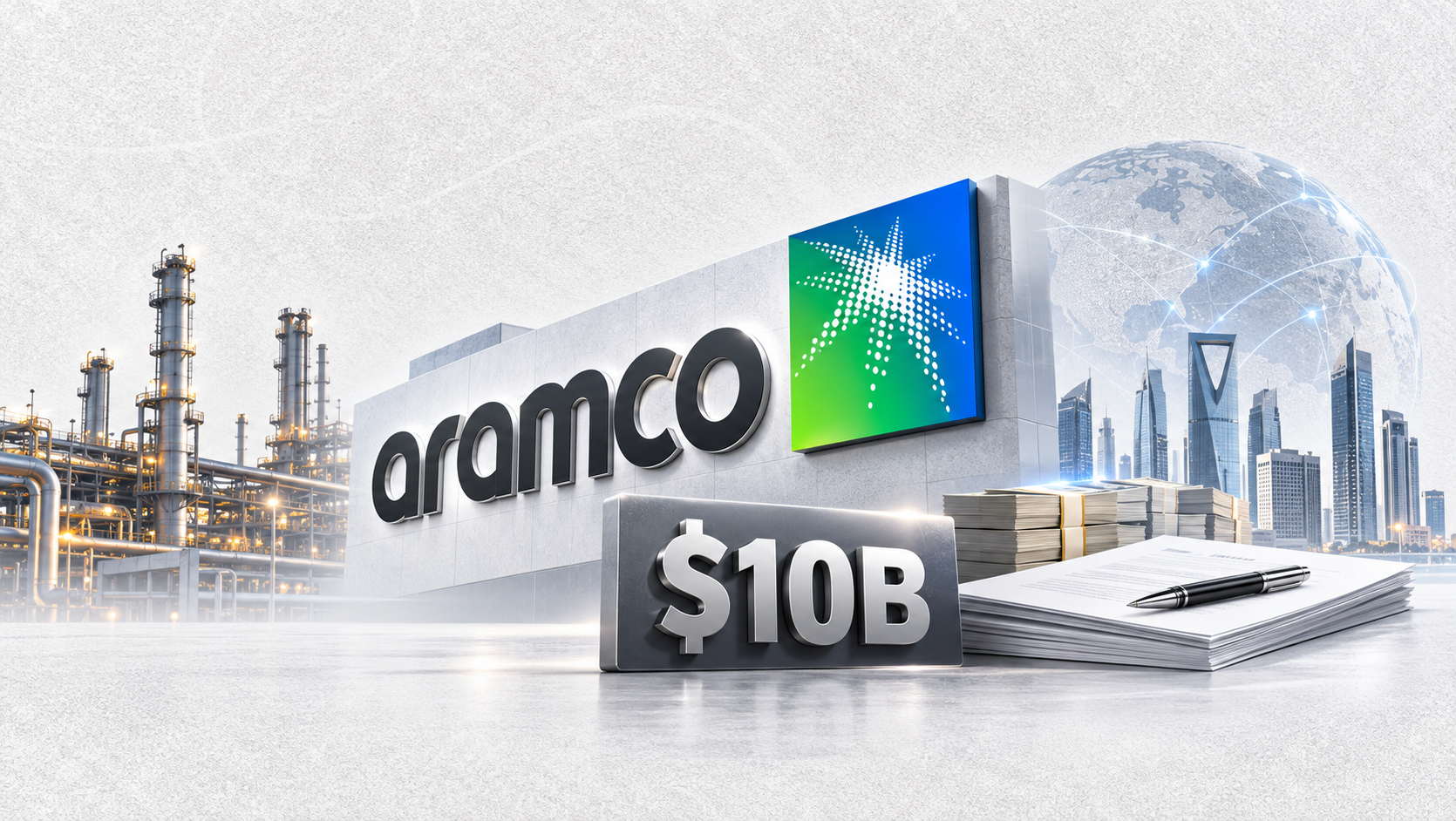
Saudi Aramco is nearing a USD 10 billion revolving credit deal with international banks.
The facility offers a "standby pool of money" and more room to access cash.
Pricing is reportedly 60 basis points above SOFR, with signing expected soon.
It looks like a practical cushion, not distress financing, amid shifting regional conditions.
The move reflects a wider Gulf borrowing trend mixing global and regional funding.
Saudi Aramco is getting close to signing a USD 10 billion revolving credit facility with a group of international banks, a move that would give the Saudi energy giant more room to access cash when needed as regional energy conditions keep shifting.
According to Bloomberg, the deal could be signed in the coming weeks, with pricing set at 60 basis points above SOFR, the Secured Overnight Financing Rate. In simple terms, it is a standby pool of money Aramco can draw on if and when it wants, rather than taking all the funds in one go. For a company of this size, that kind of flexibility can be spot on.
The lender group is expected to include Bank of China, Citigroup, HSBC, Industrial and Commercial Bank of China, JPMorgan Chase, and Mitsubishi UFJ Financial Group. That line-up says quite a lot on its own. It shows how important global banking ties still are for the biggest Gulf energy players, even at a time when oil prices are stronger and balance sheets look solid.
Aramco’s position in Saudi Arabia’s economy is, of course, enormous. So any change in how it funds itself gets attention far beyond the banking world. The proposed facility would also arrive while the company continues operating across a region facing heightened security risks. That said, the point here is not distress financing. It looks more like a practical cushion, and I reckon that matters because markets can turn quickly, sometimes with little warning.
This would not be Aramco’s first such arrangement. Back in 2024, it signed an earlier revolving credit package split into two parts: a USD 7 billion tranche backed by US, European and Asian lenders, and a separate USD 3 billion Shariah-compliant murabaha facility from regional banks. It is a reminder that Gulf corporates are no strangers to mixing conventional and Islamic finance when it suits the structure.
And believe it or not, this fits into a wider borrowing pattern across the region. Earlier in October, QatarEnergy secured a USD 3 billion loan led mainly by Chinese banks. In July, Saudi Energy Company raised SAR 15.8 billion, or roughly USD 4.1 billion, through murabaha financing provided by seven Gulf banks. So, this is not coming out of the blue.
For readers at Arageek who follow capital flows as closely as startup rounds, there is something familiar in all this. I have seen founders across MENA chase optionality before they actually need it, because waiting until the last minute can be a bit of a faff. The scale is wildly different here, obviously, but the logic is not worlds apart: secure access, protect flexibility, keep room to manoeuvre.
On the flip side, more debt does always invite questions around timing and cost. Still, revolving facilities are often used as financial back-up rather than a sign of pressure. If the deal goes through on the reported terms, it will offer another clue about how major Gulf energy companies are balancing international bank funding with regional financing channels in an evolving global market.
For now, the expected signing will be the next big step. Once that happens, the final lender list and terms should make clearer how Aramco wants to position itself finacially for the period ahead.
🚀 Got exciting news to share?
If you're a startup founder, VC, or PR agency with big updates—funding rounds, product launches 📢, or company milestones 🎉 — AraGeek English wants to hear from you!




✉️ Send Us Your Story 👇