 Ai Everything
 LEAP26
 AI
AI Saudi Arabia
 UAE
UAE Egypt
EgyptShipfinex Earns Key Regulatory Nod to Revolutionise Maritime Investing with Tokenisation

4 min
Shipfinex secured in-principle approval from Dubai’s VARA for a Broker-Dealer licence.
The platform tokenises vessels into “Maritime Asset Tokens” for fractional ship ownership.
Approval signals regulatory confidence, though full VASP licensing is still pending.
The move aims to modernise “old school” shipping finance with blockchain structures.
Investors must still weigh cyclical risks, governance, liquidity and exit clarity.
Shipfinex has taken a notable step forward in its plan to open up the maritime industry to a broader pool of investors. The Dubai-based platform has secured In-Principle Approval (IPA) from the emirate’s Virtual Assets Regulatory Authority (VARA) for a Broker-Dealer licence, signalling regulatory confidence in its model.
In simple terms, the approval means Shipfinex has met VARA’s initial requirements around compliance, security and operational readiness. It is not the final licence just yet, but it moves the company closer to becoming a fully licensed Virtual Asset Service Provider (VASP) in Dubai, and that is no small feat in a market known for tightening its standards around digital assets.
Shipfinex is building what it describes as a regulated pathway for fractional ship ownership. Using Distributed Ledger Technology (DLT), the company tokenises maritime assets into what it calls Maritime Asset Tokens (MAT). These tokens represent fractional ownership rights in vessels, allowing investors to participate in shipping, an asset class that has traditionally been the playground of large institutions and shipping magnates.
For many founders across MENA who read us at Arageek, the idea of “tokenising” real-world assets can feel either spot on or a bit of a faff, depending on how it is executed. I remember sitting with a logistics startup founder in Dubai Marina last year, who told me shipping finance still runs on relationships and long-standing capital structures. “It’s old school,” he said, half-laughing. And he wasn’t wrong. So attempts to modernise it through blockchain-based structures are bound to raise eyebrows, and interest.
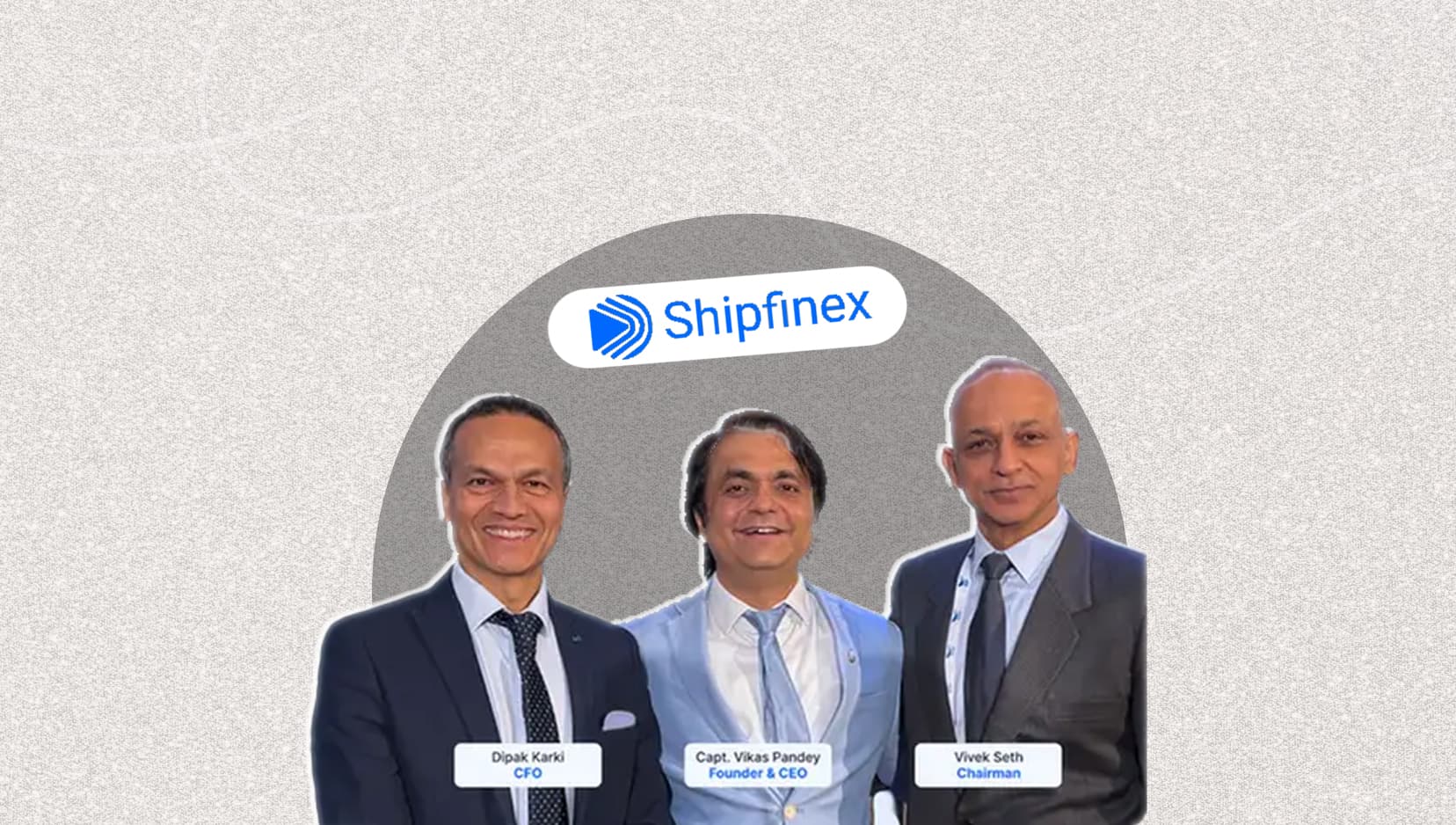
Capt. Vikas Pandey, Founder and CEO of Shipfinex, described the approval as a testament to the firm’s commitment to operating within a regulated and transparent framework. He noted that Dubai is rapidly positioning itself as a global hub for virtual assets and said the company aims to align closely with VARA’s regulatory standards to safeguard investors.
The maritime sector may be centuries old, but its financial plumbing has not changed much over recent decades. Mr. Vivek Seth, Chairman of Shipfinex, pointed out that while shipping remains a cornerstone of global trade, its funding structures have lagged behind wider financial innovation. According to him, the approval supports the company’s ambition to bridge traditional shipping with the digital economy.
From a financial structuring angle, the move could touch both debt and equity models in ship finance. Mr. Dipak Karki, CFO of Shipfinex, said the platform is designed to function as a transparent and efficient exchange where individuals and institutions can share economic ownership of a vessel, an approach now validated, at least at the preliminary stage, by a regulator widely regarded as world-class.
That said, the real test will come with the full VASP licence. Shipfinex must still meet the remaining regulatory conditions set by VARA before it can operate at full capacity. Only then will the platform be able to fully roll out its vision of a seamless, regulated marketplace for fractional ship ownership.
On the flip side, tokenisation in itself does not magically remove risk. Shipping markets are cyclical, freight rates fluctuate, and vessels depreciate. Investors, especially retail participants drawn in by the promise of fractional access, will need clarity on governance, liquidity and exit mechanisms. Still, I reckon bringing more transparency and regulatory oversight into maritime finance is a conversation worth having, definately more constructive than leaving innovation in the shadows.
Dubai’s steady push to become a serious player in virtual asset regulation is also part of this story. VARA has been building a framework that aims to balance innovation with investor protection, and approvals like this show how that vision is playing out on the ground.
For startups across MENA watching this space, there is something encouraging here. Whether you are building in fintech, logistics or tokenisation of real-world assets, the message is clear: regulation is not necessarily a barrier. In some cases, it might just be the wind in your sails, well… provided you are ready for the scrutiny that comes with it.
🚀 Got exciting news to share?
If you're a startup founder, VC, or PR agency with big updates—funding rounds, product launches 📢, or company milestones 🎉 — AraGeek English wants to hear from you!




✉️ Send Us Your Story 👇