 GITEX Dubai
 Ai Everything
 LEAP26
 AI
 Saudi Arabia
 UAE
 Egypt
Toflow Wants Sales Teams to Run LinkedIn Outreach by Talking to AI

14 min
Toflow tackles the admin slog before selling, bundling prospecting, enrichment, outreach and CRM updates.
Its standout trick lets assistants like ChatGPT “operate the outreach process through conversation”.
Natural-language targeting and LinkedIn activity can speed prospecting, but “human judgement” still matters.
Automation saves time, yet multichannel chasing can feel intrusive and carries platform, privacy and legal risks.
The real test is not more messages, but “conversations that deserve to continue”.
Sales representatives rarely spend their entire day selling.
Before a meaningful conversation begins, they must find suitable companies, identify the right people, collect contact information, verify email addresses, write messages, create follow-up sequences and update a customer relationship management system.
Much of the work happens before the prospect has shown any interest.
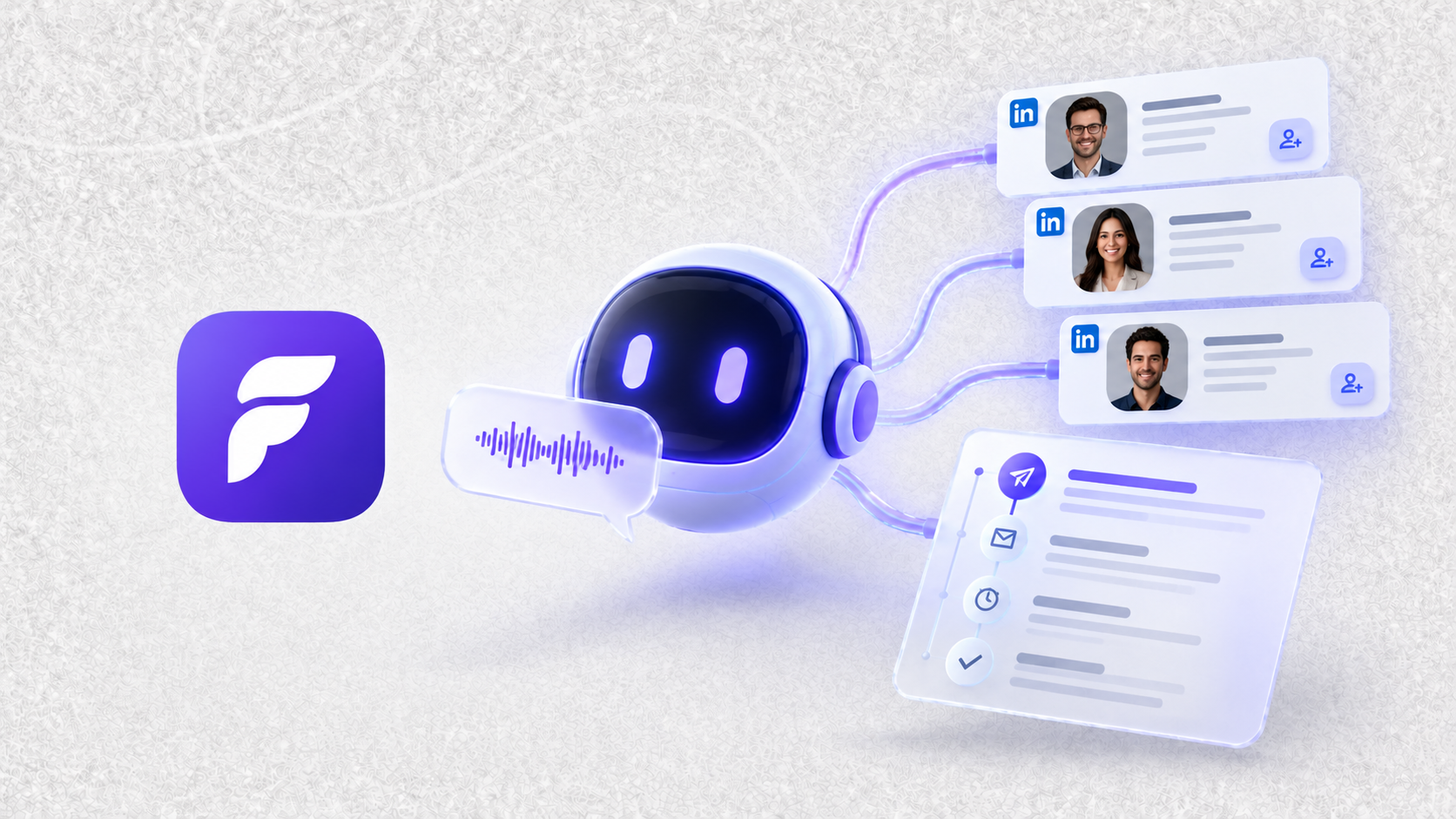
Toflow is building an AI-native platform around that operational burden. It combines LinkedIn prospecting, contact enrichment, multichannel outreach, reply management and sales pipeline tracking in one system.
Its most distinctive feature is not simply that it uses artificial intelligence to write messages. Toflow can connect with assistants such as Claude and ChatGPT, allowing users to operate the outreach process through conversation.
A sales manager can describe the type of buyer the company wants to reach. The AI assistant can translate that request into a prospect list, enrich the contacts and launch an outreach sequence.
The user states the commercial intention. Toflow handles the software actions underneath it.
The real work behind outbound sales
Outbound sales is often discussed as a messaging problem. If a company could only write a better introduction, the argument goes, more prospects would respond.
In practice, writing is just one step.
A representative may begin by searching LinkedIn for a particular role, industry, geography or company size. The resulting profiles must be reviewed and organised. Business email addresses may need to be found and verified, while telephone numbers and company details may come from separate providers.
The contacts are then imported into a sequencing tool. Messages are written, follow-ups are scheduled and replies must be monitored across several inboxes. Finally, useful information has to be transferred into the CRM.
When every stage uses a different platform, representatives spend a large part of the day moving data rather than speaking with buyers.
Toflow attempts to compress that fragmented workflow. The same platform can identify prospects, enrich their records, place them into campaigns, manage replies and track opportunities.
This does not automatically make the outreach effective. But it can reduce the mechanical work between defining a target audience and beginning a relevant conversation.
Finding buyers with a natural-language prompt
Toflow’s conversational approach begins with prospecting.
Instead of manually configuring every search field, users can describe their ideal customer profile to an AI assistant. The system can translate the description into a search for relevant people and companies.
A software agency, for example, might ask for operations leaders at ecommerce companies in a specific region. A cybersecurity provider could look for technology executives at businesses of a certain size. The result can then be refined before any outreach begins.
Natural-language search can make complex filters more accessible, especially for users who do not work with sales databases every day. It can also help teams turn an internal description of their buyer into an operational list more quickly.
However, a fluent prompt does not guarantee a useful audience.
If the ideal customer profile is broad, the AI will produce broad prospecting. If the request combines contradictory characteristics, the resulting list may look precise while containing weak matches.
Teams still need to understand why a person or company belongs in the campaign. The AI can execute targeting logic, but the business must provide sound logic in the first place.
Importing leads from visible LinkedIn activity
Toflow also allows users to import people associated with a LinkedIn post, event, group or search. This can include users who liked or commented on a post.
These behavioural sources can be more contextual than a static database.
Someone who commented on a discussion about supply-chain problems may be more relevant to a logistics platform than another person selected only because they have the correct job title. An event attendee may have demonstrated interest in a particular industry or technology.
This can create a stronger starting point for outreach, but engagement should not be confused with purchase intent.
A person may react to a post for many reasons. They may be a student, competitor, job seeker or simply someone who found the discussion interesting. Public interaction does not automatically create an invitation to receive a sales message.
The sales team must decide whether the activity establishes a reasonable connection with its offer. Toflow can collect the signal, but a human still needs to interpret what the signal means.
Enrichment without another data platform
After finding a prospect, Toflow can enrich the profile with business email addresses, telephone numbers and company information.
This removes a common interruption in the prospecting process. Representatives do not need to export a list, upload it into an enrichment provider and then reimport the results into a sequencing system.
The platform uses credits for different enrichment actions. According to its current pricing information, finding a business email costs one credit, while verifying an existing email uses 0.2 credits. Retrieving a LinkedIn profile also begins at a fraction of a credit, while finding a direct telephone number consumes considerably more.
This allows teams to choose the depth of data they need. A campaign focused on email may not need to spend credits on telephone numbers for every prospect.
Data enrichment nevertheless requires quality control.
A verified address may still belong to the wrong person, and employment information can become outdated. A technically deliverable email is not necessarily commercially relevant.
Teams should sample enriched records, examine bounce rates and monitor how often representatives discover incorrect roles or companies. The purpose of enrichment is not to create the largest possible database. It is to create a reliable path to the right person.
From LinkedIn connection to multichannel sequence
Toflow supports LinkedIn connection requests, direct messages and InMail. Its Growth plan adds email, allowing teams to combine both channels inside a single sequence.
A campaign could begin with a LinkedIn connection request, follow with a message after acceptance and move to email when no response appears. Another workflow might begin with email and use LinkedIn as a later follow-up channel.
Prospect behaviour can influence the next step. The system may respond differently when someone accepts a connection, opens an email or replies.
This can reduce manual follow-up work, but multichannel automation can quickly become excessive.
The same prospect may see a connection request, LinkedIn message, email and another follow-up within a short period. What appears inside the platform as a coordinated sequence may feel to the recipient like being pursued across every available channel.
The sales team must define appropriate spacing, frequency and stopping rules. Once a person replies, declines or requests no further communication, the automation should stop across every connected channel.
More channels do not automatically produce a better experience. They increase both the opportunity to make contact and the possibility of damaging trust.
The inbox is where automation should hand control back
Outbound automation is most useful before a genuine conversation begins.
Once a prospect replies, the situation changes. The response may contain a question, objection, purchasing requirement or concern that does not fit a predefined sequence.
Toflow brings LinkedIn and email replies into a unified inbox. Representatives can see conversations from several connected accounts and take over when human judgement becomes necessary.
This handoff is one of the most important parts of the product.
An automated system can prepare lists, perform enrichment and manage predictable follow-ups. It should not prevent a representative from recognising that the prospect is ready for a different kind of discussion.
The platform’s pipeline tools allow teams to move prospects through sales stages and track opportunities. Contacts can also be exported, while integrations with Salesforce and HubSpot keep outreach activity attached to the wider customer record.
This helps prevent the automation platform from becoming an isolated database that nobody updates after the first response.
AI becomes an operator rather than a writing assistant
Many sales platforms now include AI-generated copy. The user selects a prospect, clicks a button and receives a suggested message.
Toflow’s conversational layer goes further.
Through its Model Context Protocol connection and API, an AI assistant can perform actions inside the outreach system. It can search for prospects, enrich records, build sequences and retrieve pipeline information.
This changes the role of the assistant from copy generator to software operator.
A manager could ask how many prospects replied to a campaign, request another list matching the same criteria or instruct the system to create a new sequence. The assistant converts the request into operations across Toflow.
This model may reduce the time employees spend learning complex interfaces. Instead of navigating several menus, they can describe the required outcome.
But conversational control also introduces governance questions.
A company should determine which actions an AI agent may perform without approval. Searching and preparing a draft campaign creates less risk than launching messages to thousands of people. Deleting prospects, changing suppression lists or modifying CRM records may require stricter permission.
Natural language makes powerful software easier to use. It should not make consequential actions invisible.
Different agents for different parts of outreach
Toflow divides parts of the workflow into specialised agents, including account research, enrichment, inbox management and follow-up.
This reflects the fact that outbound sales is not one task.
A research agent determines whether the company appears relevant. An enrichment agent finds contact data. A follow-up agent monitors campaign conditions, while an inbox agent helps organise replies.
Specialisation can improve clarity because each agent has a narrower responsibility and a more measurable output.
The research agent can be evaluated by the relevance of selected accounts. Enrichment can be measured through contact accuracy and bounce rates. Follow-up automation can be examined through response, unsubscribe and complaint rates.
The broader system is successful only when these parts create qualified conversations together. An accurate email address has little value when the recipient is poorly matched. A well-written follow-up is ineffective if the initial contact was inappropriate.
LinkedIn automation carries unavoidable platform risk
Toflow presents account safety as an important part of its product. The company says it spaces LinkedIn activity across realistic daily windows and recommends beginning conservatively before increasing volume.
These measures may reduce the likelihood that activity appears unusually aggressive. They should not be interpreted as a guarantee that an account will never face restrictions.
LinkedIn controls its own platform rules, automated-detection systems and enforcement decisions. Those rules can change, and no external automation provider can permanently guarantee how LinkedIn will respond.
The user remains responsible for reviewing the current LinkedIn User Agreement and deciding whether a particular workflow is permitted.
This is especially important because automation can scale mistakes quickly. A campaign that sends a handful of poor messages is a quality problem. A system that repeats the same mistake across several accounts can become an organisational risk.
Teams should begin with conservative limits, monitor account warnings and avoid relying on aggressive volume as the foundation of their sales strategy.
Toflow’s claim that it kept 100% of accounts safe during a reported quarter is a company-published performance statement, not an independent assurance about every future customer or campaign.
Privacy and communications rules still apply
Contact enrichment and automated outreach also create responsibilities beyond LinkedIn’s policies.
Privacy and direct-marketing rules differ between countries. Depending on the location, type of recipient and communication channel, a company may need a lawful basis for processing contact information, specific disclosures or an accessible way to opt out.
Toflow can automate a campaign rule, but it cannot decide whether that rule is legally appropriate for every market.
Businesses should document where contact data came from, limit its use to a defined purpose and honour suppression requests across all connected campaigns. If someone opts out by email, the system should not continue contacting the same person through LinkedIn or WhatsApp without a valid reason.
Sensitive personal data should not be used for automated personalisation simply because it is technically available.
The strongest outreach demonstrates relevance without making the prospect feel watched.
Company-reported results require careful interpretation
Toflow says that more than 100 sales teams use its platform. It also publishes quarterly figures including more than 60,000 LinkedIn messages, 130,000 leads found and over 9,800 meetings booked.
The company provides customer examples describing increased meeting volume and more prospects reached without adding staff.
These figures show the scale and outcomes Toflow reports, but potential buyers should understand how each measurement is defined.
“Meetings booked” may refer to calendar bookings rather than attended meetings. A lead found is not necessarily a qualified prospect, and a reply may be positive, neutral or a request to stop.
A serious evaluation should measure more than activity.
Useful indicators include:
- Accuracy of the selected ideal customer profile
- Percentage of valid contact records
- Connection acceptance rate
- Positive reply rate
- Qualified meetings attended
- Opportunities and pipeline created
- Bounce, unsubscribe and complaint rates
- Time saved per representative
- Number of messages requiring human correction
The goal is not to prove that automation can send more messages. That is already easy. The goal is to determine whether it can produce better commercial conversations without creating unacceptable reputational or platform risk.
Plans for individual representatives and growing teams
Toflow currently offers Starter, Growth and custom plans.
Starter is listed at $39 per seat per month when billed annually. It includes LinkedIn prospecting and outreach, one LinkedIn account per seat, unlimited campaigns, a LinkedIn inbox and 500 monthly enrichment credits.
Growth costs $55 per seat per month with annual billing. It adds multichannel LinkedIn and email sequences, three email accounts per seat, a unified inbox and 1,000 enrichment credits.
The company also lists monthly and quarterly billing, with discounts applied to longer commitments.
Optional additions include WhatsApp for $20 per month, extra LinkedIn accounts for $20 each and additional email accounts for $7 per month. Custom plans increase the number of accounts, senders, credits and user permissions while adding onboarding, support and service commitments.
A 14-day free trial is available. As with any software subscription, buyers should confirm current prices and allowances before purchasing.
Teams should calculate more than the seat price. Enrichment usage, additional LinkedIn accounts, email infrastructure and the number of required sender accounts can all affect the real operating cost.
Who is Toflow built for?
Toflow is most relevant to agencies, B2B sales teams, founders and go-to-market specialists that already use LinkedIn as an important prospecting channel.
It is particularly useful when representatives spend substantial time moving leads between search, enrichment, messaging and CRM systems.
Agencies may benefit from managing several client or representative accounts through a common system. Smaller sales teams may use the conversational workflow to achieve more consistent prospecting without constructing an extensive sales-technology stack.
The platform will be less transformative for companies whose sales depend primarily on inbound demand, existing relationships or complex procurement processes where public LinkedIn information provides little useful context.
It also cannot repair a weak product or an unclear market.
If almost any company could supposedly be a buyer, an AI agent cannot invent genuine relevance. If the value proposition is generic, automated personalisation will still produce generic outreach.
Automation amplifies the quality of the strategy behind it.
Measuring success by conversations rather than messages
Toflow’s larger idea is that sales software can become operable through conversation.
A user tells an AI assistant what kind of buyer the company wants. The assistant turns that request into LinkedIn searches, enriched contacts, sequences, follow-ups and pipeline actions.
This could remove a significant amount of repetitive work. It also makes careful targeting and campaign governance more important because the distance between an idea and a launched sequence becomes much shorter.
The strongest use of Toflow is not asking AI to imitate a human representative across thousands of messages. It is allowing automation to handle research, data movement and predictable early steps so that human representatives can spend more time where they are most valuable.


That value begins when a real prospect replies.
The quality of an AI-native outreach platform should therefore not be judged by how quickly it launches a campaign. It should be judged by whether the resulting messages create conversations that deserve to continue.