AI
AI Saudi Arabia
 UAE
UAE Egypt
EgyptTwo weeks after CES, these are the ideas still stuck in my head.

8 min
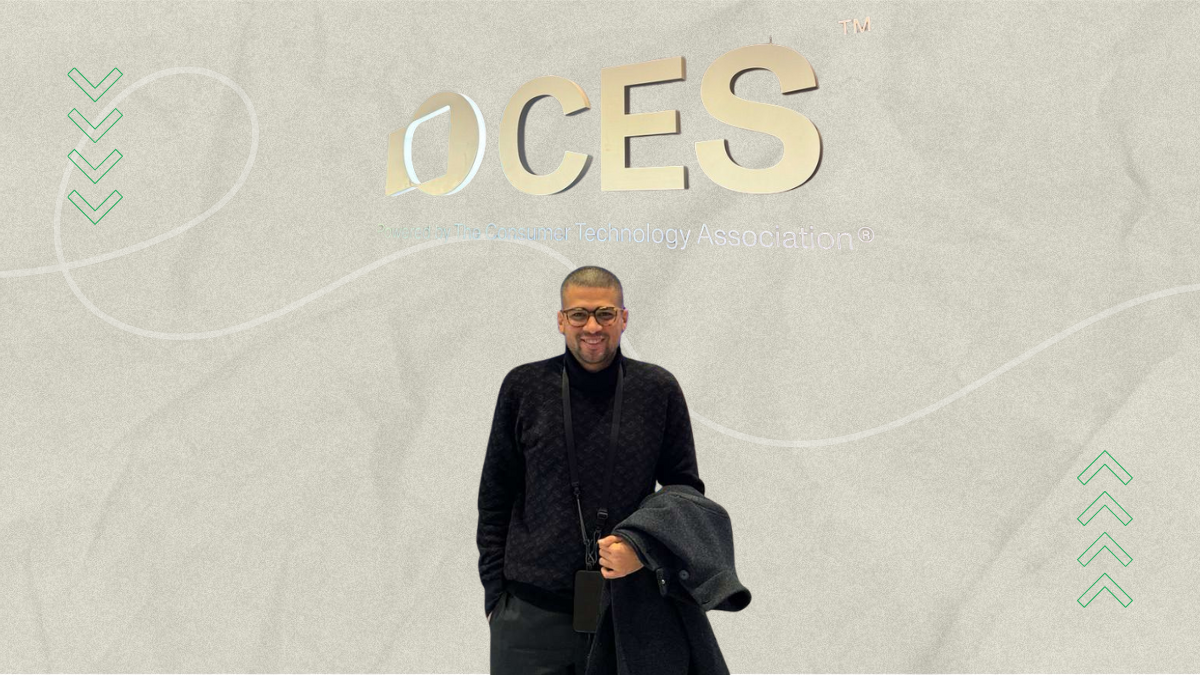
I finally made it to the Consumer Electronics Show (CES), hosted by the Consumer Technology Association (CTA), and it impressed me on every possible level; here are the thoughts I still have on my mind after two weeks of the event.
1. Las Vegas is the best city in North America to host a major event:
CES had the best logistics and most seamless attendee experience I have ever had at a 100K+ attendees event. And this is coming from a regular attendee who has organized 100+ events and attended almost every major tech conference globally. Las Vegas gets criticized for many things, but hosting a major event is not one of them.
Partner Hotels and the airport both had badge pickup locations. I picked up my badge at Harry Reid International Airport in under three minutes. The free shuttles between venues and hotels were incredibly efficient. Ten to fifteen minutes max between The Venetian and the LVCC was lovely.
Getting around the Strip on The Deuce was genuinely enjoyable. Clean, on time, fast, and with visible police presence almost everywhere. And when all of that was not enough, the Bay Area’s Zoox was there to remind me that the autonomous future is already here, while the Vegas Loop made it clear that ambitious infrastructure still has a place in the real world and underground transit still rules.
2. CES is not an entrepreneurship or a Silicon Valley event, and that is kinda a good thing.
There is far more to technology than AI or crypto. Since Sam Altman’s ChatGPT launched, almost every tech conversation has been dominated by AI, making it hard to see what else is being built at the product or national level. CES cuts through that noise. It brings the focus back to real products, engineering, manufacturing, and global execution. You see what countries are actually shipping, not just pitching. In a world obsessed with hype, CES feels refreshingly grounded. Also, as a venture capitalist, it was a grounding experience that opened my eyes on catagories that are thriving that might not be in the news or in front of me every day.
3. China is far ahead in consumer technology, and catching up will be hard. But America has never backed down from a challenge.
Hi, where are you from? Shenzhen! That was the answer that I got almost every time I asked someone where they were from.
That consistency was striking. Across both startups and large companies, Shenzhen repeatedly emerged as a focal point. This is because it has established itself as the global center for consumer electronics. Products ranging from robots and healthcare devices to drones, cameras, AI companions, smart home products, laptops, accessories, and even smart toothbrushes are overwhelmingly designed, manufactured, or scaled in Shenzhen. For nearly any physical consumer device, the likelihood that it originates from Shenzhen is extremely high.
It is easy to feel like the gap is too wide. But the idea that America should accept falling behind has never sat right with me, especially in an age where data will play a massive role in achieving artificial general intelligence and America winning the 21st century. The data from all these devices around us will be used by tech companies to develop the next generation of tech weather for consumers or businesses, and I don't like the idea of Americans' data being shipped overseas or being used to advance the economic or political agendas of countries that don't share our American values. Think of achieving AGI at the same importance of achiving the nuclear bomb, and our data is the core of a nuclear site.
One thing I respect about the Trump administration is its refusal to accept decline or stagnation as inevitable. If there is one place I would take President Trump, it would be CES in 2027. Let him walk the floor. Let him challenge the tech elite on why so much manufacturing, talent, and investment was exported instead of built in American cities.
No challenge is beyond the US, but only if we decide to take it seriously.
4. AI is everything, everywhere, all at once.
Even with consumer tech everywhere around me, AI dominance at CES was still felt at every level. It started with California’s big three: NVIDIA, AMD, and Qualcomm. Their next-generation AI supercomputer announcements cemented California as the global leader in AI hardware, by a gap that no one is realistically closing in the short term, and likely not even in the medium term.
AI was also everywhere in a more literal sense. Almost every device now ships with some form of AI, or at least something repackaged and marketed as AI. Sometimes to absurd levels, including products like knives and toothbrushes. Much of this adds little real value for everyday consumers, and data increasingly shows that users are either annoyed by or simply ignore most so-called AI features and assistants. Still, it clearly signals what investors want, and companies are falling in line.
The good news is that many of these products are built on open-source large language models. That matters. It pushes AI forward more collectively and inclusively, even when the marketing gets ahead of reality.
6. Boston Dynamics made humanoid robots feel inevitable, no longer experimental.
Boston Dynamics’ new Atlas was one of the clearest signals at CES that humanoid robots are moving from demos to deployment. This is not a concept or a lab prototype. It is a fully electric, enterprise-grade humanoid robot entering production now, with 2026 deployments already locked in for Hyundai and Google DeepMind.
What stood out is how practical Atlas is. It is designed for real industrial work: material handling, order fulfillment, operating autonomously in dynamic environments, lifting up to 50 kg, swapping its own batteries, and integrating directly with existing factory systems. Once one robot learns a task, that capability can be replicated across an entire fleet.
The partnership with Google DeepMind adds another layer, bringing foundation models into physical labor at scale.
What made robots feel truly inevitable was not just Atlas, but the 100-plus other robots I saw across the CES floor. Consumer and enterprise, premium and affordable, all shipping across a wide range of use cases. For the first time, it felt realistic that many households will be able to afford a world-class robot at home well before 2030.
7. Love, Sex, and AI:
One of the biggest unresolved questions of the AI age is how these systems will shape our emotions. Will AI ease loneliness, or quietly deepen it? Early signals already show that tools like ChatGPT are being used as a form of companionship, and CES made it clear that this is only the beginning. This year at CES, several companies unveiled what I would call the next generation of AI companions. Two stood out.
The first was Razer Eva, powered by xAI’s Grok, which is a desk companion that I would say is super flirty. Watching Razer founder and CEO Min-Liang Tan defend the decision to partner with xAI during a live recording of The Verge’s Nilay Patel podcast was so bizarre. The justification was simple: Grok has the best conversational model on the market, a claim that is very much debatable, especially since it also neglected the recent backlash around security and privacy Grok is facing as I am writing this article. I am grateful to Vox Media for the chance to be in the room.
The second was even more unsettling. A floofy cat, where the founder spent so much time bragging about that I won’t need to clean after it, or it won’t have mood swings, or won’t be mad at me for not spending any time with it. She made me why would they have a pet then?
History suggests we will eventually get robots that tolerate all our flaws, never challenge us, and never call us out the way real partners do, because who will pay for something that tells you need to get your s*** together. I can easily imagine how damaging that could be for personal growth and human relationships. Add physical customization into the mix, and it raises even darker questions about intimacy, effort, and connection.




I am not convinced we are talking enough about this future. It feels like the conversation is overdue. Perhaps it is time to move regulation away from a reflexive “tech versus the world” mindset and toward a more collaborative one, where we clearly distinguish between what could genuinely harm our species and what could meaningfully equip us with greater knowledge, agency, and abundance.
CES 2026 made one thing clear: the future is not coming. It has arrived, unevenly distributed but impossible to ignore. AI, robots, smart devices, and new forms of intimacy are already reshaping how we work, play, and relate to each other. CES did not give us answers. It gave us a responsibility to ask better questions.