 Ai Everything
 LEAP26
 AI
AI Saudi Arabia
 UAE
UAE Egypt
EgyptVia Separations Secures $36M to Electrify Industrial Separations and Slash Emissions

4 min
Via Separations raised $36m to scale its electrified membrane filtration technology.
It targets “heat-heavy” industrial processes consuming 12 per cent of global energy.
The system fits existing plants, cutting separation energy use by up to 90 per cent.
After pulp mill success, it’s moving into refining and chemicals.
Investors see potential to “unlock additional capacity” while lowering costs and emissions.
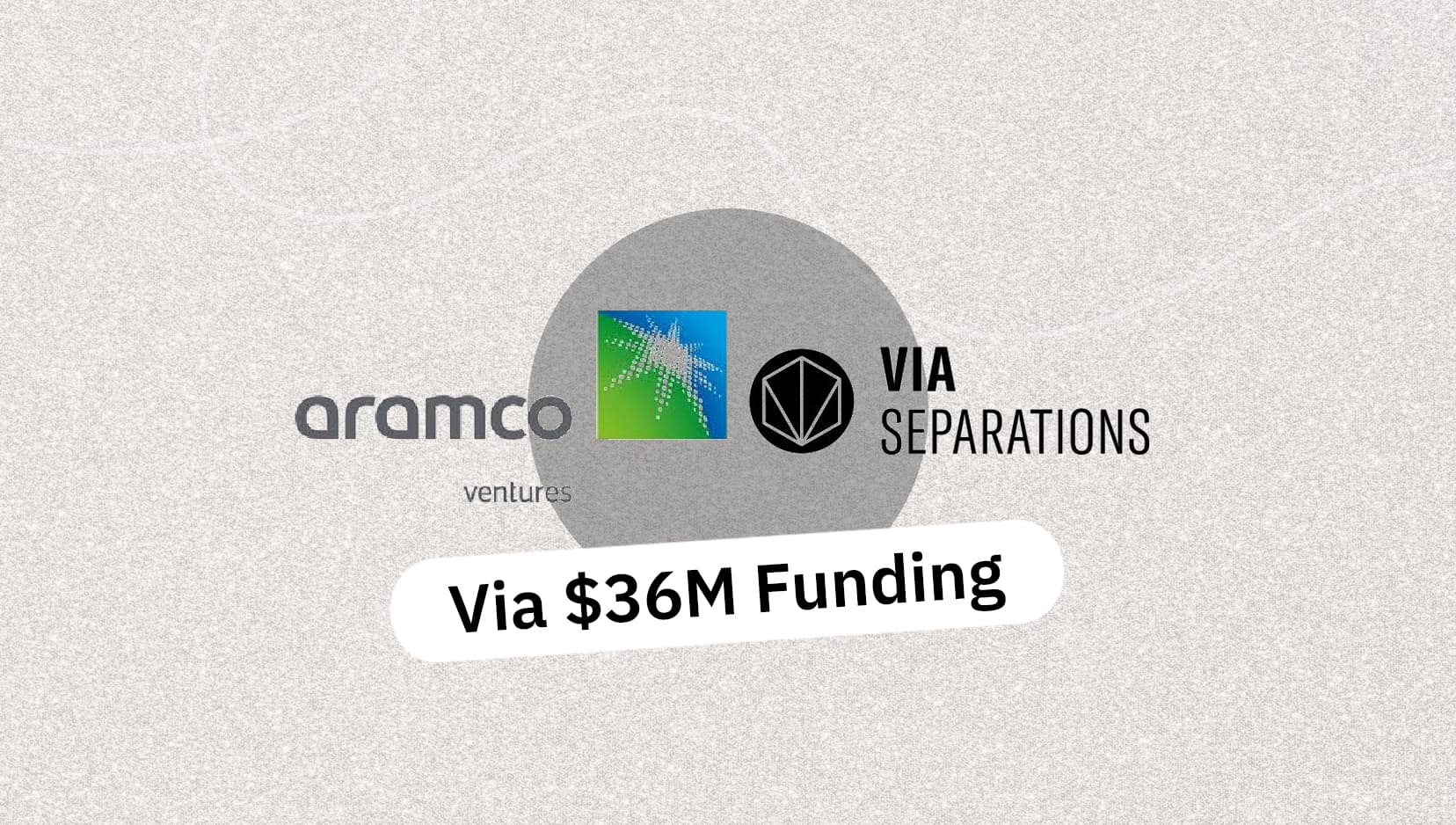
Via Separations, a US-based deeptech company focused on industrial process solutions, has secured $36 million in fresh funding, drawing in heavyweight backers including Climate Investment, Aramco Ventures and Marathon Petroleum Corporation. Existing investors such as Embark Ventures, The Grantham Foundation for the Protection of the Environment, Massachusetts Clean Energy Center (MassCEC) and Safar Partners also joined the round.
The plan is clear: speed up the rollout of its modular filtration platform into refining and chemicals, after proving itself in pulp and paper. And this is not a small niche. Thermal separation processes, the heat-heavy steps used widely across industry, account for around 12 per cent of global energy use. That’s a staggering figure when you stop and think about it. Replace heat with electricity-driven membrane filtration, and you suddenly have a shot at slashing both fuel demand and emissions.
Via’s system integrates directly with existing infrastructure, which, frankly, makes all the difference. Industrial operators are not keen on ripping everything out and starting from scratch, it’s expensive and, well… a bit of a faff. By “electrifying” these conventional heat-based separations, the company says it can cut energy consumption at the separation stage by up to 90 per cent. If that figure holds at scale, it’s spot on for operators looking to lower costs while improving uptime and resilience.
The technology is not just theory on a slide deck. Via has been running commercially in a pulp mill in Grande Prairie, Alberta, for nearly two years. Continuous operation at that scale speaks volumes. On the flip side, scaling into refining and chemicals is another beast entirely, but the company appears to be moving carefully. It completed a pilot last year at a major Gulf Coast refinery and reports hundreds of millions of dollars in capital projects in its commercial pipeline.
Mike Bishop, Investment Director at Climate Investment, highlighted the scale of the opportunity, noting that thermal separations are among the largest and least-addressed sources of industrial energy consumption. He pointed out that Via’s membrane platform introduces electrification into processes that have relied on heat for more than a century, while fitting into existing assets without major overhaul.
Tibor Toth, Senior Investment Director at Aramco Ventures, said the firm backs differentiated technologies that deliver operational value at scale. He described Via’s approach as one that tackles a critical processing step and has potential to improve efficiency while unlocking additional capacity in refining and chemical facilities.
For CEO Shreya Dave, the message is about momentum. She said that demonstrating commercial success in one sector has laid the groundwork for expansion into far larger markets. The new capital, she added, will support additional projects, expanded manufacturing capacity and faster global adoption of membrane-based separations.
From where I sit, covering startups across MENA for Arageek, energy efficiency in heavy industry often feels like the quiet cousin of flashy climate tech. But it’s the kind of innovation that can move the needle in a serious way. I’ve seen founders in the region struggle to convince traditional industries to try something new, change can be slow, sometimes painfully so. That said, when a solution slips into existing systems without demanding a complete overhaul, doors tend to open.
Of course, the real test will be how smoothly Via navigates the refining and chemicals sectors, where risk tolerance is low and downtime is costly. If the company can replicate its Alberta performance in these more complex environments, this raise could look like just the beginning. And believe it or not, in heavy industry, boring is often brilliant.
For a region like ours, where energy transition conversations are definately picking up pace, stories like this are worth watching closely. Industrial efficiency may not grab headlines in the same way as consumer apps, but I reckon it’s where some of the biggest climate wins will quietly happen.
🚀 Got exciting news to share?
If you're a startup founder, VC, or PR agency with big updates—funding rounds, product launches 📢, or company milestones 🎉 — AraGeek English wants to hear from you!




✉️ Send Us Your Story 👇