 Ai Everything
 LEAP26
 AI
AI Saudi Arabia
 UAE
UAE Egypt
EgyptRaya FutureTECH Rebrands for Growth, Launches EV Accelerator

4 min
Raya Holding ended its GIZ partnership and launched “FutureTECH by Raya” in Cairo.
The shift means “less theory, more market access” for growth-stage startups.
Over two years, 46 ventures created 238 jobs and raised $2.
3 million.
Founders gained “real operators and real markets”, moving towards commercial traction.
An EV Accelerator signals a push into clean mobility and deeper corporate ties.
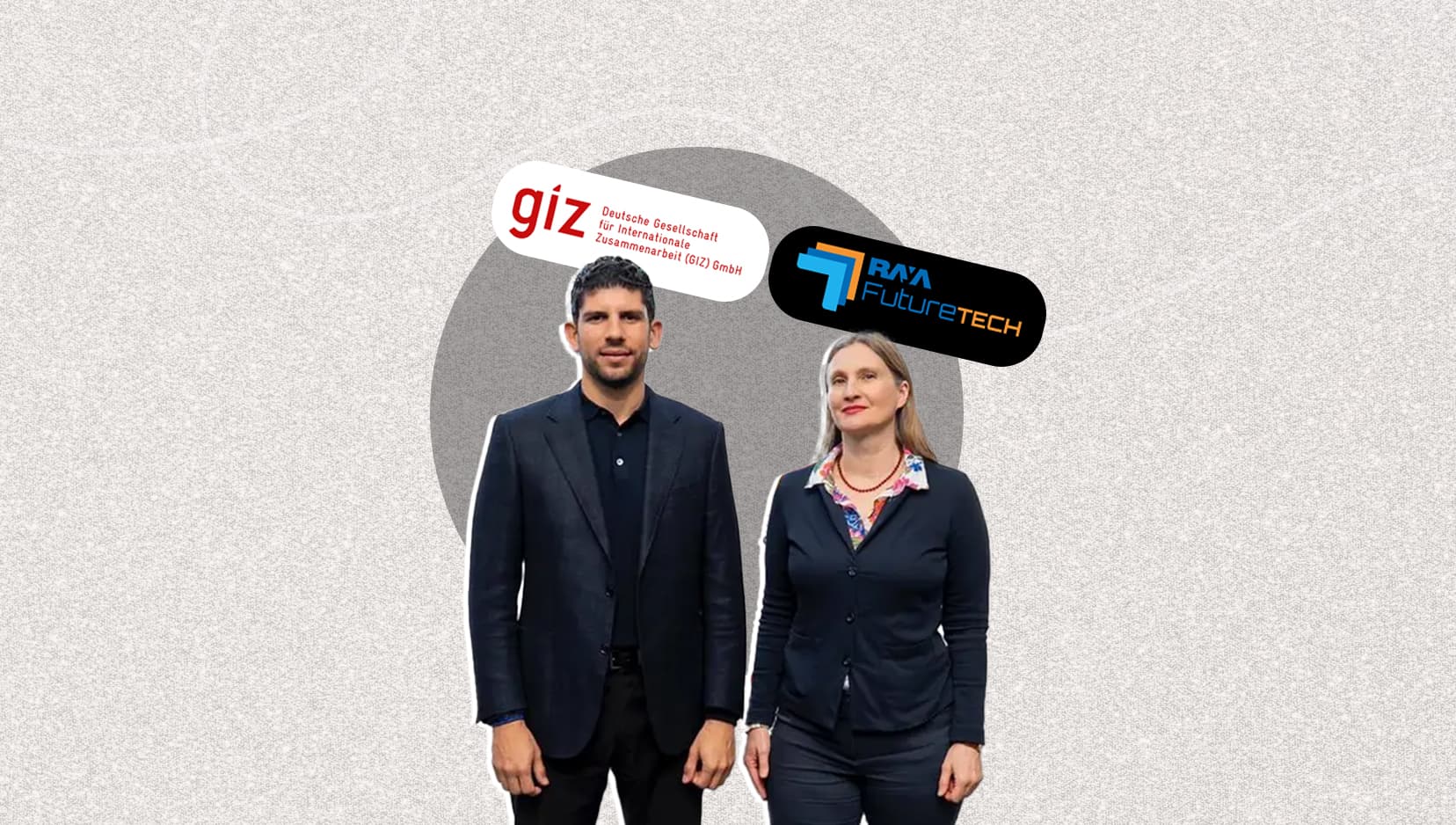
Raya Holding has wrapped up its two-year collaboration with the German Agency for International Cooperation (GIZ) under the Raya FutureTECH programme, marking the end of one chapter and, quite clearly, the start of another. The closing event in Cairo gathered founders, investors, corporate executives and ecosystem players to reflect on what has been achieved, and to introduce a new identity: “FutureTECH by Raya”.
The rebrand is more than cosmetic. It signals a shift from early-stage experimentation towards deeper integration with Raya’s various business lines, with a sharper focus on growth-stage startups, commercial partnerships and investment readiness. In simple words, less theory, more market access.
Over the past two years, the programme rolled out 12 specialised webinars that drew close to 1,000 participants. Six themed hackathons attracted 112 startups, while four acceleration cycles supported 46 ventures working across fintech, logistics, e-commerce, clean tech and artificial intelligence. The numbers tell part of the story: 238 jobs created and around $2.3 million raised by participating startups. Several also moved from pilot projects to commercial collaborations with Raya portfolio companies, and that’s often where things either click or collapse, you know?
Ahmed Khalil, Group CEO of Raya Holding, said during the event that the partnership showed what can happen when corporates and development institutions align around a shared purpose. He noted that innovation at Raya is not treated as a side project but as a growth engine, adding that many of the group’s established businesses originally began as greenfield ideas before becoming market leaders. Through FutureTECH, he said, founders gained access to real operators and real markets, helping them move from proof of concept to commercial traction.
Representing GIZ, Elisabeth Richter, Head of Programme at develoPPP, pointed out that private sector engagement sits at the heart of GIZ’s mission to promote sustainable economic development in emerging markets. The develoPPP programme, financed by the German Federal Ministry for Economic Cooperation and Development (BMZ), partners with companies to strengthen capabilities, create decent jobs and build more resilient economies. According to Richter, the project in Egypt delivered measurable progress, particularly through technical assistance, capacity building and access to networks that improved business readiness.
The closing event also featured startup elevator pitches and a panel discussion titled “Breaking Down Corporate Walls: How to Make Startups Welcome Inside Large Organizations”. Speakers from Raya Holding, Egypt Ventures, Flash and Significa Ventures tackled a familiar challenge: how to bridge the sometimes awkward gap between nimble founders and large corporates. From what I’ve seen over the years covering this space, that gap can be a proper headache. Startups move fast; corporates move… well, not always at the same speed.
The new slogan, “FutureTECH by Raya – Accelerating the Daring”, captures this evolution. The platform now aims to support proof-of-concept development, secure commercial contracts and potentially invest in promising technologies within Raya’s multi-industry ecosystem. On the flip side, it also means startups will need to be ready for more scrutiny and higher expectations, not just shiny pitch decks.
Looking ahead, FutureTECH by Raya has announced plans for an EV Accelerator Programme in partnership with Raya Auto, signalling a push into clean mobility. Given the growing interest in electric vehicles across the region, this feels spot on. Egypt’s mobility transition is still in its early days, but corporates stepping in could tip the balance.
From our side at Arageek, we’ve always believed that corporate–startup collaboration in MENA can be either a bit of a faff or a game changer, there’s rarely an in-between. I remember attending a demo day years ago where a young founder told me that one pilot contract changed the entire trajectory of his company. That stayed with me. Access to real markets, not just mentorship sessions, is what definately makes the difference.
With the GIZ chapter closing, Raya’s commitment to innovation appears intact. If anything, the strategy seems more grounded in commercial reality. For Egypt’s startup ecosystem, and perhaps the wider region, that kind of long-term, structured engagement from corporates could be just what is needed to turn promising ideas into sustainable businesses. That said, the proof will, as always, be in the execution.
🚀 Got exciting news to share?
If you're a startup founder, VC, or PR agency with big updates—funding rounds, product launches 📢, or company milestones 🎉 — AraGeek English wants to hear from you!



✉️ Send Us Your Story 👇