 GITEX Dubai
 Ai Everything
 LEAP26
 AI
 Saudi Arabia
 UAE
 Egypt
Your Outreach Gets the Click. Your Website Decides the Meeting.

5 min
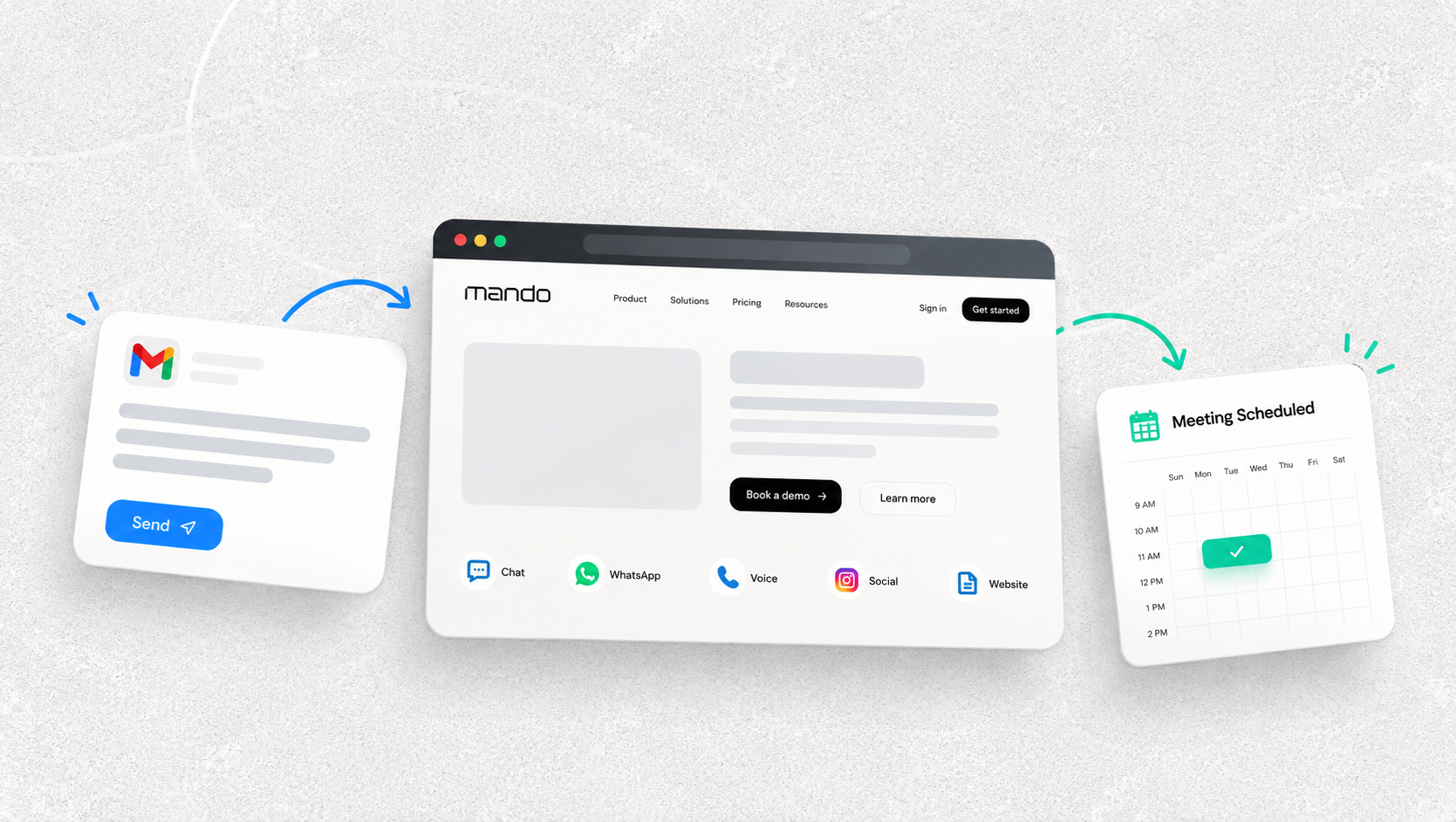
Outreach wins attention, but the website decides whether prospects actually book a meeting.
Buyers do "silent research" first, checking integrations, pricing, company fit and data safety.
Leads slip away when answers are buried, search fails, or replies come too late.
Clear pages, plain language and searchable answers help visitors find what matters quickly.
Link sales, website and chat so replying feels like "the obvious next step".
Sales teams put a lot of work into the first touch: the right list, a sharp connection request, a follow-up that lands at the right time. Then the prospect does something the sequence cannot see. They open a new tab and look you up. At Mando AI, we build tools that answer customer questions on websites and messaging channels, and one pattern shows up across B2B teams constantly. The prospect was interested enough to visit, but left without replying, because they could not find what they were looking for.
Outreach earns attention. What the prospect finds on your site decides whether that attention turns into a conversation.
The silent research step
Very few B2B buyers reply to a cold message straight away. They check your site first, usually with two or three specific questions in mind:
- Does this work with the tools we already use?
- Roughly what does it cost?
- Is it built for a company our size?
- Is our data safe with them?
If those answers take more than a minute to find, most people close the tab. They are not rejecting you. They just have forty other things to do, and your reply now sits at the bottom of their priorities. From your side, it looks like a sequence that stopped working. In reality, the sequence did its job and the website lost the lead.
Where prospects get stuck
The answer exists but nobody can find it. Integration details sit in a help article three clicks deep. Security information is in a PDF on a separate page. The prospect never gets there.
Site search that only matches exact words. A buyer types "does it connect to HubSpot" and gets zero results because the page says "CRM integrations." Most default website search tools cannot handle questions phrased the way people actually ask them.
Pricing that raises more questions than it answers. "Contact sales" is fine for enterprise deals, but a prospect who only wants to know if you are in their budget range will often leave instead of filling in a form.
Replies that come too late. The prospect writes in on your chat widget or WhatsApp at 9 pm their time. Your team answers the next morning. By then, they have booked a call with someone else.
Make your site ready for outreach traffic
1. Collect the questions your prospects actually ask. Go through your recent LinkedIn replies, discovery call notes, and chat logs. List the questions that come up before a meeting gets booked. Most teams find the same ten or fifteen repeating.
2. Answer each one in writing, in plain language. One short page or help article per question. Name the tools you integrate with. Give a price range or starting price. State who the product is built for and who it is not.
3. Make the answers searchable by meaning, not just keywords. This is where most B2B sites fall short. Adding AI-powered site search lets visitors type a question the way they would ask a salesperson and get a direct, sourced answer from your own content, instead of a list of links or a "no results" page.
4. Cover the hours your team is offline. An AI agent on your website and WhatsApp can answer the common pre-sales questions any time of day, then hand the conversation to a rep with the full history when the prospect is ready to talk. The rep starts from context instead of starting from zero.
5. Watch what people search for. Search queries that return nothing tell you exactly which questions your content is missing. Fix those first, and your outreach traffic converts better without changing a single message in the sequence.
Connect the two sides of the funnel
Outbound and inbound are usually owned by different people. The SDR runs the sequence, marketing owns the website, and support owns the chat widget. The prospect experiences all three as one company.
A few simple habits close that gap:
- Share the list of top prospect questions between sales and whoever owns website content
- Link directly to the relevant answer page in follow-up messages, instead of the homepage
- Track which pages outreach visitors land on and where they drop off
- Review chat and search logs monthly for questions that should be added to your sequences
When your messaging and your website answer the same questions in the same language, the prospect gets a consistent picture, and replying feels like the obvious next step.
The takeaway



A strong outreach sequence brings the right people to your door. If they arrive and cannot quickly find out whether you fit their needs, the work that got them there is wasted. Make the answers easy to find, make them searchable in plain language, and make sure someone, or something, responds when a prospect asks. The meetings follow from there.