 GITEX Dubai
 Ai Everything
 LEAP26
 AI
 Saudi Arabia
 UAE
 Egypt
YouTube Expands Shopping Affiliate Programme to MENA, Boosting Creator Monetisation

5 min
YouTube Shopping launches in the UAE, Saudi Arabia and Egypt, linking content with commerce.
Creators with 500 subscribers can tag products and earn commission through Amazon first.
Viewers already watch "shopping-related content" heavily, and trust creators’ reviews and tutorials.
Google AI suggests product tags, while QR codes speed television viewers to checkout.
The move could help smaller creators build businesses, if recommendations stay authentic.
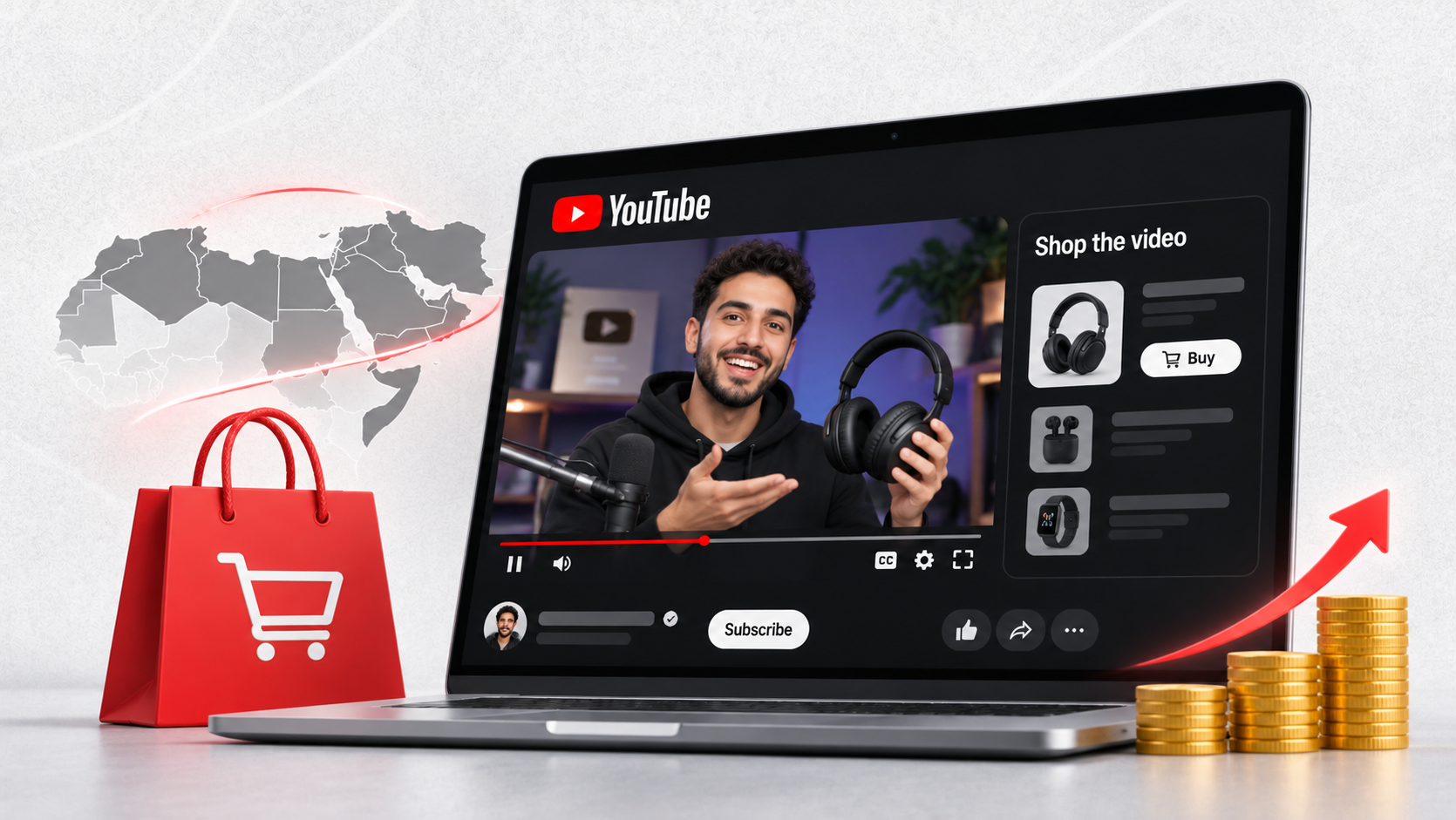
YouTube is rolling out its Shopping affiliate programme in the UAE, Saudi Arabia and Egypt, opening a fresh route for creators to earn money by tagging products directly inside their videos, Shorts and live streams. It is a notable step for the platform in MENA, and for readers who follow the region’s startup and creator economy through Arageek, this feels a bit like one of those moments where content and commerce finally stop circling each other and just get on with it.
The setup is fairly simple. Eligible creators in the YouTube Partner Program with more than 500 subscribers can tag products and receive a commission when viewers buy them. In the first phase, Amazon is the launch affiliate partner, though YouTube says more retailers are expected to join later. That lower threshold matters, because it gives smaller creators a chance to monetise earlier rather than waiting until they become huge names.
The timing is not random. YouTube says people globally watch more than 40 billion hours of shopping-related content on the platform every year. In June 2026 alone, more than 40 million logged-in users across MENA markets including Egypt, Algeria, Morocco, Saudi Arabia and the UAE made shopping-related searches on YouTube. That is a huge pool of intent, and brands are clearly keen to catch users at the moment they are already watching reviews, tutorials or unboxings.
A Kantar survey adds more colour here. Surveyed viewers in Saudi Arabia and the UAE said YouTube offers the strongest shopping-related content, with 94% pointing to instructional videos, 85% to product reviews and 80% to unboxing clips. The same survey found that 86% believe YouTube has the most trusted creators for product recommendations while shopping. In Saudi Arabia specifically, 84% said the platform helps them make more confident shopping decisions. I reckon that trust factor is the real game changer, because flashy ads are one thing, but a creator trying a product on camera is often what nudges people over the line.
Javid Aslanov, Head of YouTube in the Middle East and North Africa, said the launch in Saudi Arabia, the UAE and Egypt opens “a massive new chapter for the creator economy”, giving creators another practical way to build their businesses while also offering brands access to highly engaged audiences. He added that the partnership with Amazon helps connect businesses of all sizes with customers at the exact moment they are looking for recommendations.
Amazon is equally upbeat. Sumit Kapoor, Director of Marketing and Prime at Amazon Middle East, North Africa and Turkey, said the collaboration combines authentic creator recommendations with Amazon’s established shopping experience. According to Kapoor, the idea is to help creators in the three markets connect audiences with millions of products while making discovery and checkout more seamless.
And believe it or not, the tech side may be one of the least fussy parts of the whole thing. YouTube is using Google AI to identify products in videos and suggest tags automatically, which should save creators time they would otherwise spend doing manual work. For viewers watching on television, there is also a QR code feature that lets them scan the screen with a phone and jump straight to checkout. That is spot on for a region where mobile behaviour already shapes so much of online shopping.
Creator Ayatee, who has nearly 11 million subscribers, framed it in very practical terms. She said her audience often wants to know whether the beauty hacks and unusual gadgets appearing in her challenge videos are actually worth buying. In her view, YouTube Shopping makes it easier to share those finds because viewers can click and complete a purchase while the product is still on screen, which lifts how she connects with her community.
On the flip side, affiliate commerce is not magic, and not every creator will want their content to lean more heavily into product linking. Some audiences can sniff out forced recommendations from a mile away, and I’m not a fan of content turning into a shop window for every other sentence. Still, if used well, this can save creators a lot of faff and give regional sellers a cleaner path to customers who are already paying attention.
For the MENA creator economy, this launch looks definately bigger than just another platform feature. It hints at a more mature ecosystem where creators are not only building audiences, but also building businesses around them. I’ve seen early-stage founders across the region obsess over customer acquisition costs and conversion funnels; sometimes the answer is not another ad campaign, well... I mean, sometimes it is simply putting the right product in front of the right audience with a trusted voice behind it. YouTube seems to be betting exactly on that.
🚀 Got exciting news to share?
If you're a startup founder, VC, or PR agency with big updates—funding rounds, product launches 📢, or company milestones 🎉 — AraGeek English wants to hear from you!


✉️ Send Us Your Story 👇