 Ai Everything
 LEAP26
 AI
AI Saudi Arabia
 UAE
UAE Egypt
EgyptZeal Secures $10M to Revolutionise Global Card Payments with Loyalty Integration

4 min
Egypt’s Zeal raised $10 million, taking total funding to $14 million for expansion.
It has signed deals to activate technology on over four million card machines.
Zeal wants card payments to be “the start” of stronger customer relationships.
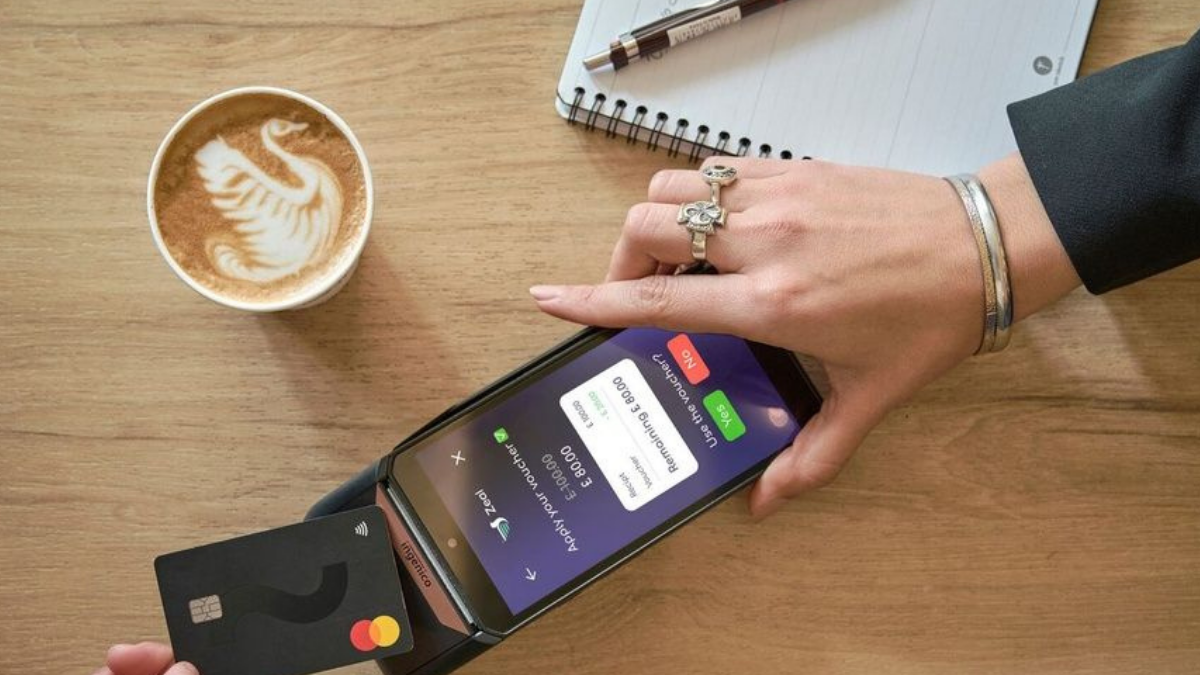
Its terminals add loyalty, merchant insight, and alerts on declines or inactivity.
The real challenge is turning signed contracts into live deployments at scale.
Egypt-based fintech Zeal has raised $10 million in a new funding round, lifting its total funding to $14 million, as the company pushes ahead with plans to grow beyond its home market. The investors in this latest round were not disclosed.
The fresh capital is meant to support a pretty ambitious rollout. Zeal says it has already signed contracts with payment acquirers around the world to activate its technology on more than four million card machines over the next 24 months. That is no small feat, and in fintech, where integrations can be a bit of a faff, signed distribution matters almost as much as the money itself.
At the heart of Zeal’s business is a simple idea: a card payment should not be the end of the customer relationship. In online commerce, retailers have become used to linking payments with loyalty schemes, customer data and repeat engagement. In physical shops, though, that connection often falls away at the till. A payment goes through, and that’s that.
Zeal is trying to change this by bringing loyalty and merchant intelligence directly into payment terminals. Merchants can use its system to offer stamp cards or points, capture phone numbers if they want, or plug into an existing loyalty setup. Rather than building a separate product for every case, the company is pitching one loyalty product that can be configured around different merchant needs and payment environments. I reckon that makes sense, because retailers usually do not want ten different systems stitched together just to reward a returning customer.
That said, the hard part is not the idea. It is the plumbing underneath. Payment terminals, operating systems, acquiring platforms and applications all tend to have their own rules and technical requirements. So connecting checkout activity to loyalty engines or customer-data tools is rarely spot on from day one. Zeal’s argument is that it has spent years working across this fragmented ecosystem and can now make those links in a practical way.
The company is also offering tools beyond loyalty. Its Merchant Health feature gives merchants as well as acquirers, payment service providers and independent sales organisations a view of transaction trends, terminal activity, payment declines and periods of trading inactivity. In plain terms, it is meant to help them spot when something has changed in a business and where follow-up might be needed. On the flip side, this also shows how payment providers are looking for ways to be more useful than simply processing transactions.
Omar Ebeid, Zeal’s co-founder and chief executive, said a card payment should be “the start of a more useful customer relationship”. He added that the company’s signed acquirer contracts, covering more than four million card machines, will support the next two years of activation and the next phase of growth.
Belal Mohamed, co-founder and CTO, said the usefulness of a checkout product depends on the infrastructure below it. According to him, Zeal’s work has focused on connecting terminal journeys, loyalty and merchant insight across different payment environments so partners can offer a consistent proposition to merchants.
And believe it or not, that timing could work in Zeal’s favour. Payment terminals are increasingly becoming software platforms, not just hardware for accepting cards. Android-based terminals, in particular, are opening the door for more business applications to run alongside payments. For startups across MENA, readers at Arageek will know this is where things get intresting: the real opportunity is often not inventing a totally new behaviour, but improving the tools merchants already use every day.
Zeal’s route to market runs through payment acquirers and other payment partners, giving it access to existing terminal estates while allowing each deployment to reflect the provider’s own platform and the merchant’s needs. The rollout tied to those signed contracts is expected to happen over the next 24 months.
The startup has already attracted backing from Raed Ventures, Pinnacle Capital and CUR8 Capital. Raed Ventures’ Raed III fund includes Saudi Venture Capital among its investors. Zeal has also picked up recognition in the UK, winning Team of the Year at the UK FinTech Awards 2026, while Belal Mohamed was named Innovator of the Year. The company is also part of the Scale Up by Endeavor programme.
For a regional fintech with roots in Egypt, it is a chuffed-to-bits kind of moment, even if the real test still lies ahead in implementation. Four million terminals sound brilliant on paper, well… I mean, now Zeal has to prove it can turn those contracts into live, working deployments at scale.
🚀 Got exciting news to share?
If you're a startup founder, VC, or PR agency with big updates—funding rounds, product launches 📢, or company milestones 🎉 — AraGeek English wants to hear from you!



✉️ Send Us Your Story 👇