 GITEX Dubai
 Ai Everything
 LEAP26
 AI
AI Saudi Arabia
 UAE
UAE Egypt
EgyptAbu Dhabi’s AI Everything Summit Shifts Focus from Hype to Real-World Impact

7 min
Ai Everything Abu Dhabi returns on 6-7 October, stressing real-world use over AI hype.
Microsoft will roll out Copilot to 35,000 staff, backing an “AI-native government” by 2027.
VDURA brings storage tech for “AI factories”, cutting bottlenecks as datasets grow and costs rise.
IFS will show industrial tools that predict faults, schedule repairs, and save “$3 million annually”.
The wider message is clear: AI is moving into government, labs, and industry.
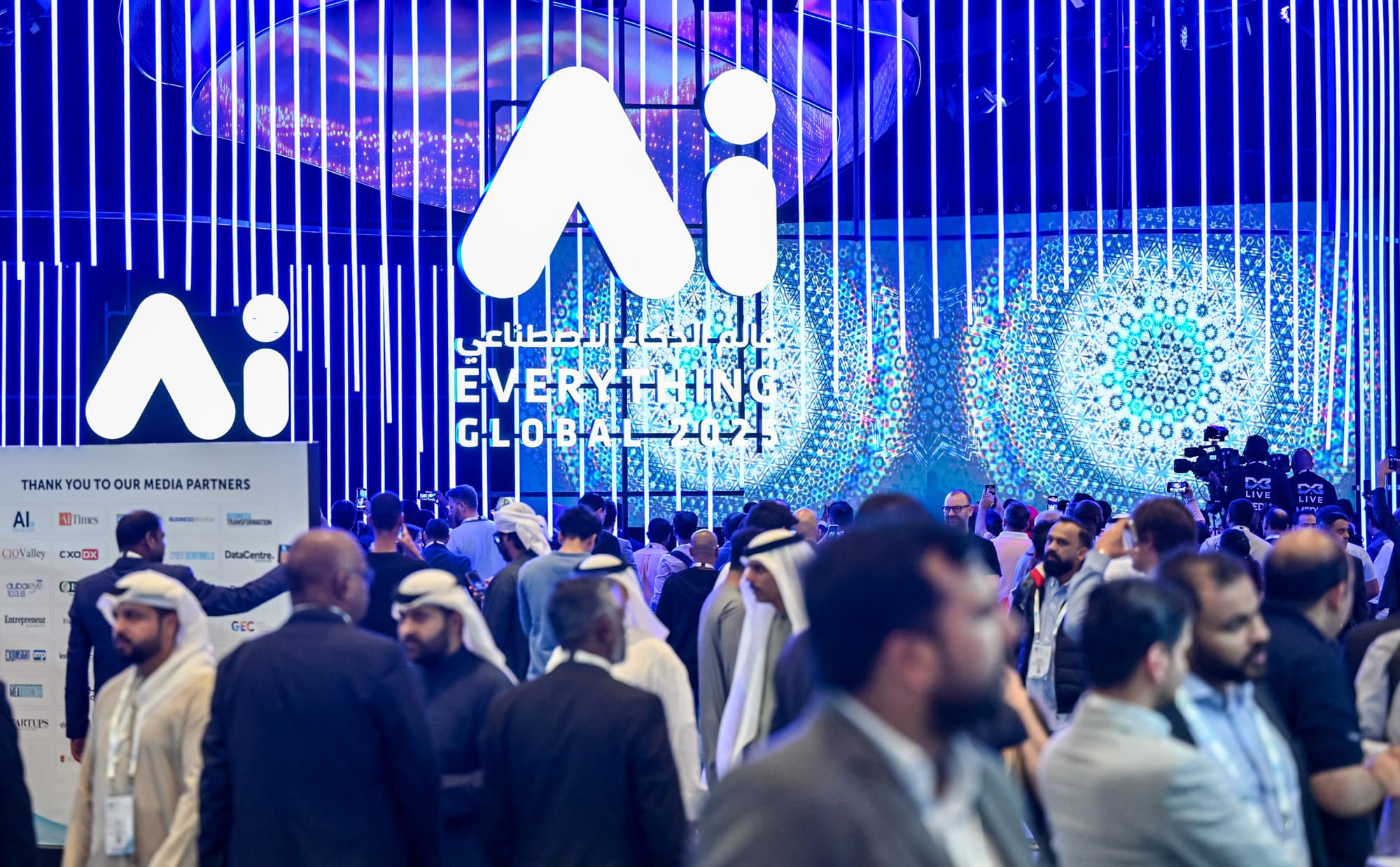
Ai Everything Abu Dhabi is returning on 6 and 7 October at ADNEC Centre, and this year’s edition looks set to put less focus on the hype around AI and more on what it is actually doing in the real world. Organisers say the event will gather more than 400 AI-first companies and over 180 speakers, alongside policymakers, investors and executives from more than 70 countries. Hosted by Abu Dhabi’s Department of Government Enablement and organised by inD, with Solutions+ as global partner, the summit is clearly pitching itself as a place where big ambition meets practical use cases.
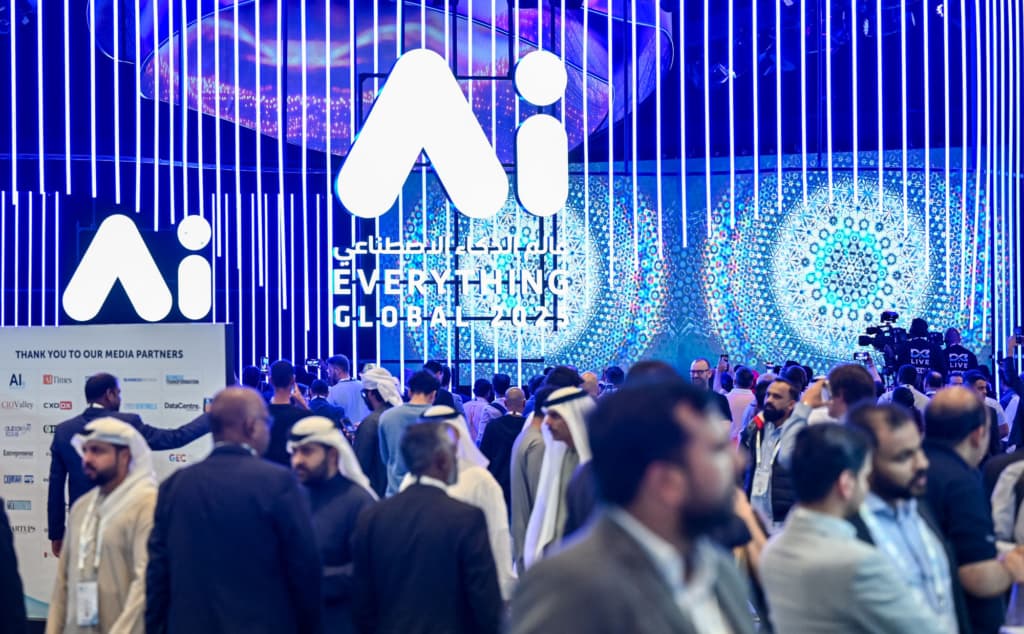
And, to be fair, that feels spot on. Around Arageek, we often hear founders talk about AI as if it is a magic wand, but the more interesting bit is when it starts solving messy, expensive problems that are a bit of a faff for organisations to fix the old way.
Microsoft is expected to showcase how AI is being folded into public services in Abu Dhabi, where Microsoft 365 Copilot is being rolled out to 35,000 government employees. The wider idea is to support Abu Dhabi’s goal of becoming what it calls the world’s first AI-native government by 2027. According to Microsoft, the programme is meant to help staff make better-informed decisions, simplify processes and free up time for more valuable public service work, while keeping security, responsible AI and local data residency in place.
Amr Kamel, Managing Director at Microsoft UAE, said the biggest change now is the move from AI as a tool to AI as a teammate. He said people are entering an era where they work alongside AI agents that can reason, plan and act across workflows, while human judgement and accountability remain central. Microsoft’s presence at the event will include Copilot, Azure AI, cyber security and partner-led tools aimed at showing how organisations can scale AI in a secure and responsible way. Kamel also said the UAE has one of the clearest AI ambitions in the world, and that the next stage is turning that ambition into impact at scale.
Elsewhere, VDURA is using the Abu Dhabi gathering for the Middle East debut of its Data Platform V12, a storage infrastructure product built for GPU clouds and so-called AI factories. In simple words, it helps place data in the right type of storage automatically so expensive computing power is not sitting idle. That matters more than it sounds, especially when AI projects begin to chew through giant datasets and the bills start climbing fast.
The company points to its work with New Mexico State University, where researchers in agriculture, aerospace and biomedicine needed one platform for large-scale simulations and AI model training rather than separate systems fighting over resources. With annual research spending of more than $141 million, the university had little room for bottlenecks. VDURA said its system, running since August 2026, combines NVMe flash storage with high-capacity hard drives in one setup, giving fast performance for active data while keeping larger datasets at lower cost.
Ken Claffey, VDURA’s chief executive, said the centre of gravity is shifting from training AI models to inference at scale, and that this changes what storage systems need to do. He pointed to agentic AI and long-context applications as the reason persistent context and very large retrieval datasets are becoming more important. Well... I mean, this may sound niche, but it is exactly this layer of infrastructure that often decides whether an AI product becomes useful or just expensive.
IFS is also lining up its industrial AI tools for the event, with a focus on asset-heavy sectors such as ports, utilities, aerospace and defence, oil and gas, manufacturing and energy. The company’s pitch is that spotting a possible failure is only half the job; the real value comes from acting at the right moment, arranging repairs, finding parts and scheduling crews before a problem becomes costly.
Suliman Gaouda, Regional Vice President for IFS AI across Asia Pacific, Japan, the Middle East and Africa, said many sectors are commissioning assets faster than they are building the systems needed to run them. He argued that the biggest opportunity is capturing maintenance regimes and asset registers at handover instead of trying to retrofit them years later at several times the cost. IFS says one of its examples comes from Kodiak Gas Services, where its Material Replenisher agent is projected to save $3 million annually and cut 90,000 technician hours.
At the summit, IFS plans to demonstrate several products, including the IFS Loops Digital Workers platform, which carries out tasks across business systems, and Nexus Black Resolve, which can use images and voice input to identify faults and suggest repair steps. Its Operational Intelligence tool is also expected to show how declining equipment performance can be spotted early before a work request is raised. I reckon this sort of behind-the-scenes automation is less flashy than generative AI demos, but definately more valuable for industries where downtime costs a fortune.
The wider summit agenda will also bring in public sector and education voices. H.E. Mariam Al Musharrekh, Director General of the Department of Government Enablement, is due to speak about Abu Dhabi’s efforts to build an AI-ready government workforce. H.E. Prof. Ebrahim Al Hajri, President of Khalifa University of Science and Technology, is expected to look at how learning must evolve in a world where intelligent systems are becoming part of daily work, while still keeping human judgement and intuition at the centre.
There is also a strong energy angle. Sean Spicer, SVP of Digital Technology at ADNOC, is joining a panel on frontier AI in the enterprise alongside Nickson Dicson of AWS and Simon Al Khaled of Oracle. Another discussion will explore ADNOC’s ENERGYai, described as the world’s first agentic AI solution for the energy sector. The product was developed by AIQ, the Abu Dhabi venture created by Presight and ADNOC Group. Dennis Jol, CEO of AIQ, is set to appear with H.E. Dr. Amal Abdulrahim from the Ministry of Climate Change and Environment to discuss how AI is reshaping energy businesses and what that growing overlap means for the future of the sector.
On the flip side, not every AI promise lands neatly in practice, and I’m not a fan of events that drown readers in buzzwords. Still, what makes this one interesting is the level of specificity. A government rollout to 35,000 employees. A university infrastructure upgrade tied to $141 million in research activity. A digital worker linked to $3 million in annual savings. Those are the kind of details that cut through the noise.
For MENA startups watching from the sidelines, that may be the real takeaway. AI in the region is no longer only about pilot projects and shiny presentations. It is moving into government systems, university labs and industrial operations, and that shift could open fresh room for local founders building tools around data, workflows, maintenance, security and sector-specific applications. And believe it or not, that is where things get really intresting.
🚀 Got exciting news to share?
If you're a startup founder, VC, or PR agency with big updates—funding rounds, product launches 📢, or company milestones 🎉 — AraGeek English wants to hear from you!




✉️ Send Us Your Story 👇