 GITEX Dubai
 Ai Everything
 LEAP26
 AI
AI Saudi Arabia
 UAE
UAE Egypt
EgyptAl-Futtaim Teams Up with Siemens to Revolutionize Real Estate Sustainability in the UAE

4 min
Al-Futtaim Real Estate and Siemens partner to fast-track digital transformation and sustainability.
They will deploy Building X, AI tools, fire safety and management systems.
The aim is “smarter buildings, leaner operations” and steady progress towards net zero.
Energy audits will set baselines and shape a clearer decarbonisation roadmap.
The tie-up could reset standards for “human-centric autonomous buildings” across the Gulf.
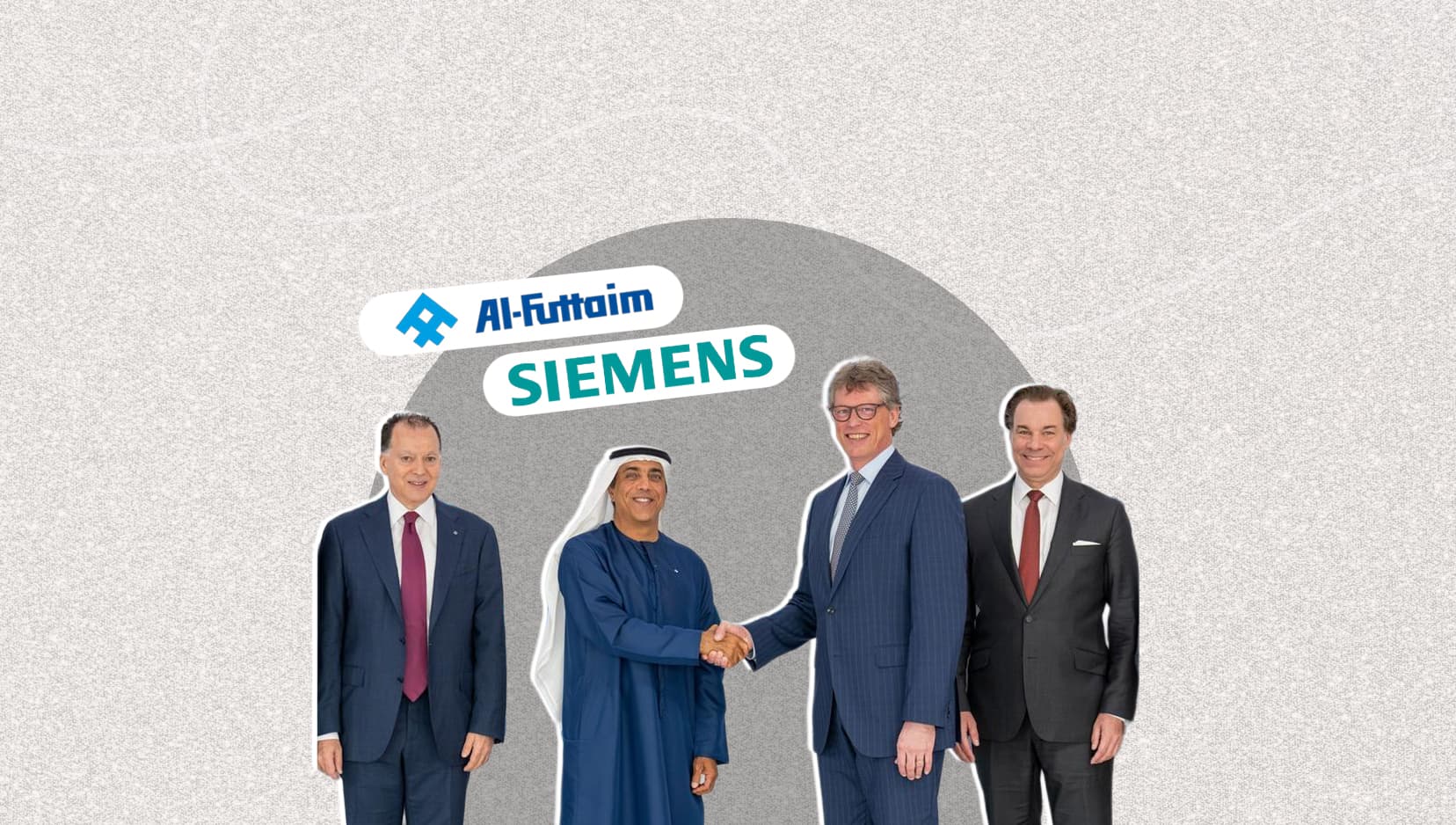
Al-Futtaim Real Estate has entered a strategic partnership with Siemens in a move designed to fast-track digital transformation and sustainability across its property portfolio in the UAE and beyond. The agreement brings together one of the region’s most diversified private groups with a global technology heavyweight, and the ambition is clear: smarter buildings, leaner operations, and a serious push towards net zero.
At the heart of the collaboration is the integration of Siemens’ technologies, including Building X from the Siemens Xcelerator portfolio, advanced fire detection and suppression systems, and comprehensive Building Management Systems. Artificial intelligence will also play a role, particularly in improving energy performance and operational efficiency. Al-Futtaim Contracting will support the rollout, starting with the deployment of Building X in several buildings as a proof of concept.
In simple terms, this is about turning traditional properties into intelligent, responsive environments. And believe it or not, that shift can have a bigger impact than many founders realise. Energy bills shrink. Maintenance becomes predictive rather than reactive. Occupants get better comfort and safety. It’s not just shiny tech for the sake of it.
Naaman Attalah, President of Al-Futtaim Real Estate, described the partnership as a pivotal moment in strengthening the company’s commitment to digital transformation and sustainability within the real estate sector. Murali Serpakkam, Managing Director of Al-Futtaim Contracting, said integrating Siemens’ technologies would help set new benchmarks for intelligent and sustainable urban environments. From Siemens’ side, Helmut von Struve, CEO of Siemens Middle East, pointed to a shared ambition to redefine real estate excellence in the region, while Hakan Ozdemir, CEO of Smart Infrastructure at Siemens Middle East, highlighted the role of Siemens Xcelerator and Building X in driving decarbonisation and human-centric autonomous buildings.
That phrase, human-centric autonomous buildings, might sound like a mouthful. But the idea is fairly spot on: properties that can monitor themselves, adapt to user behaviour, and cut waste without constant manual input. I’ve seen startups across MENA try to tackle pieces of this puzzle, often finding it a bit of a faff to integrate with legacy infrastructure. When large groups step in with scale and commitment, it can shift the whole market dynamic.
Sustainability is not just a footnote here. A comprehensive consultancy study, including energy audits across Al-Futtaim Real Estate’s portfolio, is planned to shape a clearer decarbonisation roadmap. The stated aim is to strengthen energy efficiency across assets and move steadily towards net-zero targets. I reckon this is where the real test will lie, targets are one thing, delivery is another. Still, having audits and measurable baselines in place is usually a solid start.
The impact of the partnership is also expected to reach landmark projects such as the Dubai Museum of Arts. Plans include a digital platform, advanced building management, integrated security, and state-of-the-art fire safety systems, all designed to improve both operational efficiency and visitor experience. Cultural institutions, in particular, can benefit massively from data-driven maintenance and environmental controls, especially when preserving sensitive collections.
It’s worth noting that this builds on existing cooperation: Al-Futtaim Real Estate has already deployed Siemens’ fire detection solutions across commercial buildings and data centres. The new agreement also extends to distributing Siemens’ fire alarm and building management systems across the UAE and Saudi Arabia, widening access to smart infrastructure technologies in both markets.
From an Arageek perspective, this kind of tie-up matters. Founders in proptech and climate tech often tell me how hard it is to break into established real estate ecosystems. Partnerships like this can open doors, create supply-chain opportunities, and, well… I mean, set clearer benchmarks for what “smart” really means in our region.
Siemens, which reported revenues of €78.9 billion and net income of €10.4 billion in fiscal 2025 and employs around 318,000 people globally, brings considerable scale to the table. Al-Futtaim, established in the 1930s and now operating in more than 20 countries with over 40,000 employees and a portfolio of more than 200 brands, brings regional reach and sector depth. On paper, it looks like a compelling match.
Of course, partnerships are easy to announce and harder to execute. The real story will unfold in the coming months as the proof-of-concept projects take shape and energy data starts to tell its tale. But for a region pushing hard on sustainability agendas, this feels like more than just corporate box-ticking. It could be a definatley meaningful step towards smarter cities across the Gulf, if it delivers.
🚀 Got exciting news to share?
If you're a startup founder, VC, or PR agency with big updates—funding rounds, product launches 📢, or company milestones 🎉 — AraGeek English wants to hear from you!





✉️ Send Us Your Story 👇