 LEAP26
 AI
AI Saudi Arabia
 UAE
UAE Egypt
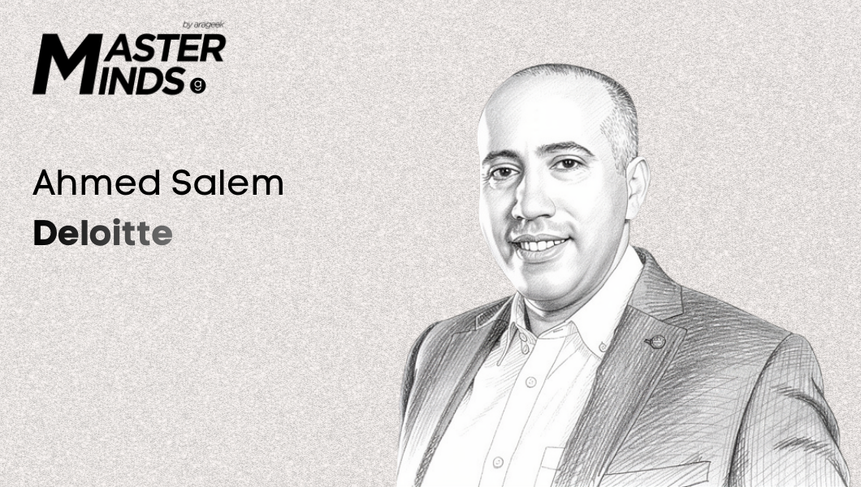
EgyptI am Ahmed Salem. I built Cairo engineering, it now runs EMEA change

9 min
Ahmed Salem on building engineering that holds up at scale
The easiest part of enterprise transformation is the slide deck. The hard part is building technology that keeps working when it meets legacy systems, regulatory scrutiny, and real users who do not care about your roadmap. Ahmed Salem’s view of the job is shaped by that reality. He talks less about “innovation” as theatre, more about engineering as a discipline: teams, standards, governance, and delivery muscle that can carry complex programmes over the line.
What emerges is a consistent logic. If you want meaningful change at scale, you need end-to-end capability, not disconnected specialist units. You need talent development that produces engineers, not just certified operators. And you need leadership that treats geography as a delivery variable, not a cultural excuse.
Why Cairo, and why now
When asked about the strategic purpose behind launching in Cairo, Salem frames it as a straightforward bet: put global work next to underused ambition. Deloitte Innovation Hub opened in September 2023 with a premise that “strategy becomes reality” only when you place engineering capability where talent is hungry and scale is possible. Cairo, in his telling, is not a compromise location, it is the point.
Two years on, he points to the practical outcome rather than the narrative. From Cairo, teams have delivered AI, data, cloud, DevOps, cybersecurity, and platform engineering solutions to hundreds of clients across EMEA. The proof, for him, is not the presence of an innovation label, it is the accumulation of delivered systems that reshaped how clients operate. The point of the Hub was never to participate in transformation as a spectator sport, it was to change how it gets built.
Engineering without silos
On the question of what the Hub actually delivers, Salem is explicit: the differentiator is integration. He rejects the idea that modern programmes can be delivered as neat functional handovers. Instead, the Hub is designed to engineer “end-to-end”, pulling AI and data, cloud, software engineering, cyber, systems integration, and customer solutions into one engine.
In practice, that means building everything from generative AI platforms and LLM engineering to data pipelines, MLOps, and enterprise cloud architectures. It also includes SRE, DevOps, automated testing, full-stack development, ServiceNow, and supply chain modernisation, with cyber defence and digital trust treated as part of the product rather than a late checkpoint. He also positions the Hub as the Google Cloud AI Experience Centre, giving clients access to tools such as Vertex AI, Gemini models, and multimodal agents.
The through-line is less about breadth for its own sake and more about coherence. Salem wants clients to receive “seamless, scalable, and secure” outcomes because the build is owned across the stack, not stitched together after the fact.
Making geography irrelevant
Pressed on leading teams across onshore, nearshore, and offshore models, Salem’s answer is not sentimental. It is operational. The aim is “consistency, alignment, and connection”, which in his terms means common standards and a shared culture, regardless of where people sit.
He comes back to fundamentals: clarity of direction, strong engineering discipline, and quality-first delivery. Collaboration matters because fragmentation is expensive, and it shows up as missed handovers, duplicated effort, and uneven standards. If teams feel connected to the mission and the bar is consistent, geography becomes an execution detail, not a limitation.
Two markets, one feedback loop
When the conversation turns to how he balances his UK and Cairo responsibilities, Salem describes it less as workload management and more as a learning system. The UK role exposes him to emerging expectations and global best practices, but the real advantage is the forced adaptability: switching contexts, listening differently, and staying agile as markets demand different things.
Cairo, meanwhile, gives him the delivery engine and talent density to execute at scale. The synergy, as he describes it, is the feedback loop: shared learning, unified ways of working, and collaboration that stays “human and connected” rather than purely process-driven. The point is not to copy and paste methods between markets, it is to keep standards sharp while remaining sensitive to context.
What 20 years teaches you
Asked to reflect on the lessons that shaped him, Salem offers three principles that sound simple but are hard to maintain under pressure. First, empower people through ownership. He believes teams perform when they are trusted to take initiative, not managed into compliance.
Second, balance speed with discipline. Transformation work demands agility, but he is clear that moving fast cannot come “at the expense of quality or governance”. This is where many programmes fail: velocity becomes the excuse for weak controls, and weak controls eventually destroy velocity.
Third, build culture, not just departments. He talks about inclusion, support, and a shared purpose as performance infrastructure. High standards stick when people feel they belong to something coherent.
Turning graduates into engineers
When asked how he thinks about talent, Salem starts with the size of the opportunity and then moves quickly to the work required to earn it. He points to Egypt’s youth advantage, with a large under-30 population, and the steady influx of IT graduates each year. But he does not treat volume as capability. The gap, implicitly, is the conversion of raw potential into globally competitive engineering habits.
His answer is a structured pipeline. New joiners go through an Analyst Induction Programme with hands-on training in AI, cloud, and engineering. Growth is then reinforced through certifications, learning pathways, and mentorship. He cites the Hub’s Mentorship Programme and Bridge internship, which together have trained over 1,600 young professionals and exposed them to international projects.
The emphasis is telling: training is not presented as a benefit, it is presented as the mechanism by which a delivery centre avoids becoming a staffing pool. Global outcomes require local depth.
A startup scene that needs more than energy
On the state of Egypt’s startup ecosystem, Salem acknowledges momentum, particularly in data-driven and cloud-native work. He sees talent and ambition in the market, and he points to the number of active tech startups as evidence of critical mass.
But he does not oversell it. The next leap, in his view, depends on access: mentorship, enterprise collaboration, and global networks that help founders pressure-test products, refine execution, and scale. The subtext is that ingenuity is present, but repeatable operating standards are what turn promise into exportable companies.
Data platforms: the unglamorous hard parts
When asked about enterprise-grade data platforms, Salem goes straight to the usual culprits: fragmented data, legacy systems, and weak governance. These are not abstract issues. They make data unreliable, slow down decisions, and block AI from moving beyond pilots.
His prescription is equally direct: unify architecture in the cloud, standardise data models, automate pipelines, and establish clear ownership. Then enforce quality through lineage, metadata, and data governance that is treated as a partner to engineering rather than a bureaucratic afterthought. The goal is not “more data”. It is resilience and scale, so analytics and AI can actually be deployed without breaking under real conditions.
The next five years of AI, if you take it seriously
Asked what trends will define the next five years, Salem frames AI and data engineering as operational change, not novelty. He talks about turning large datasets into better decisions, automation, and improved customer experiences, and he is firm that generative AI must move beyond experiments and into day-to-day workflows.
He also sets constraints that many enthusiasts prefer to ignore. Purposeful investment will matter, especially as organisations try to close adoption gaps and confront rising energy demands. Trust will become non-negotiable, with risks such as deepfakes, bias, and ethical misuse forcing stronger controls. His view is that the winners will combine “cutting-edge AI with human insight”, building systems that are useful, governable, and defensible.
Advice to founders: build for boring realities
When asked what founders should do, Salem’s advice is almost unfashionable: obsess over impact, data discipline, reliability, and security. He tells builders to treat accurate, accessible, well-structured data as the backbone of scalable AI, and to design for growth from day one.
The pitfall, in his view, is building for attention. He is blunt about “hype” as a strategy. Startups that last are the ones that solve real problems, adapt as they scale, and build lasting value, which often means doing the unglamorous work early.
Egypt as a regional engineering engine
On what the Hub means for Egypt and the region, Salem ties the work to national ambition and practical pathways. He argues that operating to global standards from Egypt accelerates adoption of advanced engineering and AI across the region, while strengthening local capability through talent development and ecosystem collaboration.
He points to programmes that connect training to employment, including work supporting the ITI’s ServiceNow programme. He also highlights the Hub’s broader delivery footprint, building next-generation platforms for regional and international clients, reinforcing Egypt’s credibility for high-value digital work. He notes Deloitte’s investment to date and the planned additional investment over the next three years as part of developing talent and showcasing Egypt’s role in advanced engineering and AI services.
A message to young engineers: chase, don’t drift


Asked what he would say to engineers early in their careers, Salem chooses an attitude over a checklist. “Don’t just learn, chase.” His argument is that tools will change, but fundamentals endure: how systems work, how data flows, how architectures scale.
He encourages curiosity and experimentation, with an emphasis on taking risks in controlled ways, shipping work, and learning fast. The engineers who matter, in his view, combine technical ability with relentless curiosity and the drive to make things happen. In a field that rewards surface-level fluency, he is arguing for depth, stamina, and craft.