AI

Coversation with Yazeed Al-Shamsi – MasterMinds

Mohammed Kamal
Mohammed Kamal

18 min

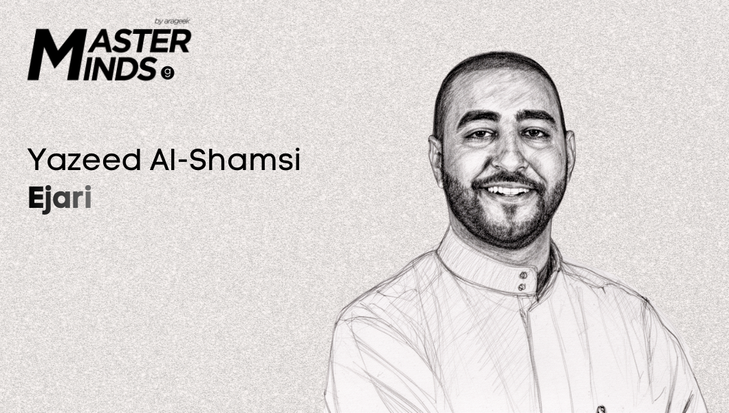
Today on MasterMinds, we meet a Saudi entrepreneur who is reshaping one of the most essential parts of modern life: renting a home. Yazeed Al-Shamsi, Co-Founder and CEO of Ejari, is building a financial services platform that makes housing more accessible, more manageable, and far more flexible for millions of people across the Kingdom.

At the heart of Ejari lies a simple but powerful mission — to ease the financial burden of moving into a new home. In a market where landlords typically require 6 months to a full year of rent upfront, Ejari introduces a transformative model: Rent Now, Pay Later. Tenants can pay monthly; landlords still receive their entire year’s rent upfront. It’s a system that balances security with flexibility, empowering both sides of the rental equation.

Through Ejari, Yazeed is not just building a fintech solution — he’s solving a real human problem, one that touches families, young professionals, and newcomers navigating the housing market. His journey reflects a belief that innovation matters most when it makes life simpler, fairer, and more attainable for everyday people.


Let’s start from the beginning… how was the idea of “Ejari” born?

The idea of Ejari began when I was a student in the UK, where I struggled to rent a housing unit because property owners required foreign students to pay the full annual rent upfront, fearing they might leave the country without paying. I found a solution through an insurance company that paid the annual rent on behalf of the student and allowed them to pay monthly.

When I returned to Riyadh, I discovered that the same issue existed in the Kingdom and was affecting a large number of individuals and businesses. So my partners and I decided to establish Ejari to offer a similar solution.


You mentioned that you faced a rental payment issue during your studies in the UK. Was that experience the first spark behind the idea?

Yes, that experience was the primary inspiration behind the idea of Ejari, particularly because I later faced the same issue in Saudi Arabia, both in personal housing and when trying to rent an office for a previous company.


What are the main factors you rely on when assessing risk before approving a customer?

Ejari’s risk assessment system is built on a holistic view that analyzes the customer from all angles that may affect their ability to pay and financial stability.

We do not look at a single factor in isolation; instead, we examine the complete profile—age, job type, income level, career stability, and financial history.

For example, government jobs are naturally more stable, making their holders lower risk due to regular salaries and job continuity guarantees. Age also plays a role, as people over 40 often display more consistent payment behavior due to a more established career and balanced financial obligations.

This assessment is combined with a detailed analysis of the customer’s income and expenses, previous commitments, credit records, and payment behavior in past years.

We then use internal models that turn these indicators into a realistic prediction of default probability. This integrated approach allows us to balance expansion with controlled risk for long-term sustainability.


Are you planning to expand into sectors beyond residential—such as commercial or institutional real estate?

Yes. While our primary focus is residential, we have a clear plan to expand into commercial sectors, including office spaces, retail stores, warehouses, and even industrial and institutional real estate with long-term leases and more complex financial structures.

We also plan to build a comprehensive ecosystem around the rental experience—insurance services, maintenance, property management, and other support services tenants naturally need. Future expansion will be driven by the same principles that built Ejari: seamless user experience, precise risk assessment, and a fully automated journey.


As one of Saudi Arabia’s young entrepreneurs, what is the most important lesson you’ve learned so far?

The most Important lesson I’ve learned is that success in entrepreneurship is not about the idea alone but about execution, endurance, and the ability to embrace challenges as a natural part of the journey.

Every project I’ve been part of—whether it succeeded or didn’t continue—gave me a deeper understanding of the market, customer behavior, and what it takes to build a scalable company. I realized that entrepreneurship is not a straight path; it’s a series of difficult decisions, accumulated experiences, and continuous learning that shapes your character, strengthens your team, and brings you closer to your goal step by step.

I also learned that timing is more important than the idea itself, and that truly understanding the customer’s real problem is the foundation on which any company should be built.

When you solve a problem that people genuinely face, the path becomes clearer, and support from investors and partners comes naturally. Above all, deep belief in what you are building is what keeps you going during the toughest moments and helps you see opportunities even under pressure.

Ultimately, success in entrepreneurship is a long journey built on patience, adaptability, and having a team that believes in the same vision. The biggest lesson for me is that every small step can create a big impact over time—and that consistency matters far more than speed.


Before founding Ejari, you worked in banking and financial markets. How did this experience help you build a fintech company?

After graduation, I worked at Mizuho Bank in Tokyo, then in Riyadh and Dubai in investment banking.

This gave me deep insight into how to build sound financial structures for companies, manage risks, and make data-driven investment decisions. Later, when I moved to work at the Saudi Stock Exchange (Tadawul) within the market development division for debt instruments and funds, I developed a broader perspective of the financial sector—from how markets operate to regulatory frameworks and designing financial products that meet real market needs.

This mix of operational, investment, and regulatory experience formed a solid foundation when establishing Ejari and helped us build an integrated and scalable financial model from day one.

It also enabled us to understand the regulatory environment and financial compliance. Additionally, this background helped me develop a mindset centered on analysis and data rather than assumptions, making strategic decisions—related to expansion and development—more accurate and realistic. Ultimately, these combined experiences allowed Ejari to create fintech solutions that address real needs experienced by entrepreneurs and offer value beyond traditional market models.


Explain in simple terms how the “Rent Now, Pay Later” service on Ejari works.

The customer chooses the residential unit they want to rent, and Ejari takes over by renting the unit from the landlord and paying the full annual rent on the customer’s behalf. The customer then repays Ejari through monthly installments.


Have you encountered any payment defaults? How do you handle such cases?

Naturally, any entity offering financing or payment facilities is exposed to some cases of default—it is a normal part of any financial activity. But what differentiates us is that these cases have been extremely limited from the beginning, thanks to a clear learning curve and continuous enhancement of our evaluation processes.

We view defaults not as obstacles but as opportunities to understand customer behavior and refine our models. To date, we haven’t faced significant collection challenges due to strict pre-screening policies and comprehensive risk assessments.

Minor payment delays are usually resolved through direct and flexible communication with the customer to address the issue early.

Exceptional cases are deeply analyzed to enhance risk models. Through this approach, we have maintained very low default rates while building a system capable of adapting and improving consistently.


How can competition help increase awareness of the service?

The market is still in its early stages, and awareness of flexible rental solutions remains limited. New competitors entering the market help educate consumers, increase understanding, and normalize these services.

Healthy competition drives innovation, raises quality, and expands the market. We see competition as a catalyst for growth, not a threat. It pushes us to innovate further and deliver richer customer experiences, ultimately benefiting the entire ecosystem.


How do you measure Ejari’s market share in such an early-stage market?

Measuring market share at this stage is challenging because the flexible rental market is still forming. The market is new, its size is evolving, and players are still shaping its structure.

However, indicators like request volumes, geographic spread, and adoption speed show that Ejari is moving strongly and becoming a primary choice for monthly rental payment solutions. Our focus now is on product development, user experience, and building trust. Market leadership will come naturally as the market matures.


How do you see the future of the rental market in Saudi Arabia in the coming years?

My expectations for the Saudi rental market are very optimistic. We are witnessing an unprecedented demographic and economic shift that is driving a major increase in housing demand.

With the Kingdom’s vision targeting the growth of Riyadh’s population to over 10 million residents, we will see a surge in the demand for flexible housing solutions that account for differences in income and lifestyle, offering payment options that make it easier for residents to manage their financial commitments.

This population growth will naturally translate into an expansion of the rental market, especially in major cities and surrounding areas. Shifts in living and working patterns—such as increased job mobility, changing priorities among younger generations, and the economy’s shift toward new sectors—will also drive higher demand for fast and simple solutions like automated monthly payments, which Ejari provides.

The rental market itself will evolve, gradually moving away from the traditional model of paper contracts and annual payments toward more flexible, tech-enabled, and transparent contracting models. Current trends also point to major growth in real estate development, higher investment in housing projects, and a rising private sector focus on building units tailored for young individuals and small families.

All these factors make the coming years a significant opportunity for tenants and for companies providing modern financial-housing solutions, as the market hasn’t yet reached maturity and still has substantial capacity for growth.

For Ejari, we believe the future holds exceptional opportunities not only in the residential sector but also in commercial and industrial leasing—driven by the ongoing economic transformation across the Kingdom. In short, the Saudi rental market is on track to become one of the largest and most advanced in the region, and the coming years will be full of opportunities for those investing in innovative real estate-financial solutions.


How does the company balance paying the annual rent upfront to the landlord while collecting monthly payments from the tenant without financial risk?

Ejari relies on a precise risk management system that ensures its ability to pay the annual rent upfront while maintaining a stable financial model for collecting monthly payments.

This begins with the initial customer assessment, where the company applies a comprehensive verification process that evaluates income stability, financial commitments, credit behavior, and a detailed analysis of the customer’s expenses relative to income to ensure realistic and sustainable payment ability.

This assessment goes beyond surface-level data and relies on internal models developed by the company using intelligence and risk evaluation tools built on accumulated operational and financial experience.

Additionally, Ejari has developed a financial framework that allows it to balance cash flows between what it pays and what it collects according to precise metrics. These metrics are continuously reviewed and updated to match market changes, demand levels, and customer behavior.

Through this approach, Ejari provides a reliable service for both tenants and landlords without compromising the sustainability of its financial model.


How have your experiences with institutions like the Saudi Stock Exchange (Tadawul) and the World Economic Forum influenced the way you manage your company?

These experiences have had a direct and profound impact on my thinking. At the Saudi Stock Exchange, I learned discipline, governance, and the importance of building clear audit and risk systems—critical elements for any company operating in a sensitive sector like fintech.

That environment taught me that decisions shouldn’t be based on intuition alone, but on accurate data, solid financial models, and a clear vision of growth and risk management both in the short and long term. My experience with the World Economic Forum opened up a completely different perspective.

It helped me see the world beyond the local market, learn from global entrepreneurs and leaders, and understand broader economic and technological trends shaping markets worldwide.

Being in a setting that brings global decision-makers together taught me to think more strategically and long-term, and to build a company that is not only successful today but also ready for future changes. These combined experiences shaped how we run Ejari, with a focus on building a strong institutional structure, making data-driven decisions, and developing a product that aligns with global standards in automation and risk management.

They also helped me build a company culture that values fast execution without compromising quality, and continuous innovation without losing financial discipline. For me, this blend of deep local insights and global perspective is what creates a strong company foundation.


The Saudi rental market is large and diverse. How do you see Ejari’s position today?

The rental market in the Kingdom is one of the largest and most diverse in the region. In a relatively short period, Ejari has secured a strong position, with rental financing requests approaching one billion SAR in the first two years alone.

This figure reflects not just adoption, but a real market need that had not previously been addressed. Ejari has also expanded across more than 20 cities in 8 regions, showing that demand for the service is not limited to major cities but is widespread across the Kingdom. This confirms that Ejari offers more than a financial product—it presents a new model for how society interacts with the rental experience.


What advice would you give to young Saudis who want to enter the fintech space?

My first advice is to understand that fintech is not just an “app” or a “platform.” It is a deeply financial sector that requires strong knowledge of the market, regulations, user behavior, and how to design financial products responsibly and safely.

Successful fintech startups are built not on attractive ideas but on real, daily problems that people struggle with. Second, you need courage and ambition—but combined with discipline.

Fintech is full of opportunities, but it also requires a high level of compliance, regulation, and risk management. A successful founder must balance innovation with responsibility—boldness in building something new, and full awareness of its financial and regulatory implications.

Having advisors or partners with strong sector experience can save you years of trial and error. Finally, learn quickly and stay close to the user. Markets evolve, financial behavior changes, and what works today may not work tomorrow.

Listening to the user, updating the product continuously, and adapting fast are the key skills that separate companies that grow from those that stall.

Saudi Arabia is undergoing a historic digital transformation, and anyone entering the sector with maturity and commitment has the potential to build something truly significant.


What are investors today looking for in proptech or fintech startups like Ejari?

Investors today are more mature in evaluating startups, especially in real estate and fintech, which offer large opportunities but require disciplined execution.

They look first for a clear business model that solves a real market pain point—not just an appealing idea.

They also prioritize the team’s execution ability more than the idea itself. We believe that the need for flexible rental solutions is not exclusive to Saudi Arabia; it exists in many countries that still rely on the traditional annual lease model and face similar challenges related to cash flow and housing costs.

In the short term, our focus is on strengthening our model in Saudi Arabia, enhancing the customer experience, expanding supporting services, and ensuring that our operational and financial infrastructure is fully prepared for scale.

In the long term, we see Gulf markets—particularly the UAE—as natural expansion destinations, given their similar demographic and economic characteristics and their high residential mobility, which makes flexible rental solutions attractive for both tenants and property owners. Expanding outside Saudi Arabia is not an urgent target but rather a strategic step that will come at the right time, once we ensure that our model is fully repeatable and that our financial and technological foundations can support confident and efficient growth.

When we reach that stage, we aim to become one of the first Saudi companies to export innovative financial and real estate solutions to the region and reshape the rental experience in wider markets.


What differentiates Ejari from competitors?

Ejari offers far more than installment-based rent payments. It provides a fully flexible, automated, and accurate experience. Unlike competitors who impose limits on rent amounts or minimum income requirements, Ejari sets no minimum or maximum income, and no rental value restrictions, giving wider segments of the community access to the service.

The entire customer journey is automated—from application to approval—making the process faster and simpler without paperwork or lengthy procedures. This enhances data accuracy and strengthens the internal risk assessment models.

Strategically, Ejari focuses exclusively on the residential sector, believing it directly impacts people’s daily lives. This specialization makes Ejari more aligned with tenants’ real needs. This mix of full flexibility, no income restrictions, complete automation, and high precision has positioned Ejari as a leading provider of residential rental solutions in a short time.


What made you leave your previous startup “Trai” and focus entirely on “Ejari”?

In 2022, I co-founded Trai in the fintech sector, and it was a rich experience in building a product, launching an MVP, and entering a new market.

But over time it became clear that Trai’s sector was significantly ahead of its time and subject to complex regulations that limited the pace of development and innovation, imposing requirements that slowed the company’s ability to deliver tangible value to users. I was searching for a project capable of creating fast and real impact on people’s lives—something that solved a daily problem experienced by everyone, not just a small niche of specialists.

It became clear that while Trai was important, it could not create the same impact as Ejari, especially when I considered the scale of suffering people face with rental payments—an issue I personally experienced and saw repeatedly among youth, families, and entrepreneurs across the Kingdom.

Ejari was more than a business; it was a practical solution to a problem that directly affects people’s lives and stability, and a chance to build a product that delivers both social and economic value.

For that reason, I chose to dedicate myself fully to Ejari, because my belief in its ability to create real change was far greater than anything else.


What role do automation and AI play in developing Ejari’s services?

Automation and artificial intelligence form the backbone of Ejari’s experience. They are the two core elements that have enabled the company to deliver a smooth, fast, and reliable user journey.

From day one, we built a fully automated system—from applying for the service, to assessment and analysis processes, all the way to approval. This automation not only reduces time and effort for the user, but also ensures higher accuracy in data collection and processing, which directly improves the quality of financial decisions made by the platform.

AI plays a central role in developing our risk assessment models. Instead of relying on traditional criteria or manual analysis, we use algorithms capable of reading customers’ financial and behavioral patterns more deeply and quickly, allowing us to predict default probabilities with greater precision.

This technology has enabled the company to build an advanced risk model that reduces delays, improves portfolio quality, and ensures sustainable growth without compromising the flexibility that tenants are looking for.


You mentioned selecting investors who add strategic value. How did that impact the company?

From the start, we sought investors who offered more than capital—those who brought deep experience in fintech, risk management, real estate, and scaling fast-growing companies.

This strategic expertise helped us avoid early-stage pitfalls, refine our product, build better customer journeys, form accurate risk policies, and open doors to key partnerships.

Choosing the right investors shaped not just our funding but our long-term direction, enabling Ejari to grow confidently and build a stronger product.


You raised over $15 million in funding. How did you attract investors?

Attracting this level of investment came from several aligned factors. Investors recognized the massive opportunity in the Saudi rental market, an industry worth tens of billions annually yet lacking effective digital solutions.

They also believed in our team’s execution ability. Ejari proved early on that it could build, launch, and scale rapidly across multiple cities. Investors saw a solution tackling a daily problem for millions of people—making its long-term value clear.

Our clear roadmap for expanding into supporting services and commercial sectors enhanced investor confidence and made Ejari an attractive long-term bet.


You reached more than 100 million SAR in financing requests in less than a year. What drove this rapid growth?

This growth reflects the huge market need for flexible solutions that align with the lifestyle of the younger generation—over half of Saudi Arabia’s population is under 35 and prefers digital solutions, monthly payments, and reduced financial pressure.

Read next

Ejari’s fully automated experience accelerated adoption, allowing customers to complete the process in seconds rather than through lengthy paperwork. Landlords also found the model attractive due to guaranteed payments and stable cash flows.

This combination created natural momentum and widespread demand across the Kingdom.

Read next