 Ai Everything
 LEAP26
 AI
AI Saudi Arabia
 UAE
UAE Egypt
EgyptDubai Founders HQ’s Accelerator Ends with Bold Corporate Partnerships and Global Ambitions

4 min
Dubai Founders HQ’s first 100 days delivered 36 proofs of concept.
Fifteen reached due diligence, with three agreements signed within the cycle.
Startups tackled “real business challenges” alongside DHL, Visa and others.
Over 80 mentorship hours and regulator links sped innovation to market.
The push backs Dubai’s D33 agenda and ambitions as a digital hub.
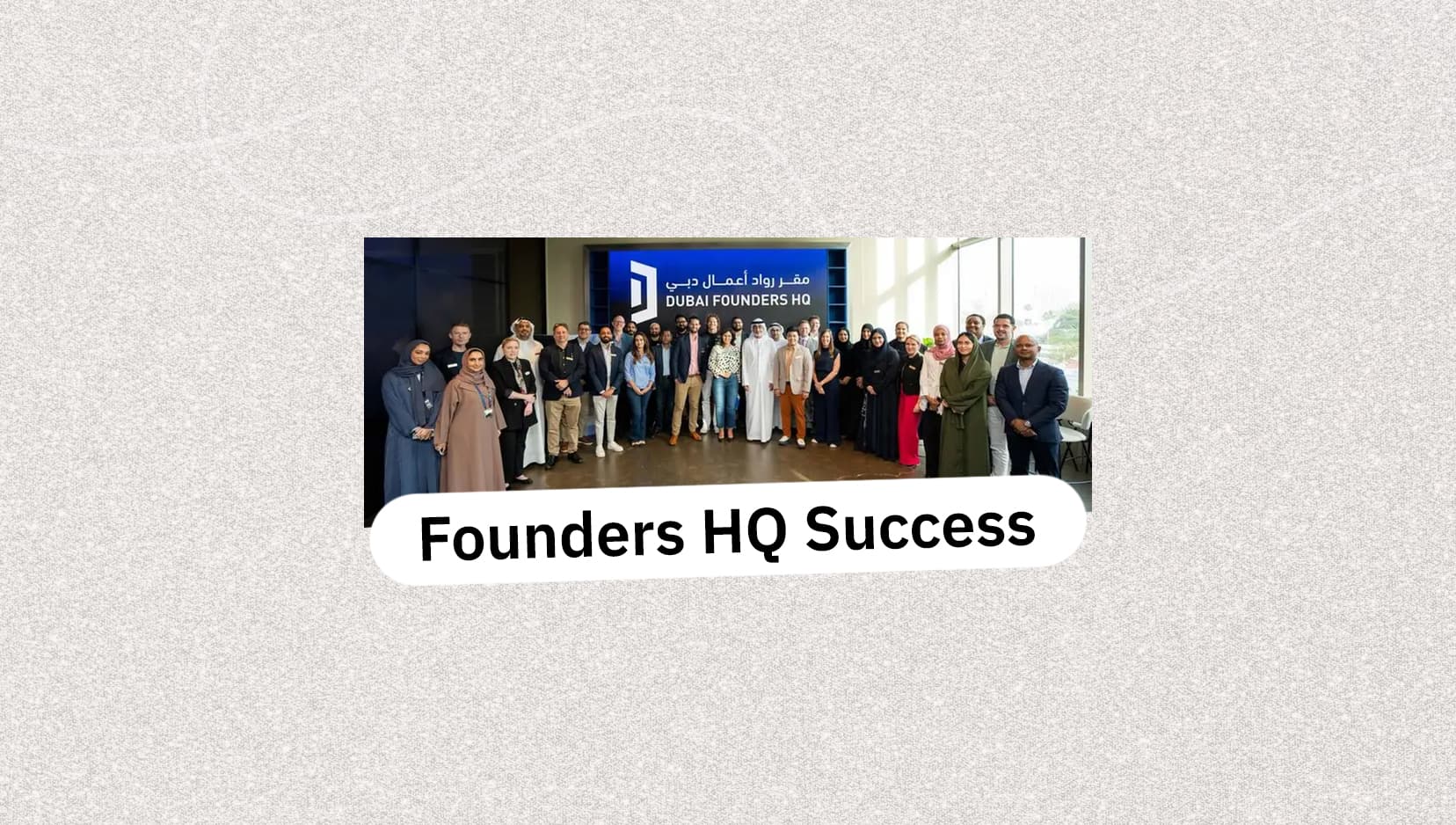
Dubai Founders HQ has wrapped up the first wave of its accelerator programmes, and the numbers suggest this was more than just another demo-day showcase. In 100 days, 23 startups worked alongside five major corporate partners, generating 36 proof-of-concept opportunities. Of those, 15 are already in advanced due diligence or contracting stages, and three agreements were signed within the programme cycle itself.
That’s not a small feat. Anyone who has tried to broker a deal between a startup and a large corporate knows it can be a bit of a faff, months of back and forth, pilot discussions that drift, and procurement processes that seem to never end. Compressing what might typically take a year into three months signals something more structured happening behind the scenes.
The initiative, led by the Dubai Department of Economy and Tourism together with the Dubai Chamber of Digital Economy, partnered with global innovation platform Plug and Play to deliver the programme. Rather than focusing on pitch decks and networking sessions alone, the model was built around direct customer demand. In simple words: startups were matched with real business challenges from corporates, with the goal of moving quickly towards commercial deployment.
Five corporate names stood out, DHL, du Business, Emirates Flight Catering, talabat and Visa. They didn’t just sponsor the programme; they piloted solutions. For example, Emirates Flight Catering worked with Metis ESG to roll out a document-driven ESG due diligence platform, giving its procurement and sustainability teams clearer visibility into supplier risk across a global network. Meanwhile, talabat teamed up with Retailhub to scale a regional solution tackling stockouts through real-time inventory tracking. That shift from experimentation to enterprise-level deployment is, I reckon, where the real value lies.
The accelerator concluded with a demo day bringing together founders, investors and corporate leaders across sectors such as finance, logistics, telecoms, retail, and food and beverage. But beyond the stage presentations, participants reportedly received more than 80 hours of structured mentorship and over 20 introductions to regulators, investors and ecosystem partners. Those quieter backroom connections can be just as important as the flashy announcements, you know?
His Excellency Hadi Badri, CEO of the Dubai Economic Development Corporation, said the accelerator is designed to increase the speed between innovation and market adoption. By connecting startups directly with decision-makers and regulators, he noted, Dubai aims to create clearer pathways for scaling businesses under the broader Dubai Economic Agenda D33, which seeks to double the emirate’s economy by 2033.
Ahmad Al Room Almheiri, Acting CEO of Dubai SME, pointed to another important element: the progression of Emirati founders into actual market deployment. Moving beyond early-stage ideas into signed contracts and commercial pilots, he suggested, strengthens the pipeline of high-growth companies emerging from the city.
Saeed Al Gergawi from Dubai Chamber of Digital Economy highlighted the role of Dubai Founders HQ in building practical bridges between startups, customers and investors, reinforcing Dubai’s ambition to position itself as a global destination for digital ventures. And Saeed Amidi, Founder and CEO of Plug and Play, described the outcomes from the first wave as among the top-performing globally, high praise for a newly launched programme.
On the flip side, early success can sometimes create big expectations. The real test will be whether these pilots translate into long-term contracts and, eventually, scale-ups that expand beyond the UAE. Still, compared with more traditional accelerators that stop at mentorship and pitch practice, this approach feels more grounded in commercial reality.
At Arageek, we often speak with founders who say access to corporate customers in the region is the hardest door to crack. Hearing that some startups moved from introduction to signed agreement within a single cycle is, frankly, chuffed to bits news for the wider ecosystem. It shows alignment between government entities, corporates and startups can actually be spot on when designed carefully.
As Dubai Founders HQ prepares to expand into more sector-focused programmes, it is clear the ambition is not just to host events but to embed innovation into the emirate’s economic machine. Whether this model becomes a blueprint for the wider MENA region remains to be seen. But if the first 100 days are anything to go by, it’s definately a step taken with intent rather than noise.
🚀 Got exciting news to share?
If you're a startup founder, VC, or PR agency with big updates—funding rounds, product launches 📢, or company milestones 🎉 — AraGeek English wants to hear from you!


✉️ Send Us Your Story 👇