 Ai Everything
 LEAP26
 AI
AI Saudi Arabia
 UAE
UAE Egypt
EgyptEgypt Launches Ambitious Startup Charter to Propel Entrepreneurial Growth

4 min
Egypt launched the “Startup Charter” after wide consultations across government, founders and investors.
The framework targets 5,000 startups and “around 500,000 jobs” over five years.
A unified startup definition unlocks incentives, funding access and clearer regulation.
The plan aims to mobilise $1 billion, pairing public finance with venture capital.
Oversight comes via an observatory and “Council of Elders” to track real-world impact.
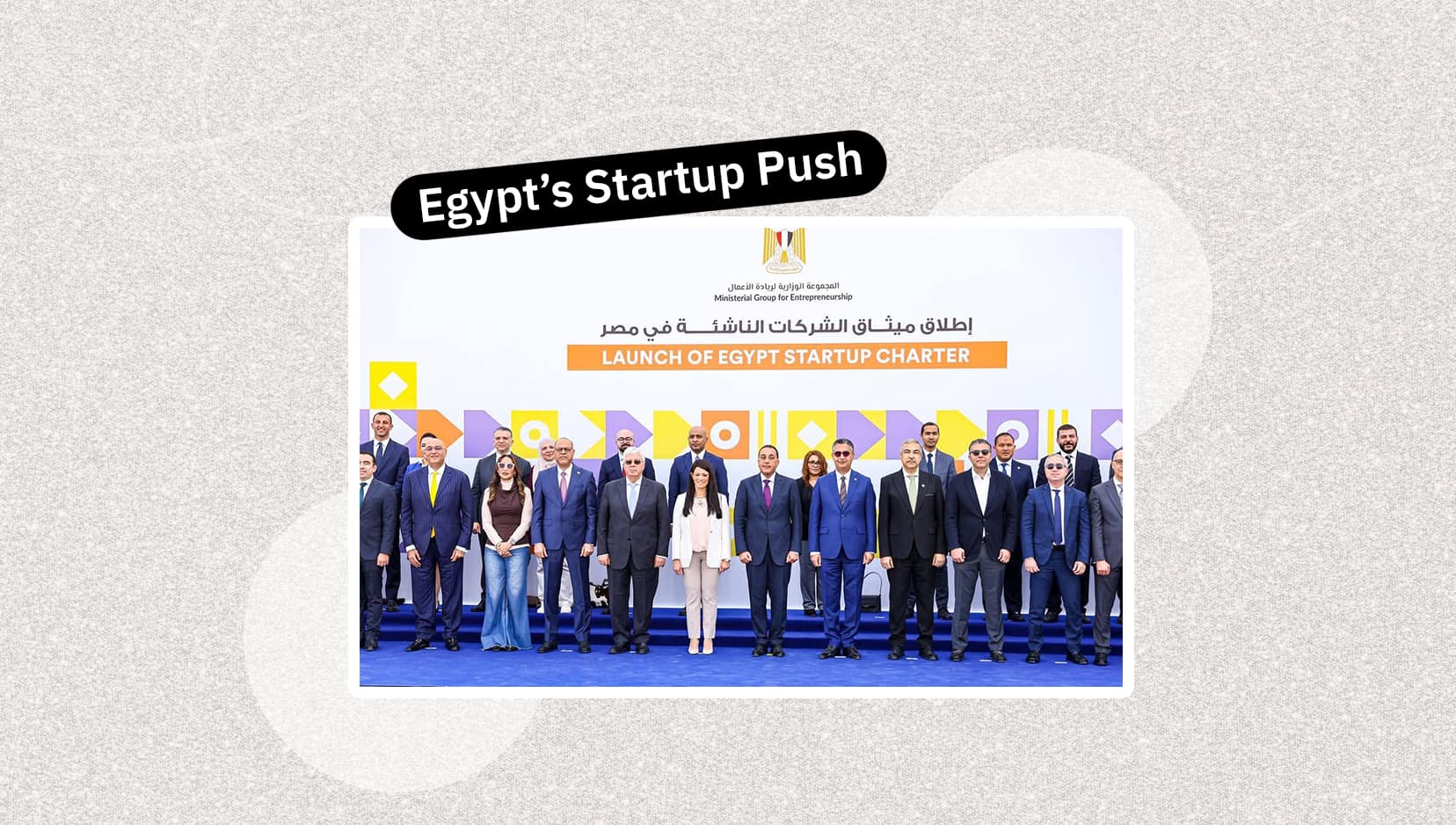
Egypt has quietly taken a significant step for its startup scene with the launch of the “Startup Charter in Egypt”, following more than a year of consultations that pulled in 15 national bodies and over 250 founders, investors and parliamentary figures. It rolled out under the umbrella of the Ministerial Group for Entrepreneurship, in line with government directives to step up support for startups, and was unveiled during the 13th edition of the RiseUp Summit — a fitting backdrop, if you ask me.
The launch brought together Prime Minister Mostafa Madbouly and Planning, Economic Development and International Cooperation Minister Rania Al-Mashat, alongside other ministers involved in the group. You also had venture capital players, founders and ecosystem builders in the room, which gave the whole thing less of a box-ticking feel and more of a serious attempt to listen. I’ve been to more than one startup event in Cairo where policy talk felt like a bit of a faff, but this time the mood was different…well, at least on paper.
At its core, the Charter lays out a framework to strengthen startup capabilities and push for faster, more sustainable growth driven by knowledge and competitiveness. Over the next five years, it aims to coordinate policies that could support up to 5,000 startups and potentially help generate around 500,000 direct and indirect jobs. There’s also an eye on international expansion, local talent development to curb brain drain, and stronger links between real economic problems and solutions built by startups. That all sounds spot on, though execution will be everything.
Speaking at the event, Al-Mashat stressed that the Charter isn’t meant to gather dust. She described it as a flexible, evolving executive tool designed to keep pace with market needs and technology shifts. According to her, its priorities were shaped through extensive consultations, with the goal of creating a business environment that’s practical, predictable and genuinely encouraging for innovation and investment. I reckon that ongoing flexibility is what makes or breaks these kinds of initiatives.
One detail that stands out is the unified definition of a startup. Under the Charter, startups are newly founded companies built on innovation, rapid growth and adaptable business models. With official classification through SME authorities, eligible companies can tap into a set of incentives and facilities — a small administrative step, perhaps, but one that has caused confusion for years.
Then there’s the money. The Charter introduces a unified financing initiative designed to coordinate public funding, guarantees and co-investment with venture capital firms. The target is to mobilise $1 billion over five years, using government resources and private-sector partnerships, and to multiply the impact of those funds up to fourfold. On the flip side, I’m not a fan of big headline numbers unless they come with clear delivery plans, but this one does feel more structured than past attempts.
To reduce the usual regulatory headaches, a comprehensive startup guide has also been prepared, covering permits, licences, fees and paperwork, all in one place. It’s meant to make market entry smoother, help founders stay compliant and clarify how to access government incentives. The Charter itself was developed in collaboration with Entlaq and UN Women, which adds another layer of credibility.
Beyond that, the document outlines steps to improve the wider business environment, from simpler tax procedures to smoother liquidation and exit processes. It also looks at identifying regulatory bottlenecks in key sub-sectors and proposing fixes that actually match how startups operate. And for companies that have outgrown the early stage, there’s a scale-up programme focused on expansion, public listings, strategic exits and attracting major international investors — with the long-term ambition of creating new unicorns in the Egyptian market. Ambitious? Definately.
Finally, the Charter introduces an observatory to track entrepreneurship policies and their real-world impact, backed by regular reports and oversight from startup community representatives. There’s even a Council of Elders drawn from the ecosystem to keep things in check. And believe it or not, that kind of structured accountability might be the most important piece of the puzzle.
For readers at Arageek who’ve watched Egypt’s startup scene grow in fits and starts, this Charter feels like a moment worth paying attention to. It won’t fix everything overnight, but if followed through, it could move the ecosystem from promise to momentum — and that’s something many founders have been chuffed to bits just to hear discussed seriously.
🚀 Got exciting news to share?
If you're a startup founder, VC, or PR agency with big updates—funding rounds, product launches 📢, or company milestones 🎉 — AraGeek English wants to hear from you!

✉️ Send Us Your Story 👇