 Ai Everything
 LEAP26
 AI
AI Saudi Arabia
 UAE
UAE Egypt
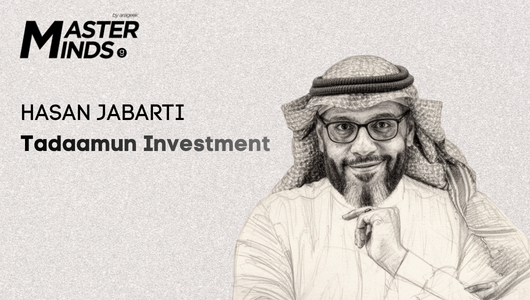
EgyptI am Hasan Jabarti. I pivoted messy logistics into Saudi’s SaaS backbone, unlocking scale

4 min
Aligning Impact and Returns in Saudi Logistics
When asked about balancing high-impact investments with commercial returns, Hasan Jabarti points to a “Dark Warehouse” project in Riyadh. A traditional operator wanted to transition into a fully automated, lights-out warehouse with IoT-enabled SaaS. The Vision 2030 impact was clear: a 40% increase in storage density and a 25% cut in energy waste. The financial case was murkier. Hardware costs for sensors and robotics extended payback from three to six years.
“We didn’t just fund the hardware,” Jabarti says. Instead, we redefined the business model. The firm measured returns by throughput per square metre rather than total footprint, automated decision-making to offset labour shortages, and leveraged low-interest industrial loans to make the ROI attractive. The decision to prioritize the IoT/SaaS layer, he explains, reflected a simple insight: physical space is a commodity, operational intelligence is a premium. The result? A project that delivered both measurable impact and a valuation uplift of 18-20% at exit.
Due Diligence When Fundamentals Are Messy
Pressed on how TADAAMUN navigates “exciting stories” with messy fundamentals, Jabarti outlines a three-pillar framework. First, compliance: any non-Sharia-compliant debt or opaque ownership structures are a hard stop unless resolved via a pre-investment restructuring plan. Second, unit economics: they strip away marketing slides to stress-test contribution margins, ensuring SaaS subscriptions can cover hardware maintenance. Third, ecosystem alignment: they verify whether operational messiness masks strategic advantages, like exclusive licenses or local footprints.
“If the mess is governance, we take control. If it’s operations, we build the venture. If it’s ethics, we exit,” he summarizes.
Converting Interest into Capital
Jabarti has also learned that angel investors in Saudi Arabia rarely commit because of the deal alone—it’s friction and isolation that block capital deployment. Multiples, the platform he co-leads, moved from pitch events to “systematized conviction.” Lead investors now commit first, sharing detailed conviction memos. Standardized Sharia-compliant SAFEs remove legal friction. Curation replaces collection, presenting only three high-signal deals per month. Fractional entry allows investors to start small, then scale their commitment fivefold once they see governance in action.
“You don’t sell the upside,” he says. “You remove the excuses for saying no.”
Avoiding the Copy-Paste Trap in Saudi Expansion
At Bridging to Saudi, the most common founder mistake is the “Copy-Paste Expansion.” Success elsewhere, he warns, does not translate automatically to the Kingdom. Jabarti implements a “Localize-First” protocol: relocating senior decision-makers to Riyadh, re-aligning regulatory structures, tailoring go-to-market strategies to Vision 2030 KPIs, and replacing cold outreach with institutional introductions. The outcome: international startups transform into “Saudi-born solutions with international expertise,” dramatically shortening sales cycles.
Defining Chairman and CEO Boundaries at Manassat
As Chairman at Manassat, Jabarti distinguishes between strategic oversight and operational execution. He insists that R&D infrastructure access, government lab utilization, and innovation voucher strategies remain under board purview, while CEOs drive product development and deployment. By treating R&D as a service, he explains, startups shorten development cycles from years to months, turning research into operational capacity.
Culture as Compass
At Manassat, he is the “culture guardian,” protecting authentic localization and high-value knowledge transfer. When senior leaders deliver results but violate these values, Jabarti employs a clear three-step “Brilliant Jerk Protocol”: audit the violation, provide a correction window, and terminate if alignment fails. “You can’t bridge startups and investors if the bridge itself is built on shaky ethics,” he says.




Career Highlight: Becoming an Ecosystem Architect
Across 20+ ventures, Jabarti cites one defining pivot: transforming a messy e-commerce platform into a B2B SaaS orchestration layer for Saudi logistics. By integrating warehouse-to-last-mile operations, the platform became the operational backbone for over 3,000 businesses in 36 months. The lesson? Real value lies not in flashy software but in plumbing the ecosystem, aligning with national mandates, and thriving amid complexity. “It shifted my identity from founder to architect of ecosystems,” he reflects.