 Ai Everything
 LEAP26
 AI
AI Saudi Arabia
 UAE
UAE Egypt
EgyptI am Saleh Al-Ghamdi. I saw Vision 2030 early, and invested accordingly

6 min
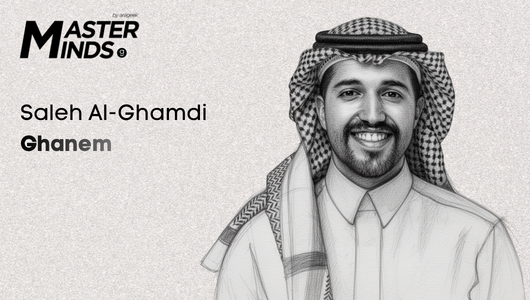
Structure Before Speed: How Saleh Al-Ghamdi Thinks About Building
Saleh Al-Ghamdi does not romanticise startups. He talks about structure before scale, governance before growth, and timing before ambition. The through line in his career is not hype or velocity. It is discipline.
When asked about his beginnings, he traces everything back to a university startup he co-founded with friends. It ran the full entrepreneurial cycle, from building to exit. That experience reshaped how he thinks about value. Execution matters, but so do structure, governance, and timing. Watching an exit unfold up close made him realise that companies are not only built through product and sales, but through legal clarity, aligned shareholders, and readiness for scrutiny.
Since then, he has operated at the intersection of technology, business development, and early-stage investing. Not as a theorist, but as someone who has seen what holds up under pressure.
Learning That There Is No Secret Formula
On the question of early turning points, he is blunt. There is no hidden formula. The real differentiator is consistent hard work and disciplined execution.
A second shift came when he understood angel investing more deeply. Early access to high-quality startups, he argues, creates asymmetric upside. That insight reframed his view of risk and return. Value creation is not linear, and timing of entry can matter as much as operational excellence.
When the conversation turns to Saudi Arabia’s Vision 2030, he describes it as a conviction moment. Recognising the scale of transformation underway gave him confidence that technology-enabled sectors aligned with national priorities would see long-term tailwinds. His investment focus sharpened accordingly.
Why Marketing Still Shapes His Decisions
Asked how a marketing background influences him today, he does not reduce it to branding. For him, marketing is structural. It teaches you to think from the user’s perspective, to understand value proposition design, pricing psychology, positioning, and distribution as an integrated system.
If product, pricing, and experience are not aligned around customer value, scale becomes fragile. That user-first, data-informed mindset now underpins how he builds and evaluates companies. It is less about storytelling and more about coherence.
Hiring for Density, Not Headcount
Pressed on what building multiple business units and hiring more than 90 people taught him, he returns to a single idea: talent density defines trajectory.
If average performance is tolerated early, it compounds in the wrong direction. High performers want to work with other high performers. Lower the bar once and the signal spreads.
Culture, in his view, is not a slogan. It is the by-product of hiring discipline, clarity of expectations, and alignment around mission. Standards compound, just like capital.
The Personal Friction Behind Ghanem
When asked what sparked his interest in real estate and fractional investing, the answer is both structural and personal. As an individual investor, he wanted exposure to income-generating property in Saudi Arabia. What he found were high entry tickets, limited flexibility, and insufficient transparency.
At the same time, he saw a broader inefficiency. Real estate is one of the Kingdom’s largest asset classes, yet participation has historically been limited to those with significant capital. That gap between asset size and investor accessibility became the starting point for Ghanem.
Building Ghanem Around Regulation, Not Around Hype
On the question of founding Ghanem, he is clear that technology alone would never have been enough. Operating in a regulated sector meant early capital, institutional governance, and alignment with regulators were prerequisites, not afterthoughts.
From the outset, the team worked closely with the Real Estate General Authority to navigate and contribute to the evolving framework for fractional ownership and tokenisation. They also ensured properties could be formally registered through the Real Estate Registry, giving investors legal clarity.
Building in a regulated environment is slower. But it creates defensibility and long-term trust. Compliance, in his words, is not a constraint. It is a growth enabler.
Explaining Fractional Ownership Without the Jargon
When the conversation shifts to how he explains fractional real estate to newcomers, he keeps it simple. Investors own a percentage of a property rather than the entire asset. They gain exposure to rental income and potential capital appreciation, with lower capital requirements and improved diversification.
In Saudi Arabia, the ability to formally register fractional ownership adds an additional layer of investor protection. Accessibility combined with legal recognition makes the model powerful locally.
Why Regulatory Fluency Is a Strategic Advantage
Asked how important regulatory knowledge is for founders in fintech and proptech, his answer is unequivocal. It is foundational.
Founders operating in financial or asset-backed sectors must understand the frameworks governing their businesses. Regulatory fluency allows proactive engagement, structured product design, and reduced execution risk. In tightly regulated industries, advantage often comes from understanding the rulebook better than competitors.
His own CME-1 certification and shareholdings in CMA and SAMA-regulated companies reflect that belief. Governance is not peripheral. It is strategic.
Backing Founders, Not Just Markets
On the subject of investing in 29 tech startups and building a syndicate, he narrows his criteria quickly. The founder comes first.
He looks for clarity of thought, resilience, execution capability, and the ability to attract strong talent. Market size and structural timing follow. Strong founders in expanding markets create the highest probability of outsized returns.
When asked about lessons from portfolio companies such as POS Rocket that went through acquisition, he points to governance readiness. Clean cap tables, aligned shareholders, and disciplined documentation accelerate exits. Misalignment can stall or derail them.
What Founders Underestimate
Pressed on which part of the investment process founders most misjudge, he highlights communication and legal structuring. Early growth phases make these areas feel secondary. During fundraising or exit, they become critical.
Clear investor communication and disciplined documentation reduce friction later. Neglect them and complexity multiplies when stakes are highest.
Looking Ahead in MENA
When asked about the future of fintech, proptech, and digital investing in MENA, he is direct. He is highly bullish.
Digital infrastructure improvements, regulatory modernisation, and demographic dynamics are creating long-term tailwinds. These sectors remain early in their development cycle. He expects them to drive capital formation, job creation, and broader asset participation across the region.
Three Principles That Compound
Finally, asked what advice he offers founders and investors building in emerging markets, he reduces it to three principles.
Capital discipline. Fundraise strategically and manage costs precisely.
Talent quality. Never compromise on hiring standards. Talent compounds.



Timing awareness. Enter too early or too late and outcomes shift dramatically.
For Saleh Al-Ghamdi, sustainable businesses are not built on momentum alone. They are built on discipline, clarity, and the patience to structure things properly before chasing speed.