 GITEX Dubai
 Ai Everything
 LEAP26
 AI
AI Saudi Arabia
 UAE
UAE Egypt
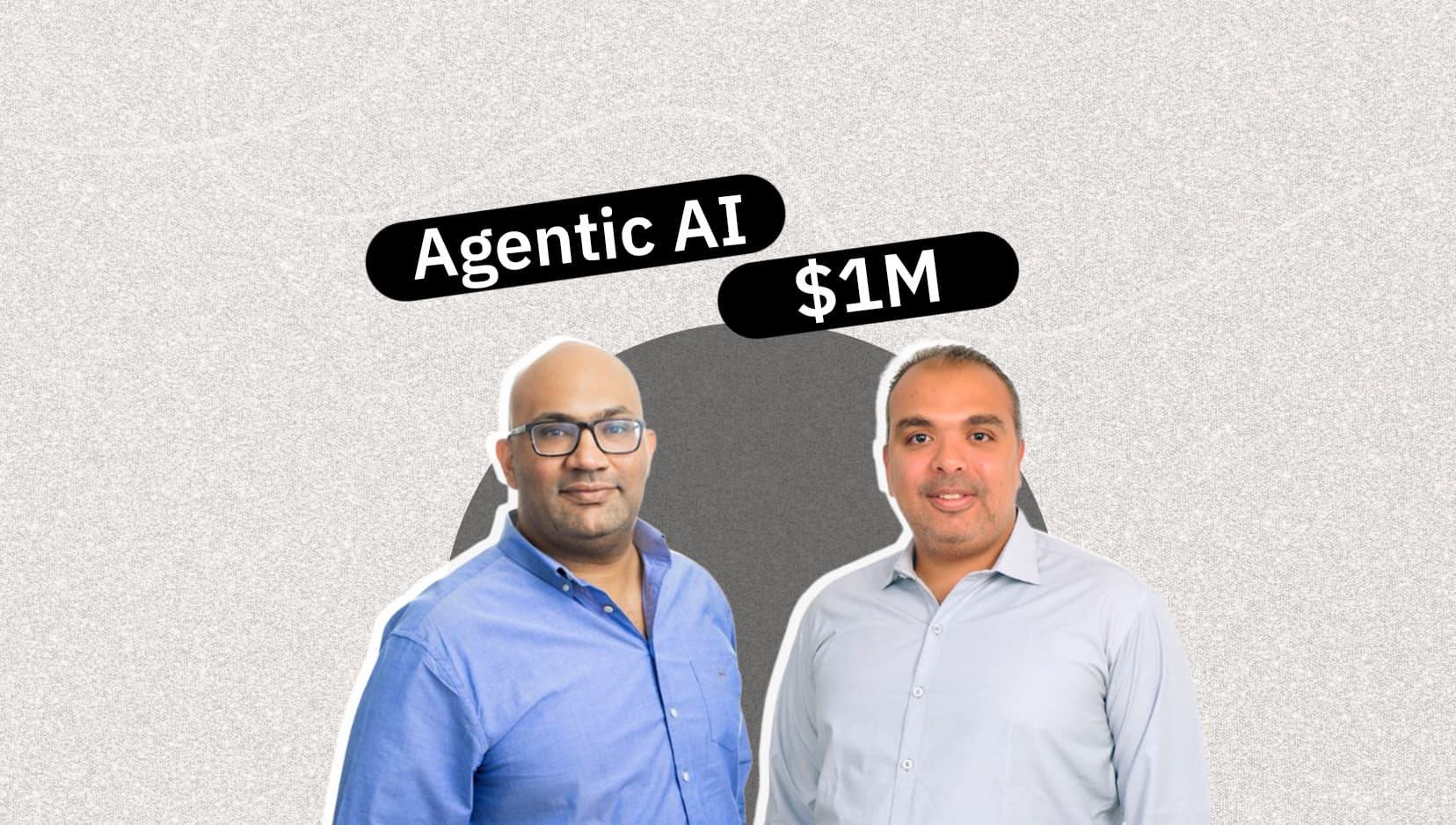
EgyptI’m Andrew Ashraf. I Connected Finishing, Management, and Returns Into One System

7 min
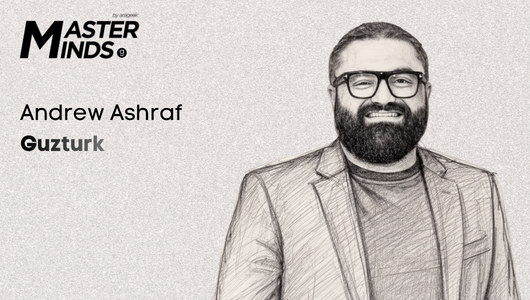
Andrew Ashraf on Building Guzturk Beyond the Traditional Real Estate Model
For years, Egypt’s real estate market revolved around one objective: selling units. Developers sold, brokers closed deals, and investors were left to manage everything that came afterwards themselves. Andrew Ashraf believed that was where the real problem started.
After nearly 13 years working across real estate, finishing, furnishing, operations, and property management, Ashraf came to view the industry less as a sales business and more as an operational one. That thinking eventually became the foundation of Guzturk, an integrated ecosystem designed to handle the full lifecycle of property ownership.
His argument is straightforward. Buying property is only the beginning. The real challenge is transforming it into something functional, profitable, and sustainable.
How he learned to think beyond transactions
When asked about the beginning of his career, Ashraf traces his professional development back to working directly inside the operational details of the business rather than approaching real estate from a purely commercial angle.
He spent years across multiple sectors tied to property, from management and furnishing to operational execution. That exposure shaped the way he understood value creation. In his view, clients rarely need isolated services. They need systems that solve interconnected problems.
Rather than focusing on single transactions, he became interested in what he describes as “integrated solutions”. The concept would later define Guzturk itself.
The broader lesson from those early years, he says, was understanding that businesses succeed through structure and consistency rather than individual effort alone. Strong people matter, but scalable systems matter more.
Why he believed the market was solving the wrong problem
On the question of why he committed specifically to real estate, Ashraf points to what he saw as a major gap in the Egyptian market.
For decades, the industry focused heavily on ownership and acquisition. But from his perspective, investors faced their biggest frustrations after purchase. Finishing work, furnishing, management, operations, maintenance, and monetisation were all fragmented across separate providers.
That fragmentation created inefficiency, higher costs, and inconsistent quality.
Ashraf believed investors increasingly needed someone capable of treating property as an operational asset rather than simply a purchased unit. That distinction became central to Guzturk’s positioning.
Instead of asking how to sell more property, the company built itself around a different question: how can ownership become easier, more profitable, and operationally sustainable?
Why Guzturk was designed as an ecosystem
When the conversation turns to the structure of Guzturk itself, Ashraf frames the company less as a brokerage or marketing platform and more as a connected operating system.
The original idea came from a simple observation. Clients were forced to move between multiple companies to complete a single investment journey. One company handled acquisition, another handled finishing, another furnishing, and yet another operations.
He saw that model as outdated.
Guzturk’s response was to consolidate those stages into one ecosystem where purchasing, finishing, furnishing, management, and operations could work together rather than independently.
For Ashraf, the logic was operational as much as commercial. Every stage affects the next one. Finishing standards influence operational efficiency. Furnishing affects rental performance. Management quality affects long-term returns.
By controlling the full process internally, the company could standardise quality, improve customer experience, and optimise asset performance more effectively.
How he thinks about property as a working asset
Pressed on the idea behind G Assets, Ashraf makes a distinction he believes more investors are beginning to understand: owning property is not the same thing as owning an asset that performs.
In his view, too much of the market still treats property as static ownership rather than an income-producing operation. An operational asset, by contrast, is designed to generate sustainable returns through hospitality, rentals, medical operations, or administrative use.
The shift matters because investor psychology is changing.
Ashraf says buyers increasingly ask about returns and operational performance before they ask about price. That marks a broader transition in the Egyptian market from ownership-focused investing toward yield-focused investing.
The implication is significant. As investors become more return-oriented, demand naturally shifts toward management, operations, and integrated support systems rather than standalone sales services.
Why technology became central to the model
Asked to reflect on technology and artificial intelligence, Ashraf avoids treating AI as a branding exercise or trend-driven addition.
Instead, he describes it as an operational tool embedded into the company’s decision-making and customer systems. Guzturk uses AI and data analysis to monitor operations, understand customer behaviour, improve sales processes, and enhance client communication.
The objective is practical rather than promotional: faster decisions, clearer reporting, and more organised operations.
That same philosophy extends into the company’s property management systems. Through its digital platform, property owners can monitor bookings, revenues, expenses, and operational reports in real time.
Ashraf sees transparency as a requirement for modern property management rather than a premium feature.
Why G Returns changes the operator-owner relationship
When asked about G Returns, one of Guzturk’s most recognisable programmes, Ashraf describes it as a partnership structure rather than a service arrangement.
Instead of operating solely as a management provider, Guzturk shares up to 30 percent of returns in exchange for managing and optimising the property’s performance.
The model is designed to align incentives directly with owners. If the asset performs well, both sides benefit. If performance weakens, the company shares responsibility for improving results.
Ashraf believes that alignment changes the nature of the relationship entirely. Operators stop thinking like contractors and start thinking like stakeholders.
How he uses content as part of the business itself
When the discussion moves to social media and content, Ashraf treats communication as something more substantial than visibility or personal branding.
He sees content as a mechanism for education, opportunity, and influence, particularly for younger audiences entering the market or looking for professional opportunities.
His approach reflects a broader belief that expertise carries responsibility. If knowledge can help people access opportunities or understand industries more clearly, he believes it should be shared openly.
That perspective has helped strengthen his presence online, particularly among younger audiences interested in real estate, business, and employment opportunities.
How he views the market’s current pressures
Asked about current market challenges, including purchasing power and shifting customer behaviour, Ashraf takes a pragmatic view.
He argues that difficult conditions expose weak business models more than they damage strong ones. Complaining about the market achieves little. Improving products and adapting operational thinking matters more.
In response to changing customer behaviour, Guzturk has focused on offering more flexible solutions, including instalment structures tied to finishing and furnishing services. The broader goal is helping clients deploy capital more efficiently in an environment where investors are becoming increasingly cautious and analytical.
What he wants Guzturk to become next
Looking ahead, Ashraf says the company’s next phase will focus heavily on expanding its operational and technology capabilities across residential, administrative, hospitality, and medical sectors.
Artificial intelligence and digital infrastructure remain central to that expansion strategy. But the larger ambition extends beyond scale alone.

Ashraf wants Guzturk to become a regional model for integrated real estate operations originating from Egypt itself.
The distinction matters to him. The objective is not simply to grow larger. It is to prove that Egyptian companies can compete regionally by building operational depth, technological infrastructure, and genuinely integrated customer experiences inside an industry that has historically been fragmented.