 LEAP26
 AI
AI Saudi Arabia
 UAE
UAE Egypt
EgyptSyria Partners with Visa to Pave Path for Fintech Future

4 min
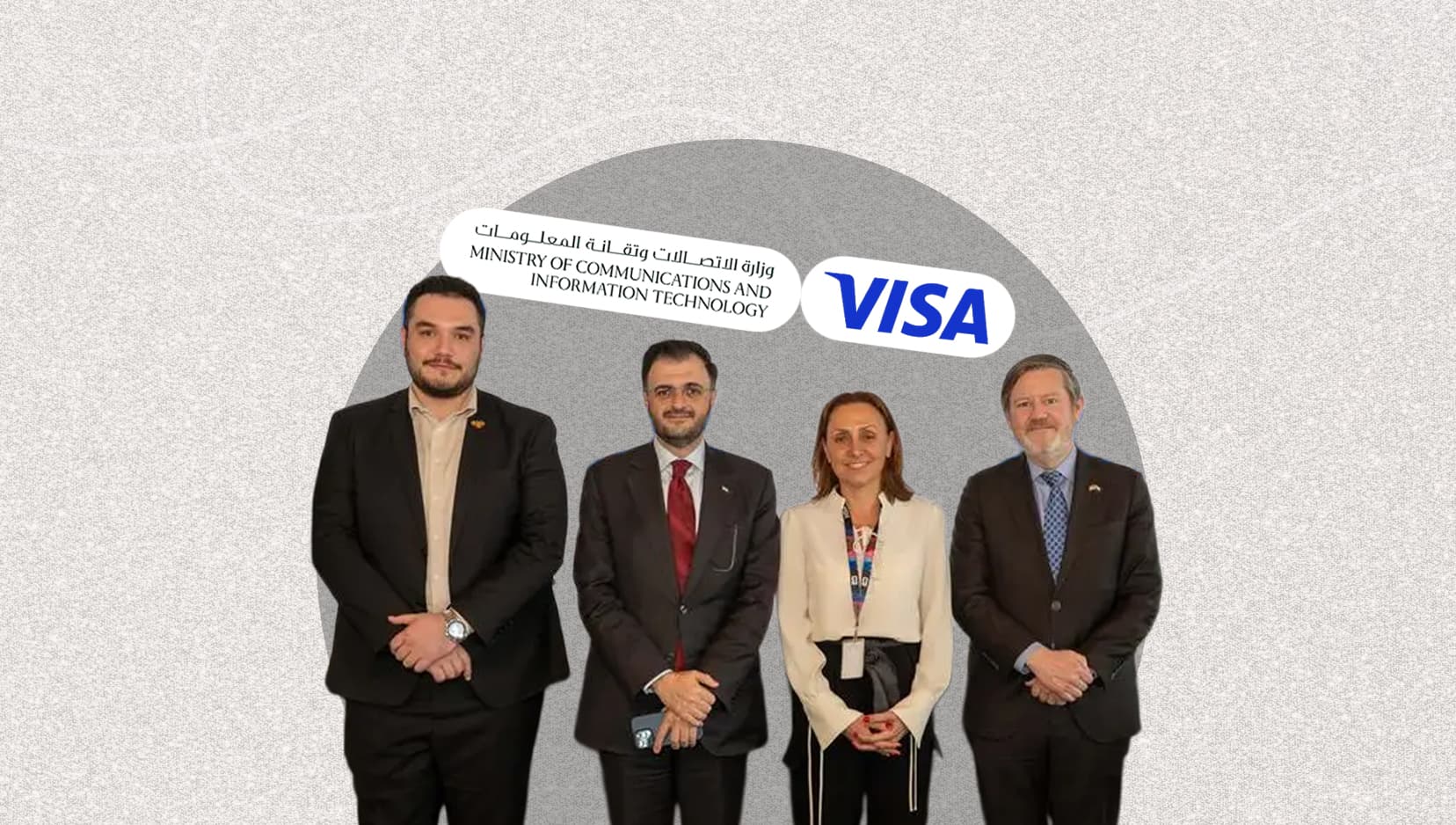
Syria’s MOCT signed a cooperation deal with Visa in San Francisco.
The agreement targets digital infrastructure, financial inclusion and fintech innovation.
Plans include a regulatory sandbox, cybersecurity support and capacity-building programmes.
Startups gain exposure through a fintech competition and Visa’s global platforms.
Execution remains the “real test”, despite ambitions for a future-ready payments ecosystem.
Syria is taking another step towards rebuilding and modernising its digital backbone. This week, the country’s Ministry of Communications and Information Technology (MOCT) signed a cooperation agreement with global payments giant Visa, aiming to accelerate the shift towards a more inclusive and modern digital economy.
The agreement was signed at Visa’s headquarters in San Francisco, in the presence of Syria’s Minister of Communications and Information Technology, His Excellency Abdulsalam Haykal, and Leila Serhan, Visa’s Senior Vice President and Group Country Manager for North Africa, Levant and Pakistan. On paper, it’s a framework for collaboration. In practice, it could become a building block for Syria’s fintech future.
At its heart, the deal focuses on digital infrastructure, financial inclusion and fintech innovation. One of the more notable elements is the plan to develop a regulatory sandbox tailored to Syria’s digital economy. For startups, that’s not just jargon. A sandbox allows fintech companies to test new products under a regulator’s supervision without facing the full weight of regulation from day one. In emerging ecosystems, this can be the difference between an idea stuck on paper and one that actually reaches the market.
There’s more. The partnership also covers upskilling and capacity-building programmes, cooperation on cybersecurity and fraud prevention, and access to Visa’s advisory services to support Syria’s broader digital strategy. For a country looking to re-integrate into global digital systems, aligning with international interoperability and security standards is, frankly, spot on.
Minister Haykal described enabling the digital economy as one of the Ministry’s top priorities, highlighting the importance of supporting tech startups in building sustainable digital services. He noted that working with Visa reflects a focus on best practices in digital government, payments and innovation frameworks that can serve citizens and businesses alike.
From Visa’s side, Leila Serhan said the memorandum builds on ongoing engagement to help establish a future-ready payments ecosystem in Syria. By combining the Ministry’s national digital strategy with Visa’s global experience, she explained, the aim is to strengthen core infrastructure and make digital services function more reliably and at scale.
For micro, small and medium-sized enterprises, this could be particularly significant. The collaboration is designed to expand access to digital payments and financial services, and to support the digitisation of everyday business transactions. And believe it or not, something as simple as enabling a corner shop to accept secure digital payments can ripple out into tax systems, supply chains and even access to credit.
There are also plans to launch a dedicated Syrian fintech innovation competition. Through Visa’s global fintech platforms, selected startups would gain exposure to regional and international investors and ecosystem players. For founders in Damascus or Aleppo working quietly on payment solutions or financial apps, that kind of visibility can open doors that once felt firmly shut.
At Arageek, we’ve seen time and again how partnerships between governments and global tech firms can either be a game-changer or, well… just another headline. I reckon the real test here will be execution. Frameworks and memorandums are the easy part; building trust, skills and reliable infrastructure is where the rubber meets the road. On the flip side, aligning early with global standards could save Syria’s ecosystem a lot of future faff.
Visa, listed on the NYSE under the ticker V, operates in more than 200 countries and territories, facilitating digital payments between consumers, merchants, financial institutions and governments. For Syria, plugging into that kind of global network is not just about payments. It’s about signalling readiness to participate in the wider digital economy.
Of course, challenges remain. Connectivity gaps, regulatory capacity and cybersecurity risks are not solved overnight. But if implemented carefully, this agreement could help lay firmer foundations for a digital economy that is more accesible, secure and open to innovation.
For a region where fintech has been one of the most dynamic startup sectors over the past decade, Syria’s move is worth watching. It may be early days, but sometimes these first structured steps are the ones that definately matter most.
🚀 Got exciting news to share?
If you're a startup founder, VC, or PR agency with big updates—funding rounds, product launches 📢, or company milestones 🎉 — AraGeek English wants to hear from you!



✉️ Send Us Your Story 👇