 LEAP26
 AI
AI Saudi Arabia
 UAE
UAE Egypt
EgyptNutanix Boosts Cloud Platform to Tackle AI-Driven Infrastructure Demands

5 min
Nutanix is doubling down on the “agentic AI era” with new NCP capabilities.
The platform unifies VMs, containers and AI workloads amid supply constraints.
Zero-copy VMware migration and broader hardware support cut disruption and costs.
Expanded sovereign cloud options let firms run workloads where regulation demands.
Nutanix says it offers flexible, scalable control as AI strains infrastructure.
Nutanix is doubling down on what it calls the “agentic AI era”, rolling out a fresh set of capabilities to its Nutanix Cloud Platform (NCP) as enterprises wrestle with growing AI workloads, tighter hardware supply, and increasingly tangled cloud environments.
If you’ve been around founders or CTOs in Riyadh or Dubai lately, you’ll know this shift is not theoretical. Everyone is talking about AI pilots suddenly becoming production systems, chewing through compute and storage like there’s no tomorrow. I remember a startup founder telling us at Arageek that scaling infrastructure felt like “building the plane while flying it”. That stuck with me. This latest move from Nutanix seems aimed exactly at that pain point.
At its core, NCP is being positioned as a full-stack platform that can handle traditional virtual machines, modern containerised apps, and AI workloads in one place. As companies rethink long-standing virtualisation choices, flexibility and cost predictability are becoming, well… non-negotiable. With hardware procurement timelines still unpredictable in many markets, having options is not just nice to have, it’s spot on essential.
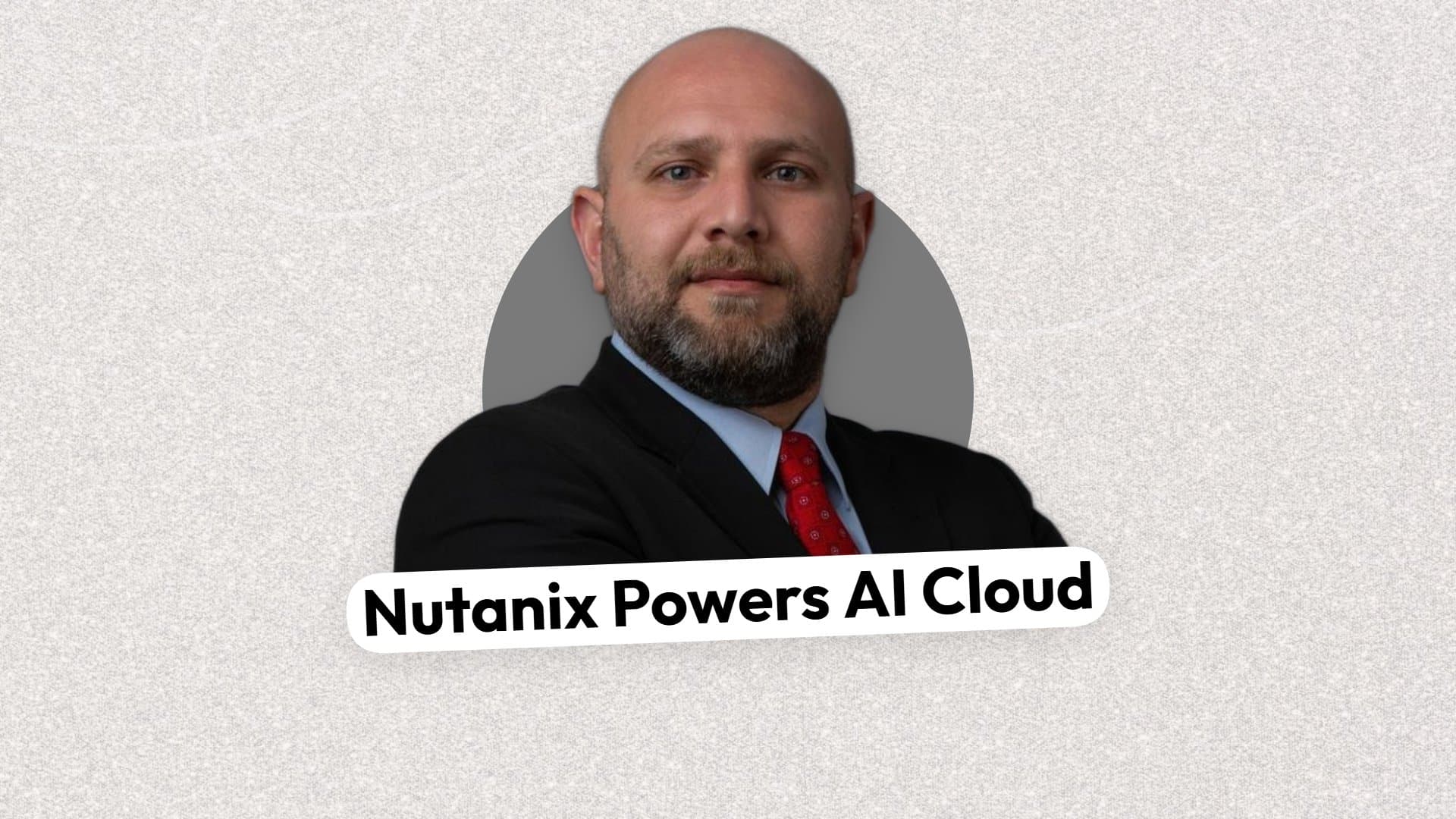
Thomas Cornely, Executive Vice President of Product Management at Nutanix, said organisations modernising their cloud infrastructure in a supply-constrained environment must balance hybrid multicloud flexibility with the sovereignty of their data and applications. He noted that the Nutanix Cloud Platform is designed to help customers make better use of existing hardware, expand across a broader ecosystem of providers, and maintain control over where workloads run, even as hardware availability shifts.
One important angle here is ecosystem expansion. Nutanix is strengthening support across a wide range of server and storage hardware so enterprises can stretch their current investments further, a practical response, I reckon, to ongoing supply chain constraints. It’s also rolling out zero-copy migration from VMware vSphere Virtual Volumes to AHV vDisks, now generally available. In simple terms, that allows near-instant, in-place workload conversion without duplicating data. Less disruption, less overhead. Anyone who has managed a large migration knows it can be a bit of a faff, so this is not a small detail.
On the service provider front, Nutanix is introducing new multitenancy capabilities through Nutanix Service Provider Central (SP Central), currently in early access and expected to be generally available in the second half of 2026. The goal is to help partners deliver hosted infrastructure and AI services on NCP while keeping tenants logically and securely isolated on shared infrastructure. That’s particularly relevant as regional cloud and “neocloud” providers look to carve out niche positions between global hyperscalers and local sovereign requirements.
Speaking of sovereignty, Nutanix is expanding its Nutanix Cloud Clusters (NC2) footprint across hyperscalers. Support for AWS GovCloud is already generally available, with AWS European Sovereign Cloud coming later this year. Further ahead, in the second half of 2026, NC2 on Google Cloud is expected to support Hyperdisk and C3 bare-metal instances, giving customers the ability to scale storage independently from compute and use instance types without local storage.
That might sound technical, but the underlying message is simple: run workloads where regulation, latency, or procurement rules demand, and move them back on-premises if needed, without refactoring. For organisations in Saudi Arabia and across the wider region, where data residency and government cloud requirements are tightening, this flexibility is definately part of boardroom conversations.
Mohammad Abulhouf, Vice President and General Manager for Middle East and Africa at Nutanix, said that as organisations across the Kingdom rethink infrastructure strategies amid rising AI demand and supply chain challenges, the company aims to provide a consistent, scalable and sovereign cloud platform while maintaining flexibility and control.
Management is another piece of the puzzle. Nutanix Cloud Manager (NCM 2.0) is now generally available, built on a new architecture designed to manage large numbers of clusters across multiple Prism Central instances. As enterprises stretch across on-prem data centres, public clouds and even air-gapped sovereign environments, having one control layer starts to feel less like a luxury and more like a survival tool.
All the announced products are either generally available now or expected in the second half of 2026.
On the flip side, the hybrid multicloud promise has been around for years, and not every vendor has fully delivered. I’m not a fan of grand platform claims without practical proof in the field. That said, with AI workloads forcing infrastructure decisions far quicker than many CIOs anticipated, vendors that can genuinely simplify complexity, not just repackage it, stand a real chance.
For MENA startups and scale-ups pushing into AI-heavy use cases, the bigger picture matters. Infrastructure might not be the sexiest topic in the room, but when it works smoothly, founders can focus on building products instead of firefighting servers. And believe it or not, that can make all the difference between a stalled pilot and a breakout sucess.
🚀 Got exciting news to share?
If you're a startup founder, VC, or PR agency with big updates—funding rounds, product launches 📢, or company milestones 🎉 — AraGeek English wants to hear from you!




✉️ Send Us Your Story 👇