 LEAP26
 AI
AI Saudi Arabia
 UAE
UAE Egypt
EgyptOoredoo Launches Nationwide LTE-M Network, Boosting IoT Potential in Qatar

4 min
Ooredoo has switched on nationwide LTE‑M in Qatar for IoT devices.
The low‑power network supports sensors, meters and trackers over long periods.
It promises “deep indoor coverage” and better economics for large deployments.
Businesses gain a future‑proof alternative as 2G and 3G retire.
The move backs smart cities and Qatar National Vision 2030 ambitions.
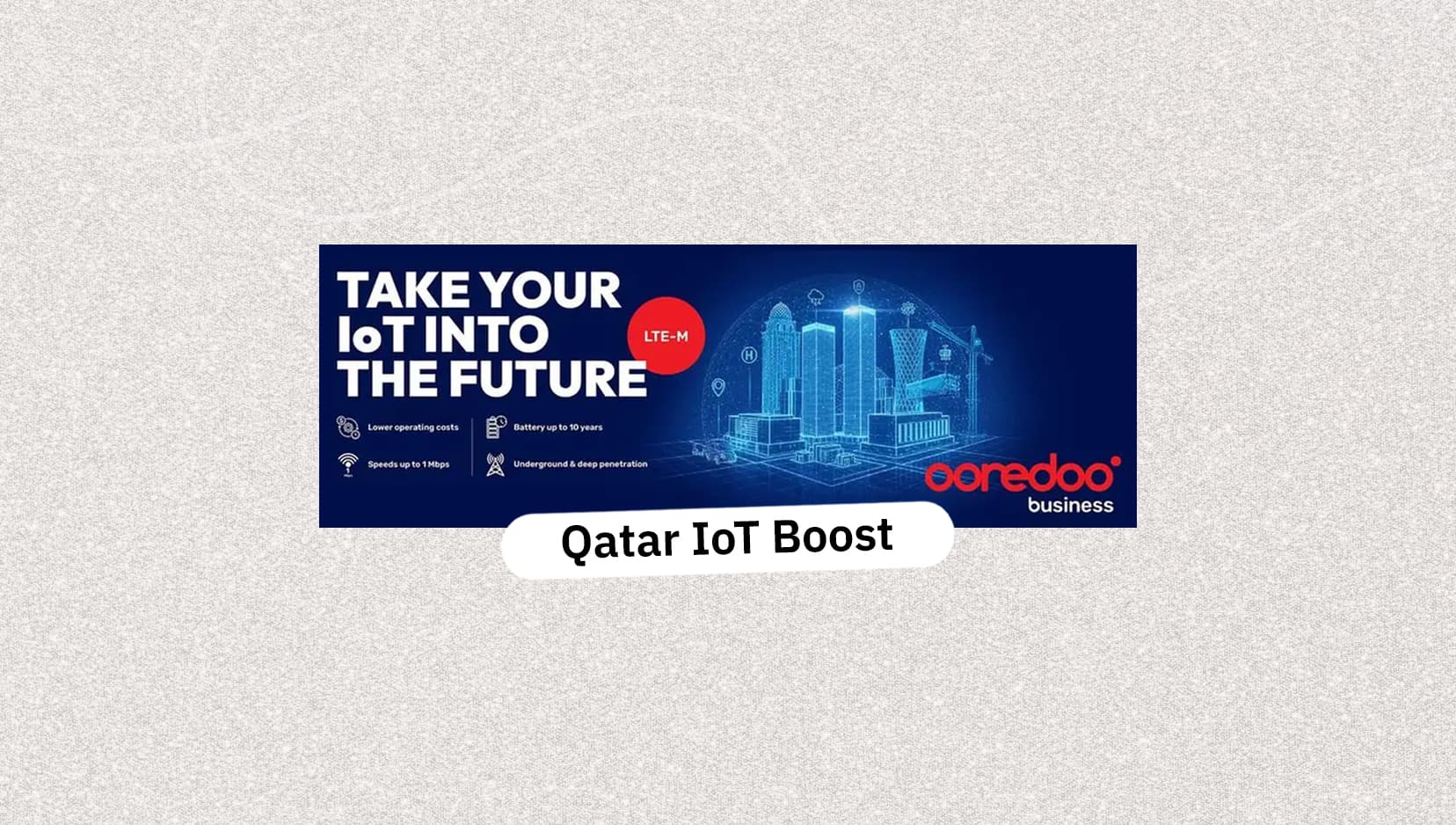
Ooredoo has switched on LTE-M in Qatar, becoming the first operator in the country to roll out the technology nationwide. It may sound technical, Long Term Evolution for Machines, also known as CAT-M1, but in simple terms, this is a network built especially for the Internet of Things. And that’s where things start to get interesting.
LTE-M is a low-power wide-area (LPWA) technology designed for machine-type communication. Unlike traditional mobile networks that focus on smartphones and heavy data use, LTE-M is tailored for small devices that send tiny bits of information over long periods. Think sensors, trackers, smart meters, wearables. The quiet workers behind smart cities.
I’ve noticed over the years, speaking with founders across the MENA region, that connectivity is often where great IoT ideas hit a wall. Devices drain batteries too quickly, costs stack up, or older networks like 2G and 3G become unreliable as they are phased out. It can be a bit of a faff, honestly. So having a purpose-built network for these use cases feels not just timely, but necessary.
According to Hassan Ismail Al Emadi, Chief Business Officer at Ooredoo Qatar, the launch marks an important step in the operator’s digital transformation journey. He described LTE-M as opening “new frontiers of possibility” for businesses in Qatar, from smart cities to industrial automation, while reinforcing the company’s commitment to Qatar National Vision 2030.
The technology is particularly suited for large-scale deployments. We’re talking smart city services, including metering and environmental monitoring, as well as asset tracking across transport and logistics. It also supports applications in utilities, oil and gas, healthcare, banking, industrial safety and security. In essence, sectors that rely on steady, low-power data flows rather than flashy high-speed downloads.
What makes LTE-M stand out is its combination of low energy consumption, deep indoor coverage, and the ability to support devices at scale. A sensor placed in a basement or deep inside industrial infrastructure can stay connected and operational for years without needing frequent battery replacement. That’s not just convenient; it changes the economics of IoT deployment.
By adding LTE-M to its existing portfolio, which already includes 4G, 5G and NB-IoT, Ooredoo strengthens its Managed IoT Connect offering. On the flip side, businesses now have more choice, which is critical. Not every IoT use case fits neatly into one connectivity model, and flexibility is spot on when industries are evolving so quickly.
There is also a broader strategic angle. As legacy 2G and 3G networks gradually retire, companies that built solutions on those infrastructures have been facing tough decisions. Migrate or risk disruption. LTE-M offers a future-proof alternative, giving enterprises continuity without sacrificing efficiency. I reckon this shift will accelerate over the next few years, especially as more governments in the region double down on digital infrastructure.
Ooredoo plans to expand LTE-M coverage across Qatar in the coming months to meet rising demand. And believe it or not, these “invisible” networks often have the most visible impact. Smarter traffic systems. More accurate utility billing. Better asset tracking. Small data packets, big consequences.
For startups watching from across MENA, especially those building in climate tech, logistics, or smart infrastructure, this kind of infrastructure roll-out is definately worth noting. It signals that the groundwork for scalable, sustainable IoT solutions is being laid, one layer at a time.
In the wider picture, LTE-M may not grab headlines like 5G once did, but sometimes steady wins the race. And in a region pushing ahead with ambitious national visions, having the right digital plumbing in place is half the battle won.
🚀 Got exciting news to share?
If you're a startup founder, VC, or PR agency with big updates—funding rounds, product launches 📢, or company milestones 🎉 — AraGeek English wants to hear from you!




✉️ Send Us Your Story 👇