 Ai Everything
 LEAP26
 AI
AI Saudi Arabia
 UAE
UAE Egypt
EgyptSyria Taps Elm for Digital Overhaul of Tourism Sector Records

4 min
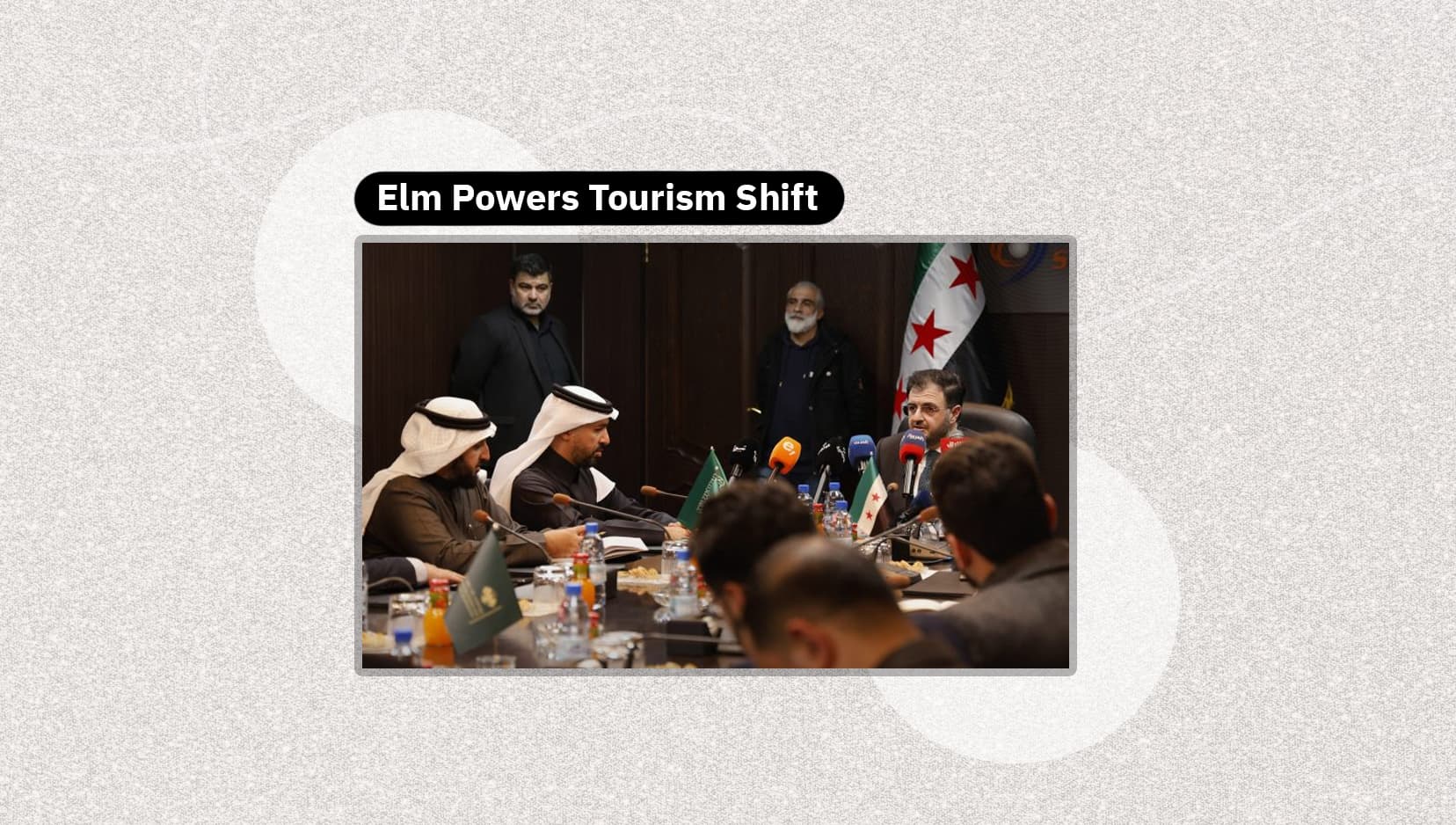
Syria’s Tourism Ministry signed a technical cooperation deal with Saudi firm Elm.
The focus is “smart archiving”, data management, and streamlined procedures.
Officials promise faster processes, stronger transparency, and better decision-making.
Elm will apply Saudi digital transformation expertise to reshape tourism administration.
Success now depends on delivery, not just another agreement on paper.
Syria’s Ministry of Tourism has signed a new technical cooperation agreement with Saudi-based digital solutions firm Elm, marking another step in the country’s broader push towards institutional reform and digital transformation.
The agreement, signed in Damascus on 16 February 2026, focuses on smart archiving, records organisation, and the development of advanced data management systems. In practical terms, Elm will work alongside the ministry to design regulatory and technical frameworks for managing documents and records, introduce modern indexing and archiving systems, and streamline procedures. The goal is simple but ambitious: faster processes, stronger transparency, tighter control over information flow, and ultimately better decision-making across the tourism sector.
From what we see across the region at Arageek, digital transformation in government can sometimes be a bit of a faff, big promises, slow delivery. That said, when it works, it can be spot on. Proper data governance and structured records might sound dry, but they are the backbone of any serious reform. Without them, innovation is just talk.
Tourism Minister Mazen Al-Salhani described the partnership as more than a routine upgrade. He said the ministry aims not only to keep pace with digital transformation but to lead it within the tourism sector. According to his remarks, the collaboration with Elm is intended to expand the scope of digital change in Syria’s tourism industry and create a qualitative leap in institutional innovation, while adhering strictly to governance and data management standards.
He stressed that digital transformation should start within government institutions themselves. The Ministry of Tourism, he noted, is working to become a model of sound digital administration, one that reflects efficiency and transparency, and can serve as a reference point for the wider tourism ecosystem, including facilities, investors, and partners.
Elm’s CEO, Mohammed Alomeer, pointed to Saudi Arabia’s accumulated experience in government digital transformation as the foundation of the partnership. He said the Kingdom’s journey has resulted in integrated digital systems that improved efficiency, transparency, and service quality. That expertise, built around governance, process re-engineering, and data management aligned with international best practice, will now be applied to Syria’s tourism sector to help accelerate institutional transformation and create a modern operating environment supportive of investment and improved user experience.
On the flip side, implementation will be the real test. Systems and frameworks are one thing; changing daily administrative habits is another. I’ve seen startups struggle with much smaller internal shifts, so scaling that mindset across a ministry is no small task. Still, if executed well, this could definately strengthen investor confidence, especially at a time when regional players are watching Syria’s reform steps closely.
This agreement does not come in isolation. It forms part of a busy week on Syria’s digital front. The Ministry of Communications and Information Technology recently announced the operational launch of its own partnership with Elm to accelerate digital transformation and modernise e-services across public institutions. In parallel, major telecommunications infrastructure deals have been signed with regional partners to enhance digital connectivity and link the country more robustly to global networks.
And believe it or not, these administrative reforms, often overlooked, may end up being just as important as shiny new infrastructure projects. Updating backend systems, tightening governance, and structuring data properly can quietly reshape how a sector functions.
For Syria’s tourism industry, which will need efficiency, transparency, and investor trust to grow sustainably, this move could be a meaningful building block. Whether it becomes a success story or just another agreement on paper will depend, as always, on delivery. But for now, the direction of travel is clear.
🚀 Got exciting news to share?
If you're a startup founder, VC, or PR agency with big updates—funding rounds, product launches 📢, or company milestones 🎉 — AraGeek English wants to hear from you!



✉️ Send Us Your Story 👇