 GITEX Dubai
 Ai Everything
 LEAP26
 AI
AI Saudi Arabia
 UAE
UAE Egypt
EgyptUAE Unveils Ambitious 2030 Financial Inclusion Strategy at MENA Summit

4 min
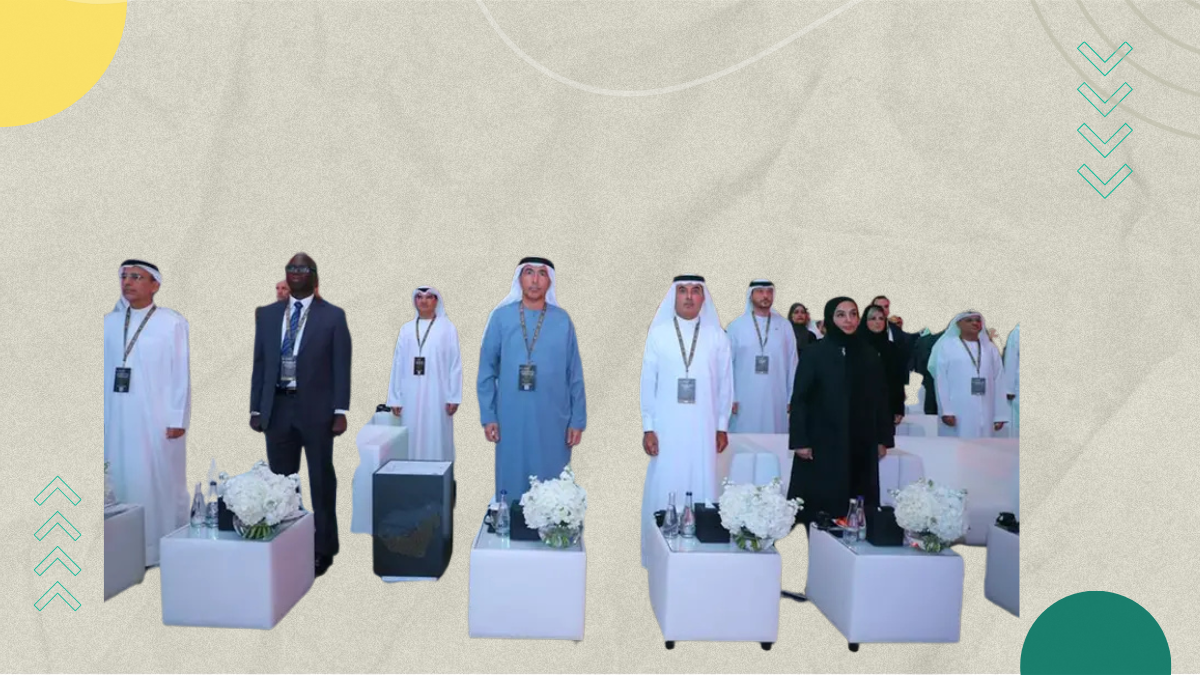
The MENA Leaders’ Summit on Financial Inclusion in Abu Dhabi attracted key regional figures.
The UAE’s Financial Inclusion Strategy aims to enhance access to fair financial services.
The strategy includes initiatives for women, youth, and entrepreneurs, with regional collaboration.
Global Money Week 2026 will be hosted by the UAE, promoting financial education.
There was a strong focus on creating a financial culture for smarter financial decisions.
The opening day of the MENA Leaders’ Summit on Financial Inclusion brought quite a buzz to Abu Dhabi, and it wasn’t just because it was the first time the UAE hosted the gathering. Under the patronage of His Highness Sheikh Mansour bin Zayed Al Nahyan, senior figures from across the region—governors, ministers, regulators, and international partners—packed into the venue for two days of discussions on how to build more inclusive and resilient financial systems. I’ve seen many events in this space through my work with Arageek, but this one felt like it carried a bit more weight, perhaps because of the scale of the delegation and the timing.
H.E. Khaled Mohamed Balama, Governor of the Central Bank of the UAE, set the tone in his opening remarks, stressing that financial inclusion isn’t just a policy checkbox but a key pillar of sustainable development. He spoke of the UAE’s ambition to remain “a global model” of innovation and inclusive growth, guided by the country’s long-term visions for 2031 and even 2071. Spot on, really—most countries struggle to lay out plans for five years, let alone fifty.
What caught my attention, and probably many others’, was the launch of the UAE’s National Financial Inclusion Strategy (NFIS) 2026–2030. Developed with the World Bank, the OECD, the Arab Monetary Fund and more than 70 stakeholders, the strategy outlines how the UAE intends to ensure fair, safe access to financial services for everyone. It’s quite comprehensive—strengthening legislation, speeding up digital transformation, raising financial literacy, and even using data and AI to shape better decisions. I reckon the AI bit will spark some lively debate, given how quickly that space is evolving.
H.E. Fatma Al Jabri, who oversees financial crimes, market conduct and consumer protection at the Central Bank, highlighted the 2030 goals: increasing the share of individuals with financial accounts, encouraging wider use of digital payments, and making sure innovation plays nicely with regulation. And believe it or not, the strategy includes 12 initiatives designed for very specific groups—women, youth, people of determination, and, importantly, entrepreneurs and MSMEs. As someone who’s spent years talking with founders across the region, I know how access to finance can make or break a small business. Sometimes it’s a bit of a faff for them to get through basic procedures, so any improvement is welcome.
The event didn’t stop there. Officials from the World Bank and the Arab Monetary Fund unveiled new regional Findex results, which track progress in financial inclusion across the Arab world. Their role is to help policymakers understand who’s being left behind and what needs fixing. There were also sessions on financial health—everything from women’s economic empowerment to a rather interesting announcement that the UAE will host Global Money Week in 2026. That one had a few people chuffed to bits, judging by the reactions in the hall.
What I appreciated most was the broader message threading through the day: that inclusion isn’t just about accounts and apps, but about building a financial culture where everyone feels equipped to make smart choices. It reminded me of conversations I’ve had with startup founders who told me that no matter how innovative their ideas were, access to financial tools—and the knowledge to use them—often determined whether they could grow or not. On the flip side, if the NFIS is implemented well… well, it could be a real game changer for the ecosystem. If not, it risks becoming another glossy strategy document that gathers dust. Let’s hope for the former, even if the odds can be a little wobbely at times.
All in all, the summit’s first day unfolded as a significant push toward shaping both regional and global agendas. And for a region where millions still sit outside the formal financial system, the discussions felt not only timely but necessary.
🚀 Got exciting news to share?
If you're a startup founder, VC, or PR agency with big updates—funding rounds, product launches 📢, or company milestones 🎉 — AraGeek English wants to hear from you!


✉️ Send Us Your Story 👇