 LEAP26
 AI
AI Saudi Arabia
 UAE
UAE Egypt
EgyptUAE’s Manufacturing Moves Forward with AI and Robotics Pact

4 min
MoIAT signed an MoU with Sinaha to accelerate Industry 4,0 adoption.
The deal moves manufacturers from “talking about digital transformation” to doing it.
Sinaha will deploy AI, robotics and smart automation with measurable productivity gains.
Flagship projects include an “intelligent warehouse” and physics-based digital twins.
The UAE is doubling down on advanced manufacturing with local tech partners.
The UAE’s push to modernise its factories took another step this week, as the Ministry of Industry and Advanced Technology (MoIAT) signed a Memorandum of Understanding with Abu Dhabi-based Sinaha Technology to speed up the adoption of artificial intelligence, robotics and other Industry 4.0 tools across the country’s manufacturing sector.
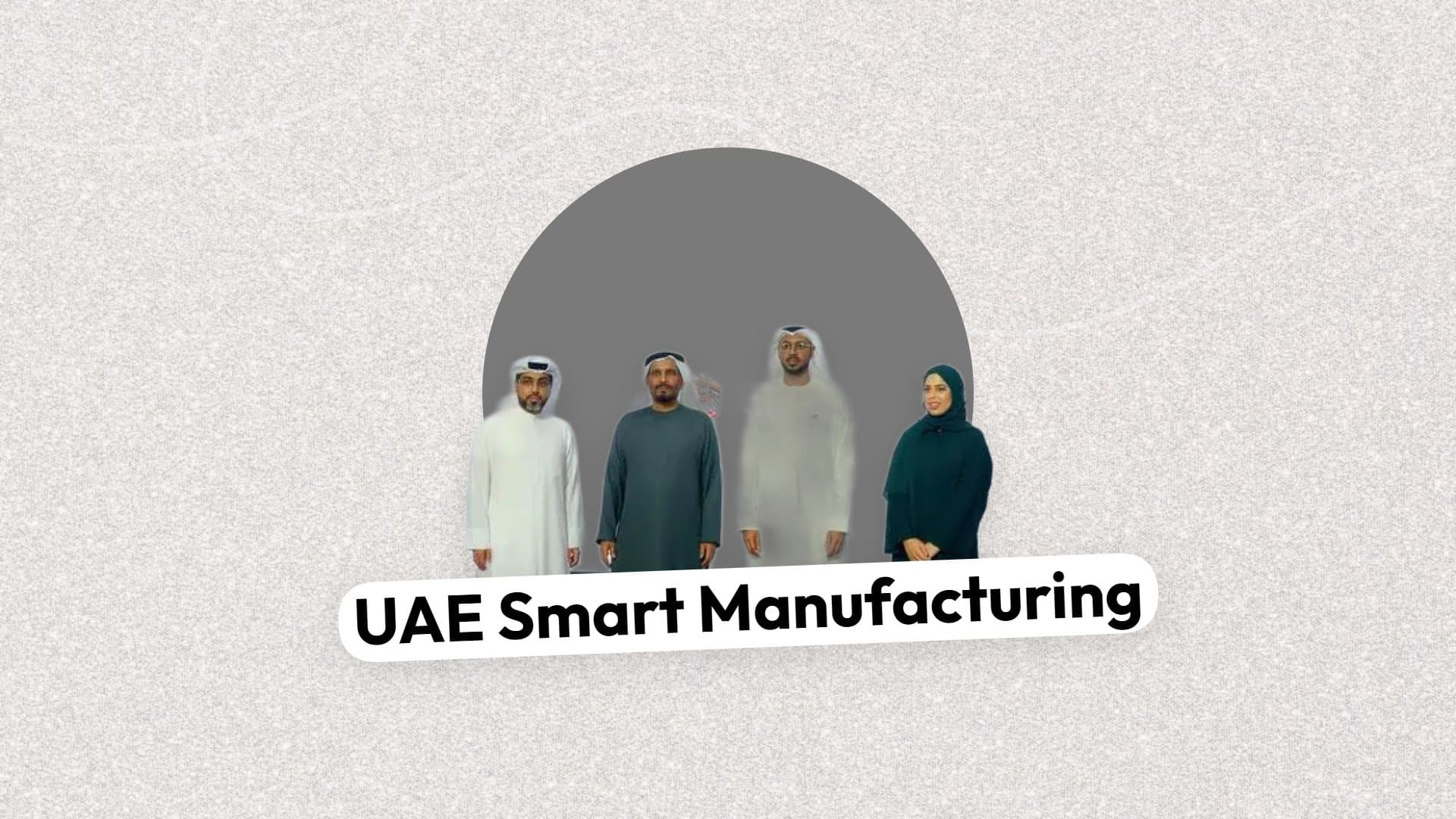
The agreement was signed during Make it in the Emirates 2026 by Fatma AlMheiri, Director of Technology Adoption and Development at MoIAT, and Mubarak Abed Nasser Doman AlAmeri, Authorised Director at Sinaha Technology. The signing was witnessed by senior officials including H.E. Mansour Mohamed Salem Kardous Alameri, Deputy CEO of Sinaha, and H.E. Osama Fadhel, Assistant Undersecretary of Industrial Accelerators at MoIAT.
In simple terms, the partnership aims to help manufacturers move from talking about digital transformation to actually doing it. Sinaha will work with high-potential factories to create technology roadmaps and roll out practical Industry 4.0 solutions, covering everything from AI-driven systems to robotics and smart automation. The focus is not just assessment, but execution, with measurable gains in productivity and operational efficiency.
AlMheiri said the ministry is focused on turning the National Strategy for Industry and Advanced Technology into “real results” by strengthening supply chains and reinforcing the UAE’s standing as a global hub for advanced industry. She pointed to the Transform 4.0 programme as a hands-on initiative designed to help manufacturers speed up tech adoption, better link production to market demand, and support the growth of industrial SMEs. According to her, the collaboration with Sinaha directly supports these goals.
From Sinaha’s side, AlAmeri highlighted one of the company’s flagship achievements: what he described as one of the UAE’s first intelligent warehouse deployments built on locally engineered technologies. The system enables fully autonomous operations by combining robotics, software and real-time decision-making. At the centre of it sits an in-house Robotics Management System that connects different robotic fleets with business logic, allowing multi-vendor machines to work together without it becoming a bit of a faff.
The company is also developing physics-based digital twin environments, virtual models of logistics systems that allow operators to design, test and optimise processes before they are rolled out on the ground. It’s a practical approach, reducing risk and speeding up implementation. I’ve seen startups across the region struggle with costly trial-and-error in warehouses; having a simulation layer first could be, frankly, spot on.
The broader ambition is clear. MoIAT wants UAE manufacturers to “make more, grow more, and export more,” and this agreement fits into that narrative. Industry 4.0, a catch-all term for technologies like AI, automation, data exchange and smart sensors integrated into manufacturing, is no longer a buzzword in policy circles here. It’s becoming a national priority.
The fifth and largest edition of Make it in the Emirates, where the MoU was signed, brought together government bodies, investors and industrial players. The event is hosted by MoIAT in collaboration with the Ministry of Culture, the Abu Dhabi Investment Office, ADNOC and L’IMAD, and organised by ADNEC Group. These gatherings, if done well, can be more than ceremony. On the flip side, we all know conferences can sometimes be heavy on speeches and light on outcomes. That said, tangible partnerships like this one suggest there is substance behind the stage lights.
Established in July 2020, MoIAT has been tasked with shaping the UAE’s industrial policies, strengthening supply chain resilience and accelerating technology transformation across sectors such as food security, healthcare, defence, aerospace and the digital economy. Through programmes like the National In-Country Value (ICV) initiative and the Technology Transformation Programme, it connects manufacturers, startups and investors to financing and offtake opportunities.
For readers of Arageek, especially founders building in the industrial tech or logistics space, this move definately signals continued public-sector appetite for deeper collaboration with local tech providers. I remember speaking with a young robotics founder in Abu Dhabi last year who said breaking into large industrial contracts felt like knocking on a heavy door. Partnerships like this may not fling the door wide open overnight, but they do loosen the hinges.
Whether it translates into widespread factory-floor transformation remains to be seen. But one thing is clear: the UAE is doubling down on advanced manufacturing, and it is doing so with local technology players firmly in the picture.
🚀 Got exciting news to share?
If you're a startup founder, VC, or PR agency with big updates—funding rounds, product launches 📢, or company milestones 🎉 — AraGeek English wants to hear from you!


✉️ Send Us Your Story 👇