 LEAP26
 AI
AI Saudi Arabia
 UAE
UAE Egypt
Egyptzypl.ai lands $5.5M to scale synthetic data for banks

3 min
zypl.
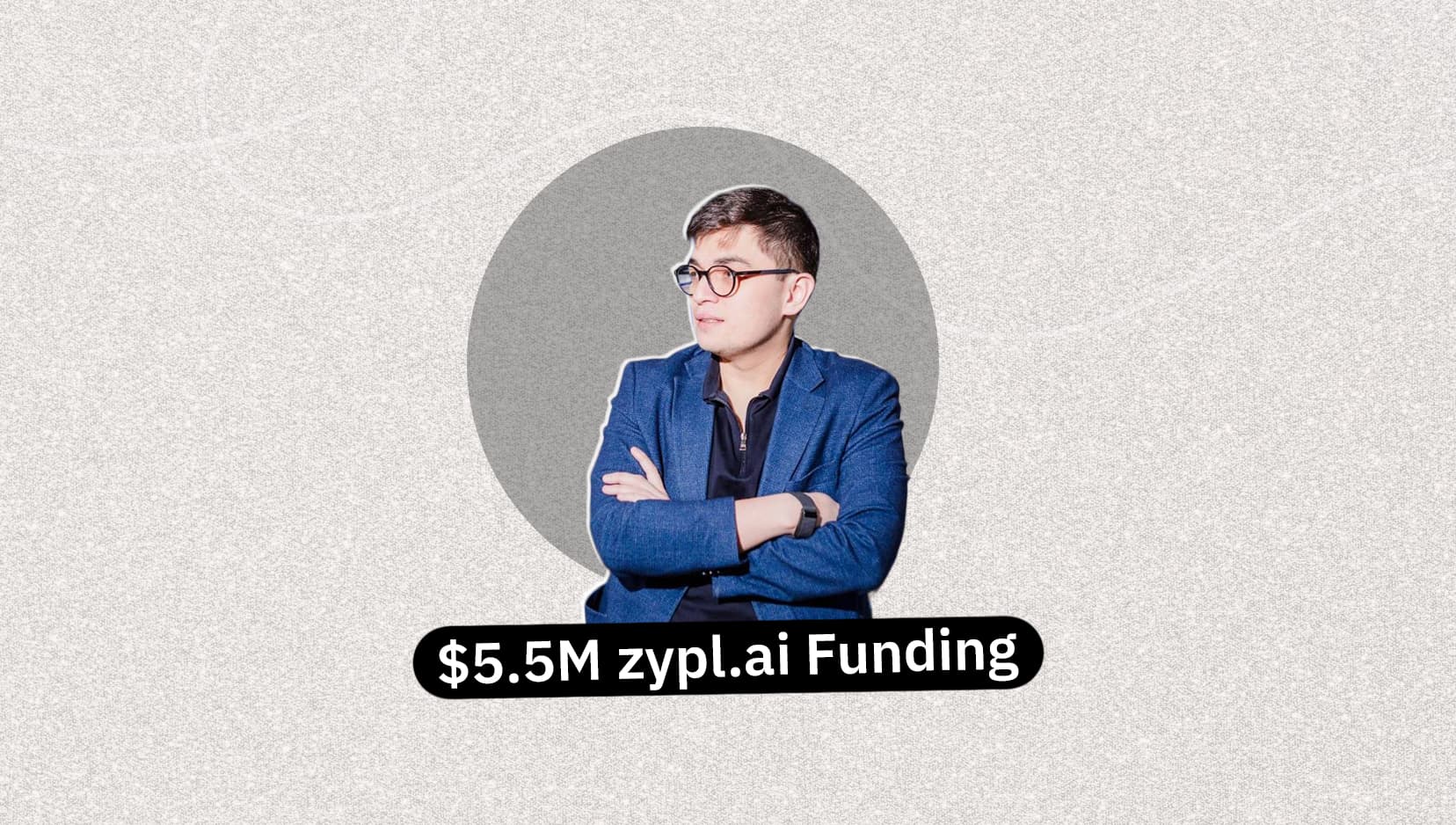
ai raises $5,5 million in bridge funding, lifting valuation to $80 million.
Carbide Ventures led the round, praising “team, product, and growth”.
Its zGAN synthetic data model helps banks navigate “economic turbulence”.
More than 60 financial institutions use its tools across 20 markets.
The no-code Lucid platform simplifies AI deployment within complex banking systems.
Artificial intelligence startup zypl.ai has secured $5.5 million in bridge funding, pushing its valuation to $80 million. The round was led by Silicon Valley-based Carbide Ventures, with participation from investor Shukhrat Ibragimov. It’s another clear signal that synthetic data, once a niche concept, is fast becoming a must-have tool for financial institutions navigating uncertain markets.
The fresh capital is set to speed up zypl.ai’s expansion into new territories and deepen its work with banks. At the heart of its offer is a proprietary model called zGAN, designed to improve predictive AI performance, especially during periods of economic turbulence. And let’s be honest, in today’s climate of rate hikes and geopolitical jitters, “economic turbulence” feels like a polite understatement.
Dan Weirich, general partner at Carbide Ventures, said the firm was impressed by “the team, product, and growth over the past twelve months”, which led to its immediate reinvestment. That kind of follow-on backing, particularly from a US venture player, tends to speak volumes. On the flip side, bridge rounds can sometimes be a bit of a faff if they merely plug short-term gaps. In this case, though, the valuation bump suggests a stronger vote of confidence.
Ibragimov’s involvement also stands out. He serves as CEO of Eurasian Resources Group and chairs the boards of Eurasian Bank and Eurasia Insurance Company, both major financial institutions in Kazakhstan. For a startup focused so heavily on banking applications, that connection is more than symbolic—it’s spot on strategically.
Synthetic data, for those less deep into AI jargon, is artificially generated information that mirrors real-world data patterns without exposing sensitive customer details. In banking, where privacy and regulation are everything, this can be a game changer. zypl.ai’s zGAN model creates these datasets to train algorithms, helping banks make better predictions even when real data is limited or volatile. I reckon that’s why the startup has managed to build relationships with more than 60 financial institutions across 20 markets worldwide. Those are not small numbers.
The company has also been active on the research front, publishing academic work on arXiv and presenting at NeurIPS, one of the leading AI conferences globally. That combination, serious academic credibility mixed with commercial traction, isn’t always easy to pull off. And believe it or not, that’s often where young AI firms stumble.
One product drawing attention is its Lucid no-code platform, which allows financial institutions to build and deploy AI models on their own, without needing heavy in-house engineering teams. Anyone who has worked with a bank’s legacy systems knows integrating new tech can be… well, complicated. So a no-code layer that simplifies deployment could be the difference between an idea staying in a PowerPoint deck and actually going live.






Backed by investors including Prosus Ventures and Carbide Ventures, zypl.ai now seems poised to widen its technological footprint in AI-driven financial services. From what I’ve seen covering MENA startups at Arageek, deeptech companies with strong academic roots sometimes struggle to translate research into revenue. zypl.ai appears to be bucking that trend, or at least trying to.
It’s still early days, of course. Scaling across multiple regulatory environments is never straightforward, and synthetic data will need to prove itself again and again in real-world stress scenarios. But with $5.5 million in fresh funding and heavyweight investors backing the vision, the company is definately not standing still. And in a market that rewards resilience as much as innovation, that might just make all the difference.