 GITEX Dubai
 Ai Everything
 LEAP26
 AI
AI Saudi Arabia
 UAE
UAE Egypt
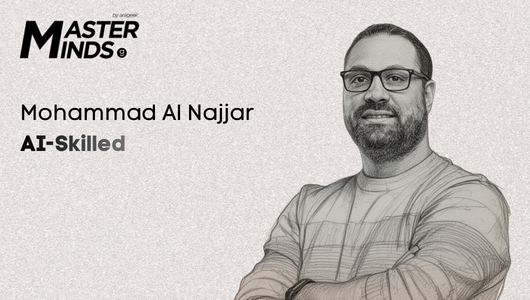
EgyptI am Kahlani Mohamed Alif. I believe entrepreneurship needs restraint, not hype

7 min
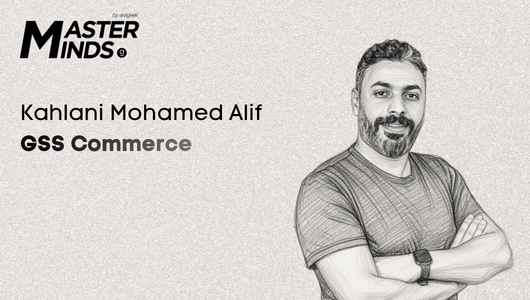
Kahlani Mohamed Alif does not talk about entrepreneurship as a personal triumph or a badge of honour. When asked to introduce himself, he frames his entire career around a single unresolved problem: how to build a business without destroying a life. That question was formed early, after watching his father move from success to bankruptcy during Alif’s teenage years. Since then, marketing, strategy, auditing and coaching have all served the same purpose, to understand failure well enough to avoid repeating it.
How a family failure shaped his definition of entrepreneurship
When asked about his professional journey, Alif traces it back to home rather than to a job title. Entrepreneurship entered his life before theory or ambition, through lived consequences. His father’s collapse did not push him away from business, it pulled him closer, but with caution. He describes that moment as both a warning and a motivation, a lesson that business performance and personal cost cannot be separated.
By 2008, marketing became his most practical tool, not because it was glamorous, but because it could be monetised quickly. Coaching and training followed in 2012, alongside his accreditation as an auditor in entrepreneurship. The pattern is consistent, every skill he accumulated had to justify itself in the real world.
The moment he chose responsibility over approval
Pressed on early turning points, Alif recalls an ordinary afternoon in his neighbourhood. While helping a neighbour in a furniture workshop, he was told he should study negotiation because he communicated well. That comment mattered more than any formal assessment. It validated a strength he had not yet claimed.
Later, financial pressure forced a harder decision. Despite a scientific academic path and disagreement with his father, he shifted to economics and management. He describes this as his first real confrontation with responsibility, choosing a direction alone and accepting the consequences. Co-founding an entrepreneurship club in 2006 gave him something he lacked elsewhere, freedom to think, create and test ideas without judgement.
Door-to-door sales followed. It was not a strategic move, it was survival. What it delivered was discipline, humility and a respect for rejection that would shape his approach to marketing permanently.
What international work taught him about leadership limits
When the conversation turns to his roles across Tunisia, Turkey, Canada and the UK, Alif is careful not to romanticise global exposure. An international mindset, he argues, sharpens perspective but also exposes arrogance. Moving across cultures forced him to confront his blind spots repeatedly, especially when he assumed others would adapt to his logic.
The value, for him, came from three lessons. First, clarity about weaknesses, surfaced by new supervisors and unfamiliar expectations. Second, confidence in transferable strengths, knowing what he could offer regardless of market. Third, a reinforced belief that ethics and fair exchange are not cultural preferences, they are prerequisites for sustainability.
Why retail management tested his principles
Asked about managing large retail brands, Alif describes retail as an exercise in self-management before people management. Communication allowed him to move between shop floors and executive offices, but ownership structures proved harder.
In family-owned businesses, he repeatedly clashed with board members. His belief that business decisions should override personal interests created friction, even amid strong commercial results. Leaving the company was not a failure, it was a recognition that financial success alone does not define success inside family enterprises. Non-financial motives, he learned, often outweigh performance metrics.
How moving across sectors built a systems view
On the question of sector hopping, Alif is direct. It was intentional. Without an inherited business, experience became his main asset. FMCG, media, NGOs and startups each revealed different mechanics of value creation.
Over time, he began to see businesses as interconnected systems rather than isolated functions. He compares it to a Rubik’s Cube, where progress depends on understanding how each move affects the whole. That perspective now underpins his advisory work.
Why Digital Istanbul was about survival, not networking
When asked about founding Digital Istanbul, Alif places it firmly in the migrant experience. As a foreign professional, social safety nets disappear while professional pressure intensifies. Success becomes non-negotiable.
Initially, the group existed to exchange contacts. Quickly, it became something else. Five members committed to actively solving one another’s problems, and within a month, most of those problems were resolved. That outcome reframed Alif’s thinking around lobbying and collective strength.
Digital Istanbul imposed strict rules, recommendation-only entry, entrepreneurship as the sole topic, zero tolerance for distraction. The result was an ecosystem that enabled visibility, consultancy, fundraising and market access, driven by contribution rather than consumption.
Building an Arab digital identity without borders
Asked to expand on the broader vision, Alif situates the initiative within the post-2010 Arab migration wave. Economic, political and humanitarian pressures concentrated talent in Türkiye at the same moment the digital economy accelerated, especially during Covid.
The ambition was not symbolic identity, but functional impact. Knowledge sharing inside the community supported members directly while indirectly benefiting their home countries. What was missing, he argues, was a professional, results-driven Arab digital ecosystem grounded in reality rather than rhetoric.
Why Angels Board rejects traditional consulting
When the discussion shifts to Angels Board, Alif points to a structural gap. Startups, regardless of founder age, lack access to genuine senior expertise. Immersion in daily execution limits strategic vision.
Inspired by the logic of a consultant board rather than episodic advice, Angels Board was built around three disciplines, finance, technology and product, and marketing and sales. The model is simple, active board-level involvement in exchange for fees or equity, with weekly follow-ups and shared accountability. Its purpose is not inspiration, but decision clarity.
The mistakes founders repeat despite experience
Pressed on patterns from coaching hundreds of startups, Alif identifies overreliance on intuition as the most dangerous habit. Gut feeling replaces market validation, and confidence drifts into isolation.
He is particularly critical of what he calls entrepreneurship addiction. The title becomes the goal, fundraising becomes validation, and ventures multiply without depth. In his view, discipline and consultation outperform individual brilliance every time.
What actually separates startups that scale
Asked to distinguish success from failure, Alif resists absolutes but insists on patterns. Successful startups obsess over their markets and competitors. They bootstrap before fundraising, treating equity as responsibility rather than currency. They anticipate failure through scenarios and contingencies, not optimism.
Entrepreneurship, he argues, should be practised with readiness and restraint. Titles and hype obscure the real work.
Why GSS Commerce focuses on execution, not theory
When asked about his current role at GSS Commerce in Saudi Arabia, Alif describes it as an execution platform rather than a consultancy. The company enables brands to operate end-to-end in e-commerce, from importation and legal representation to sales, fulfilment and customer care.
The wider GSS Group footprint allows Saudi brands to export westward with reduced friction, while international brands gain structured entry into the region. The objective is not experimentation, but controlled expansion.
How he reads the future of MENA e-commerce
On the question of regional outlook, Alif balances caution with conviction. Global inflation and geopolitical tensions complicate trade, but Saudi Arabia presents a rare counterpoint. Vision 2030 provides direction, investment and regulatory support across retail, logistics and technology.
In an unstable global context, he views Saudi Arabia as one of the few markets offering both scale and predictability.
The skills he believes founders cannot outsource
Asked about essential skills, Alif returns to fundamentals. Finance literacy, project management and continuous learning are non-negotiable. No founder needs to master everything, but every founder must recognise their gaps and compensate through people.
Entrepreneurship, in his framing, is less about personal capability and more about orchestration.
His advice to the next generation



When asked to advise young Arab entrepreneurs, Alif starts with an unpopular recommendation, work as an employee first. Understanding execution from the inside builds empathy and realism.
Leadership, for him, is not authority but environment design. When teams are enabled to perform and grow, progress follows naturally. Entrepreneurship, stripped of mythology, becomes a responsibility to people before it becomes a vehicle for ambition.