 Ai Everything
 LEAP26
 AI
AI Saudi Arabia
 UAE
UAE Egypt
EgyptI am Lucy Aziz. I stopped saying yes to everything, which made me lead!

12 min
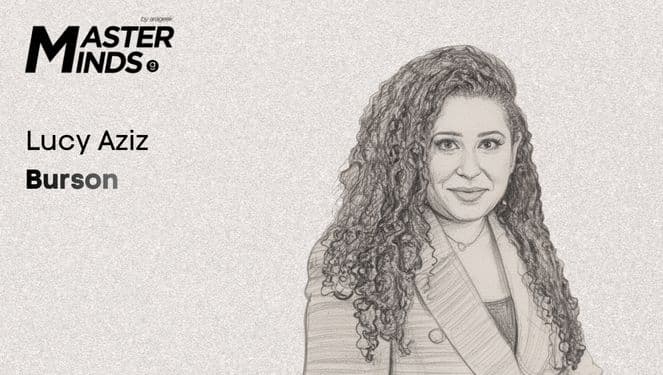
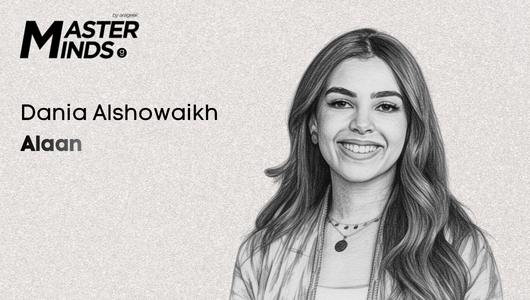
Lucy Aziz does not talk about agency and client as opposing camps. She sees them as "two faces of the same coin", bound by the same underlying job: managing reputation, trust and influence. That matters because her return to agency life at Burson, after six years inside OPPO and Chery, was not a retreat to familiar ground. It was a deliberate move towards wider exposure.
When asked about the pull back to agency, Aziz is clear that client-side work gave her depth, but also a sharper understanding of what happens before a brief ever lands. She now understands the budget pressures, the leadership expectations and the internal politics that shape what clients ask for, and what they are often unable to articulate. That, in her telling, makes her more useful now than she was earlier in her agency career.
There is a practical confidence in the way she frames it. Early agency life taught her speed, resilience and media instinct. The years inside brands added a different discipline: how decisions are weighed internally, how pressure builds, and why certain asks come wrapped in compromise. Back on the agency side, she believes she can challenge clients more effectively because she can do it with empathy rather than distance.
It is also one of the clearer themes running through her career. She is not especially interested in communications as a narrow function. She speaks about it as work that carries real weight, where trust can be damaged, leadership exposed, and the confidence of a team tested. That seriousness explains both the move and the timing. Agency now gives her what she wanted next, range.
How she built two automotive brands from zero
On the question of launching OMODA and JAECOO in the UAE, Aziz rejects the idea that awareness is built through noise alone. Her account is more disciplined than that. Moving from zero awareness to 39 per cent in under two years, she argues, came from treating communications as a business driver rather than a support act.
The first step was basic but often mishandled: defining what each brand stood for. OMODA had to be positioned as future-facing, youthful and design-led. JAECOO needed a different shape, more premium, capable and adventurous. Without that separation, both risked becoming generic entrants in a crowded market.
Trust came next. Aziz points to Chery's international track record as an important asset, not as a substitute for local work but as a source of credibility. From there, the build was cumulative: media relations, executive profiling, product narratives, launch moments, test drives, influencer engagement and stronger community relevance. None of it sounds magical because in her view it was not. It was a system.
Pressed on what she got wrong, she offers a useful correction. Early on, the instinct was to push everything at once. That, she says, is a mistake common to brand launches. Reputation does not compound properly if every lever is pulled at the same speed. Her sequencing now is much clearer: credibility first, then familiarity, then aspiration.
If she were building those brands again, she would start earlier on what she calls the narrative system, the messaging matrix, spokesperson positioning, content pillars, dealer alignment and a more explicit reputation roadmap. It is a revealing answer because it shows where she thinks communications becomes operational rather than decorative.
When PR stopped being execution and became leadership
When the conversation turns to OPPO, Aziz identifies the key shift less as a campaign than as a change in posture. The defining moment was when she stopped thinking like a PR manager delivering activity and started thinking like a regional leader building a system.
That distinction matters to her. She grew from PR Manager to leading PR across the GCC, and with that came a broader frame. Coverage and launches were no longer enough. The job became one of shaping regional relevance and deciding how the brand should actually connect.
Her sharpest lesson from that period is simple: consumer tech too often hides behind specifications. Aziz pushed against that. People, she argues, respond less to processors and camera features than to what technology enables in their lives. It is a familiar idea in theory, but the force of her answer comes from where she locates the decision, not in copywriting but in leadership judgement.
Asked to reflect on winning a global PR case competition during that period, she is careful not to overplay the award itself. What mattered was that work coming from the GCC could influence the wider network rather than merely receive direction from it. For her personally, it was proof that she did not need to wait for permission to think at a bigger scale.
There is also a note of loyalty in how she describes that chapter, especially the leader who backed her and widened her sense of what she could carry. But the more interesting point is the one she draws from it: confidence comes from tested judgement, not title alone.
What breadth across sectors actually gives you
Asked to account for a career that has crossed oil and gas, pharmaceuticals, government, consumer tech, automotive and agency work, Aziz does not romanticise versatility for its own sake. The value, as she sees it, is that it breaks fixed thinking.
Each sector trained a different muscle. Government taught discipline and stakeholder sensitivity. Pharmaceuticals imposed precision and responsibility. Oil and gas brought scale and complexity. Consumer tech demanded speed and relevance. Automotive sharpened her understanding of trust and the emotional force behind major purchase decisions.
The result is not simply variety on a CV. It is pattern recognition. Aziz says she can usually tell quite quickly whether a problem is really about visibility, trust, positioning, alignment or risk. That is the kind of distinction experienced communications leaders make and inexperienced ones often miss. Clients may ask for media, but the actual issue may be messaging. Or leadership. Or internal confusion.
She also makes a plausible case for adaptability. Because she is not attached to one sector's habits, she can move techniques across contexts, taking the rigour of regulated industries, the pace of tech, the emotional storytelling of automotive and the caution of government, then applying the right combination to the job in front of her.
Her crisis rule is simple: do not manage the noise
On crisis and issues management, Aziz's philosophy is unusually stripped back: "do not manage the noise, manage the trust". It is the cleanest line in the interview because it captures both her instinct and her scepticism about polished reactions.
She anchors that view in the Arthur W. Page principle she returns to often: tell the truth, prove it with action, listen to stakeholders, manage for tomorrow. In practice, that means resisting the temptation to confuse immediate visibility with the actual problem. A crisis, in her view, is never only a media event. It is a business, leadership and trust event.
When asked what she looks for first under pressure, her order of operations is pragmatic. What is true, what is unknown, who is affected, what is at risk, and who needs to hear from the organisation first. That sequence tells you a lot about how she works. She is less interested in saying something quickly than in making sure the response does not create a second problem.
The mistake she sees most often is communicators confusing speed with strategy. The other is more revealing: protecting image before protecting people. Once that happens, she argues, credibility starts to collapse because audiences can tell the difference between responsibility and self-preservation.
Her broader point is that crises expose the quality of the organisation behind the statement. Values, decision-making, transparency and internal alignment all become visible at once. In that sense, a crisis is not just a reputational threat. It is an audit.
Where AI helps, and where it still falls short
When asked about AI, Aziz takes a firmer line than many communications leaders currently do. She is interested in its value, but suspicious of overheated claims.
The practical gains, she says, are already clear enough. AI can accelerate research, analysis and idea development. It can pressure-test a brief, surface angles, and reduce the time it takes to move from raw information to sharper thinking. For teams under pressure, that matters.
But she draws the boundary quickly. AI does not carry market judgement. It does not recognise when silence is more useful than a statement, when wording is culturally sensitive, or when a message can be factually correct and still reputationally wrong. Those are not minor exceptions. They are, in her framing, the centre of the job.
So her conclusion is not anti-AI at all. It is that the technology will remove repetitive work and make stronger strategic communicators more valuable, not less. The advantage will go to people who can ask better questions and make better decisions, not simply produce more content. That is a more grounded position than most, and probably a more durable one.
The career decision that mattered most
Asked to name the best decision of her career, Aziz does not point to a company or title first. She points to a pattern: choosing growth over comfort.
That choice showed up repeatedly, but she singles out her move deeper into Chinese technology and automotive brands as an especially important one. At the time, she says, it was not the obvious path. These were ambitious brands entering competitive markets quickly, with much to prove. She moved anyway because she saw the opportunity before it became conventional.
The reasoning is instructive. She wanted more complexity, more responsibility and a closer connection between communications and business growth. In other words, she was not chasing novelty. She was chasing a harder operating environment.
Asked what would have been lost had she taken the safer path, her answer is blunt. Comfort would have cost her speed of growth, and the confidence that only comes from being tested. It is one of the few places in the interview where her philosophy becomes fully explicit. The right decisions are not always the easiest ones. Often they are the ones that "scare you a little" because they demand more from you.
The mistake she had to grow out of
Pressed on her worst professional decision, Aziz avoids the theatrical answer. There was no single disaster, she says. The real problem was a pattern of overextension, saying yes too often, trying to carry too much personally, and equating care with total involvement.
It helped early on. People who immerse themselves in every detail often do grow quickly. But eventually it becomes self-limiting. Aziz recognises that now. If everything depends on one person, the work cannot scale and the leader never fully moves into leadership.
The cost was not dramatic but cumulative: time, energy and lost strategic headroom. Her correction has been to guard priorities more carefully, delegate with intention and invest more in building the team around her. Delegation, in her framing, is not about loosening standards. It is about creating more people who can hold them.
That answer connects neatly to how she now thinks about leadership. Growth is no longer about absorbing more and more work. Sometimes it is about releasing it, empowering others and building systems that outlast your own direct involvement.
How she leads when the pressure is on
When the conversation moves to leadership, Aziz describes a style built on clarity, standards and ownership. She has little patience for the performative version of management, the loudest voice, the person copied on every email, the leader who mistakes visibility for control.
Her weekly rhythm is structured. Priorities should be explicit. Owners should be named. Deadlines should be clear. Escalation points should be obvious. In communications, she says, internal ambiguity is expensive because clients feel it immediately.
Asked what she hires for, she is less interested in polish than in ownership, curiosity, judgement and hunger. Skills can be trained. Care cannot. The strongest people, in her view, think beyond the task itself. They do not stop at "I sent the email". They ask whether the work actually moved forward.
Her red flags are equally direct: weak accountability, repeated excuses, careless work and the habit of waiting to be chased. She also resists any framing of communications as admin. For her, PR is judgement, timing, influence and trust. Reduce it to process and you lose the point.
Under pressure, her operating method is to simplify fast, separate noise from risk and decide what needs action, what needs alignment and what can wait. "I do not believe in panic as a leadership style," she says. It is an unsentimental line, and probably the best summary of how she wants to work.
What counts as the real highlight
Asked to look back across her career for a defining highlight, Aziz briefly mentions promotions and recognition, including becoming Head of PR and Communications at OPPO. But she resists making the answer about title alone.
The more revealing answer comes from further back, when a university leader in the UK stopped her after a lecture and told her she was very good at what she was doing. Aziz still remembers it because it gave her something more useful than praise, early confirmation that she was not just studying a field but entering one that suited her.
That helps explain the way she sums up her career now. The true highlight is not one award, one campaign or one role. It is the fact that she still feels purpose in the work and still wants more from it. For someone whose career choices have consistently favoured stretch over certainty, that may be the most coherent answer of all.
She has moved across sectors, sides of the industry and stages of seniority, but the through-line is stable. She values communications not as output but as judgement. She takes growth seriously enough to choose discomfort. And she thinks the strongest operators are the ones who can build trust, systems and people, not just headlines.