 Ai Everything
 LEAP26
 AI
AI Saudi Arabia
 UAE
UAE Egypt
EgyptSharjah Ignites Unified Arab R&D with SPARK-AFSRC Alliance

4 min
Sharjah’s SPARK and AFSRC plan tighter Arab research collaboration.
They aim to turn research into “real economic value” across borders.
Focus areas include green innovation, startup incubation, and commercialising intellectual property.
Proposals include a regional R&D network to align priorities and funding.
Leaders say stronger integration could move ideas “from labs” into markets.
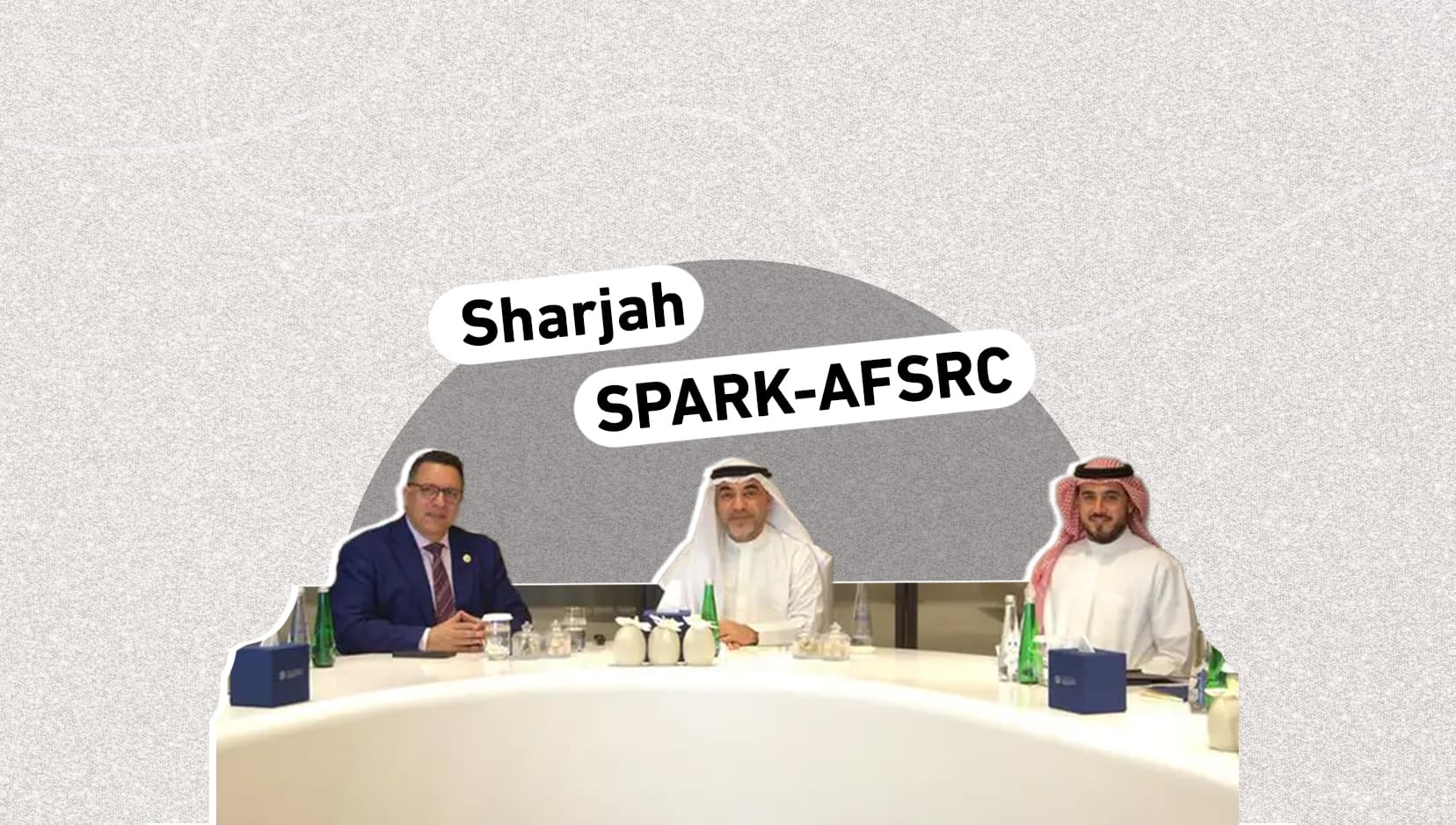
Sharjah is doubling down on its ambition to connect the Arab world’s research muscles. This week, Sharjah Research, Technology and Innovation Park (SPARK) held talks with the Arab Federation for Scientific Research Councils (AFSRC) in a move aimed at stitching together a more integrated Arab research and development ecosystem.
The meeting brought together Hussain Al Mahmoudi, CEO of SPARK, and Prof. Dr. Abdul Majeed Bin Amara, Secretary-General of AFSRC, alongside Dr. Fareed Mahmoud Alameeri, Executive Director of Strategy at SPARK. At the heart of the discussion was a simple but not-so-small question: how can Arab institutions work better together to turn research into real economic value?
From what was outlined, the focus is on building cross-border research alliances. That means linking research councils, universities, innovation centres and industry partners across different Arab countries to work on priority projects. The idea is to accelerate technology transfer and help regional economies shift towards knowledge- and innovation-led models. In plain terms, less talk, more application.
I’ve seen startups across MENA struggle to access research outputs that just sit on shelves. It can feel like a bit of a faff to bridge the gap between academia and industry. So when initiatives talk seriously about commercialising Arab intellectual property and connecting researchers with investors, that’s spot on. It’s the missing middle many founders quietly complain about.
Green innovation and sustainable technologies were also high on the agenda. Both sides discussed frameworks to incubate research-based startups, speed up commercialisation, and ultimately increase the economic return on scientific research. There was emphasis on improving the competitiveness of Arab knowledge products, a phrase that may sound technical, but really means ensuring locally developed solutions can compete globally.
Mobility and talent development came up too. The two organisations explored ways to support Arab researchers, particularly in countries facing developmental challenges, through fellowships, incubation programmes and coordinated funding. That regional lens matters. On the flip side, without structured collaboration, efforts can become fragmented and, well… diluted.
Another proposal under discussion was the creation of a specialised Arab network linking R&D centres and technology parks. The goal would be to align research priorities, exchange data and expertise, and develop shared policy frameworks and indicators to encourage more funding into innovation. If executed properly, it could help avoid duplication and strengthen collective impact across borders.
There are also plans to organise joint conferences, forums and training programmes, alongside partnerships with international organisations focused on intellectual property and technology transfer. It’s an attempt to reinforce the Arab world’s position on the global innovation map, and, I reckon, to send a message that collaboration is no longer optional but essential.
Al Mahmoudi said the discussions reflect SPARK’s broader vision of building strategic Arab alliances capable of translating knowledge into sustainable economic applications, while strengthening Sharjah’s role as a regional and international hub for R&D and innovation. For his part, Bin Amara stressed that the next phase demands structured institutional integration to unify resources and expertise and better tackle economic and developmental challenges through science-driven solutions.
For readers of Arageek who follow these shifts closely, this kind of coordination is long overdue. The region has talent. It has capital. What it sometimes lacks is alignment. If SPARK and AFSRC can turn these conversations into concrete programmes, it could definately move the needle for the Arab research landscape.
And believe it or not, that alignment might be the difference between bright ideas staying in labs — or becoming the next wave of scalable ventures coming out of the region.
🚀 Got exciting news to share?
If you're a startup founder, VC, or PR agency with big updates—funding rounds, product launches 📢, or company milestones 🎉 — AraGeek English wants to hear from you!


✉️ Send Us Your Story 👇