 LEAP26
 AI
AI Saudi Arabia
 UAE
UAE Egypt
EgyptUAE Partners with Lockheed Martin to Launch First Chiplet Facility

5 min
The UAE signs with Lockheed Martin to build its first chiplet facility.
EDGE and Khalifa University join to design and assemble advanced systems locally.
Chiplets are “foundational” for aerospace, defence, AI and autonomous technologies.
A new R&D centre will train talent and link lab research to industry.
The move aims to anchor a competitive, locally rooted microelectronics ecosystem.
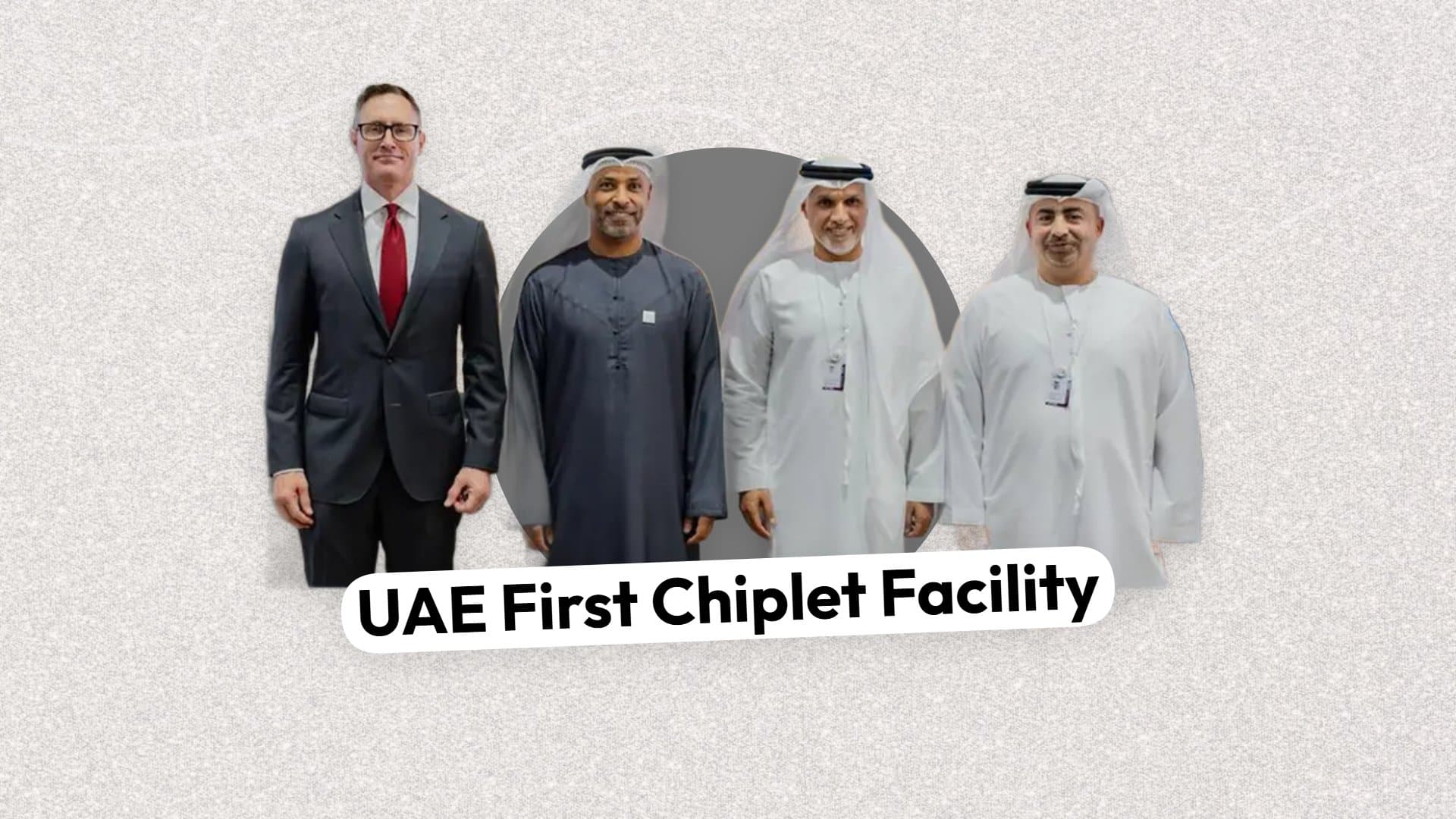
The UAE is taking another determined step into advanced microelectronics, this time through a strategic agreement between Tawazun Council for Defence Enablement and US defence giant Lockheed Martin. The deal, signed on the sidelines of Make it in the Emirates 2026 in Abu Dhabi, aims to establish the country’s first chiplet design and assembly facility, with EDGE and Khalifa University of Science and Technology joining as key partners.
If you’ve been following the region’s industrial push, you’ll know this is not coming out of nowhere. The UAE has been working steadily to localise more of its high-value manufacturing. Still, moving into chiplet-based technologies feels like shifting up a gear.
For those who aren’t deep into semiconductors, chiplets are essentially smaller, specialised pieces of a processor that can be combined to build more flexible and powerful systems. Think of them as modular building blocks. They are becoming essential in aerospace, defence, artificial intelligence, telecoms, autonomous systems and advanced manufacturing. In short, they’re foundational for what many call next-generation tech.
Under the agreement, the UAE will build the capability not only to design but also to assemble advanced chiplet-based systems. That’s important. Too often, countries focus on one part of the value chain. Here, the ambition is clearly broader: localisation of manufacturing, stronger industrial supply chains, and positioning the Emirates as a competitive hub in the global microelectronics landscape.
HALCON, a company under EDGE Group, will integrate chiplet-based processors into advanced targeting and guidance systems. The idea is to enhance onboard computing power, improving target acquisition, tracking and precision engagement. Defence applications are clearly front and centre, but the spillover into civilian and dual-use industries could be significant.
A dedicated R&D centre will also be set up at Khalifa University. The focus there will be microelectronics design, industry-led research and, crucially, talent development. H.E. Shareef Hashim Al Hashmi, General Director of Industry Development Directorate at Tawazun, said the Council’s role is to bring together strategic partners and lay the foundations for a sustainable, locally anchored chiplet ecosystem. He stressed that chiplet technologies act as a key enabler across advanced sectors and align closely with the wider objectives of the Make it in the Emirates initiative.
That point about ecosystem matters. In my early days covering startups in the region, founders often told me the hardest part wasn’t ambition, it was infrastructure and deep tech support. You can have all the vision in the world, but without labs, researchers and supply chains, it’s a bit of a faff to build something meaningful. Developments like this are meant to change that equation.
Al Hashmi also pointed to the co-development model with Lockheed Martin as a way to strengthen the UAE–US technology partnership. By linking local design, research and assembly capabilities with Lockheed Martin’s expertise and US partner network, the initiative is expected to reinforce supply chain resilience and create high-value jobs in both countries.
Daniel Mouton, Chief Executive of Lockheed Martin Middle East, noted that the company’s partnership with the UAE spans more than 50 years, adding that this agreement “establishes the design and assembly capacity needed to place the Emirates inside the global microelectronics value chain”. He described chiplets as foundational to aerospace, defence, AI and autonomous systems, and said the initiative brings together Emirati talent and US technology partners to build capacity aligned with national and industrial priorities.
From the academic side, H.E. Prof. Ebrahim Al Hajri, President of Khalifa University, emphasised that the new R&D centre will train UAE nationals in chiplet design and advanced microelectronics while directly connecting research to industry application. That bridge between lab and market is often where projects stumble, so getting it spot on is essential.
Saif Al Dahbashi, President – Missiles & Weapons at EDGE, described the move as a decisive step in strengthening sovereign microelectronics capability. By anchoring design and assembly locally, he said, the UAE can embed more secure and resilient supply chains while building a specialised talent base.
I reckon this is one of those announcements that may not grab flashy headlines like a new consumer app launch, but in the long term it could prove far more definatley transformative. Microelectronics sits quietly at the heart of modern economies. Control more of it, and you control more of your technological destiny.
That said, execution will be everything. Building a facility is one thing. Nurturing a sustainable, globally competitive ecosystem is another. On the flip side, the alignment of government, industry and academia in this case does suggest a serious, coordinated push rather than a symbolic gesture.
For readers of Arageek who care about how the MENA region climbs the value chain, this development feels like a signal moment. It shows how industrial policy, defence priorities and tech ambition are starting to converge. And believe it or not, those ecosystems we talk about so often? This is how they actually begin, piece by piece, chiplet by chiplet.
🚀 Got exciting news to share?
If you're a startup founder, VC, or PR agency with big updates—funding rounds, product launches 📢, or company milestones 🎉 — AraGeek English wants to hear from you!


✉️ Send Us Your Story 👇