 LEAP26
 AI
AI Saudi Arabia
 UAE
UAE Egypt
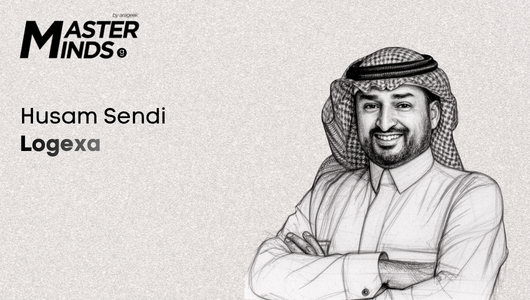
EgyptI am Husam Sendi. I simplified logistics so SMEs could finally compete

5 min
Turning movement into method
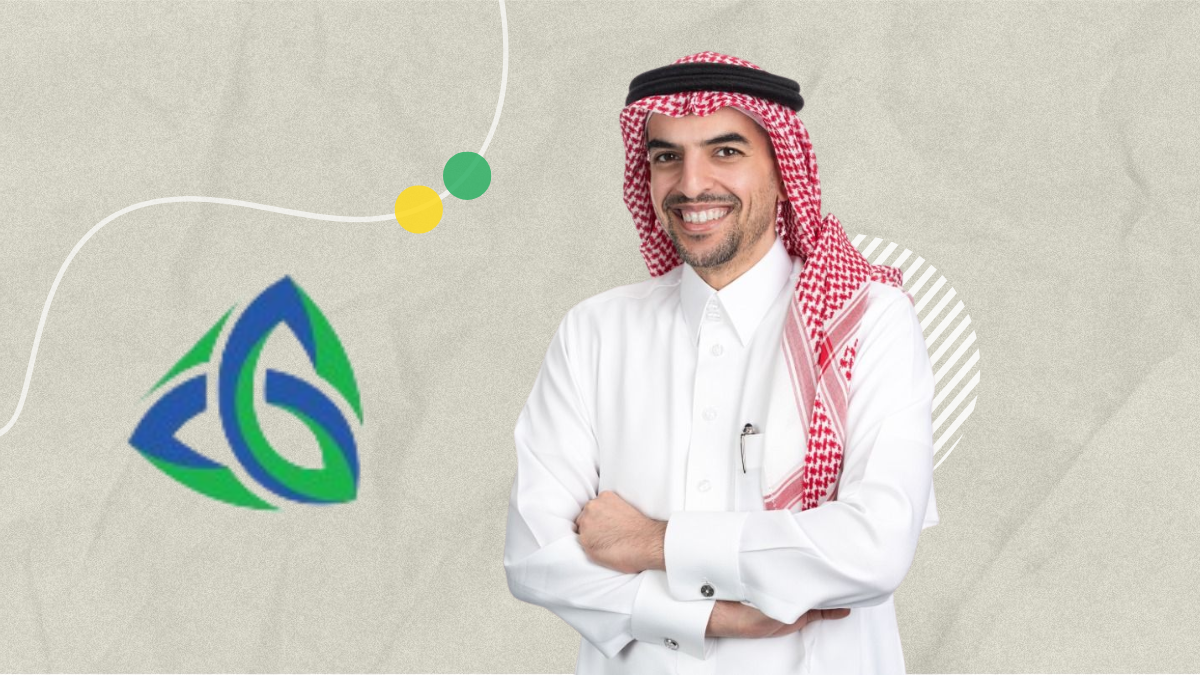
Logistics rarely attracts people looking for elegance. It is noisy, fragmented and unforgiving of mistakes. When the conversation opens with Husam Sendi, what becomes clear is that this friction is precisely the appeal. His career has been shaped by a desire to take complicated systems and strip them down to something workable, repeatable and fair.
As Founder and CEO of HSS Logistics Services and Logexa, and Co-Founder of Jusoor Hub, Sendi has spent close to two decades building logistics operations that prioritise structure over noise. His work is less about trucks and warehouses, more about decisions, systems and the people expected to run them.
How engineering shaped his way of thinking
When asked about the early years, Sendi traces his path back to uncertainty rather than ambition. After high school, he travelled to the United States without a clear plan, beginning in Electrical Engineering before realising it did not fit. Industrial Engineering, with its breadth and exposure to systems thinking, did.
That grounding proved decisive. On returning home, he moved through strategic storage projects, project management roles and logistics leadership within chemicals, FMCG, textiles and packaging. Each step added another layer of operational literacy. Eventually, entrepreneurship became less a leap and more a continuation.
Why logistics never lost its pull
On the question of what drew him to logistics, Sendi describes it almost mathematically. Clear processes. Defined movement. Cause and effect. For him, logistics is logic made physical.
It is also foundational. Whether in conflict or stability, food systems or medicine, logistics sits underneath everything. That relevance, combined with endless variables, kept the work challenging enough to stay interesting.
How crisis forced the creation of Logexa
Asked to reflect on the origins of Logexa, the story pivots sharply. Sendi initially owned and operated his own warehouse, serving a group of clients directly. That changed when a red palm weevil infestation destroyed large quantities of stored goods.
What followed was a period of genuine hardship. With patience and faith, he transferred undamaged goods to third party warehouses. Clients insisted on continuity, which forced a rethink. Ownership of a single facility gave way to orchestration of many.
Logexa emerged not as a plan, but as a response. Instead of one warehouse in one city, Sendi began managing multiple facilities across locations and temperature ranges. The only viable way to coordinate this complexity was digital. Today, Logexa’s platform connects more than 500 clients to over 50 warehouses, managing thousands of products through a single system.
Lessons from operating at Unilever scale
When asked about his time at Unilever Arabia, Sendi focuses less on brand prestige and more on exposure. Investigating theft, travelling to ports to understand shipment damage, and dissecting failures at their source sharpened his instincts.
The most meaningful contribution, in his view, came through cost reduction. Continuous improvement, process reviews and optimisation were not abstract concepts, they translated directly into saved money and better service.
Why systems are no longer optional
On the subject of ERP integration, Sendi is unequivocal. Systems are not enhancements, they are the backbone. Without ERP or warehouse management systems, scale and efficiency collapse.
He frames it with a simple comparison. No one would abandon email to return to physical mail. Integrated systems sit at the same level of inevitability. They connect data, enable analysis and allow organisations to see themselves clearly.
What it takes to move a factory without stopping it
Asked about leading a major central warehouse project and facility relocation, Sendi outlines the complexity without drama. The warehouse supplied raw materials to a factory running around the clock. Any disruption would halt production.
Over nine months, the team selected and equipped the new site, secured licences, transferred materials and maintained safety throughout. The outcome mattered more than the effort. Zero downtime, no accidents and no damaged goods.
Why Logexa goes beyond storage and transport
When the conversation turns to differentiation, Sendi points to evolution driven by clients. Storage came first. Then transport. Then customs clearance. Each addition removed another layer of operational burden for customers.
The aim was not to do everything, but to complete the cycle. When logistics complexity disappears, businesses can focus on strategy instead of survival.
A mission built around SMEs
Asked to articulate Logexa’s mission, Sendi centres it on fairness. Small and medium sized businesses are often excluded from high quality logistics because their volumes are unattractive to traditional providers.
Logexa was built to level that field. By aggregating demand and standardising access, the platform enables SMEs to compete without absorbing disproportionate cost or risk.
Saudi Arabia’s role in global logistics
On the question of Saudi Arabia’s position, Sendi is direct. Religious significance, commercial scale and political weight make it a natural hub. That status demands continuous development, not complacency.
Logexa’s ambition is to remain accessible to business owners while also producing strategic insight that helps decision makers operate with better information.
Where digital transformation and AI fit in
Asked about the future, Sendi sees digital transformation as inevitable and universal. Supply chains are no longer regional. Technology and real time translation have collapsed borders.
Artificial intelligence, in particular, already plays a role inside Logexa. From data review to customer service and analysis, it functions as an amplifier, not a replacement.
Advice for those still operating traditionally
Pressed for advice, Sendi reaches for history. Companies that fail to adapt rarely disappear overnight. They become irrelevant slowly, like Nokia after smartphones or Kodak after digital imaging.
The message is blunt. Systems change whether organisations want them to or not.
What comes next
Looking ahead, Sendi sees Saudi Arabia as far from saturated. Beyond that lies regional expansion into neighbouring GCC markets, followed by international growth. The common thread is impact. Logistics done properly does not just move goods, it enables economies.