 LEAP26
 AI
AI Saudi Arabia
 UAE
UAE Egypt
EgyptDubai Launches Ambitious AI Training for 50,000 Government Employees

4 min
Dubai has launched an AI+ programme to train 50,000 government employees.
The aim is to embed AI into everyday work, not a “shiny add-on”.
Tailored tracks span leaders, Chief AI Officers, managers and general staff.
Officials say staff will become partners designing smart, proactive public services.
The move supports Dubai’s D33 agenda to cement its status as a leading digital city.
Dubai is doubling down on artificial intelligence, and this time, it’s starting from within the government itself.
Digital Dubai has rolled out the “AI Workforce Transformation Programme (AI+)”, an ambitious plan to train 50,000 Dubai Government employees in artificial intelligence. The initiative comes in partnership with the Dubai Government Human Resources Department and the Dubai Centre for Artificial Intelligence, which operates under the Dubai Future Foundation umbrella. The goal is quite clear: make AI part of everyday government work, not just a shiny add-on people talk about at conferences.
At Arageek, we often speak about future-ready talent across the MENA region. I still remember a founder telling me how difficult it was to introduce basic automation into public-facing services because teams simply didn’t feel confident using the tools. So, in many ways, this move feels spot on. If you want digital transformation to stick, you start with people.
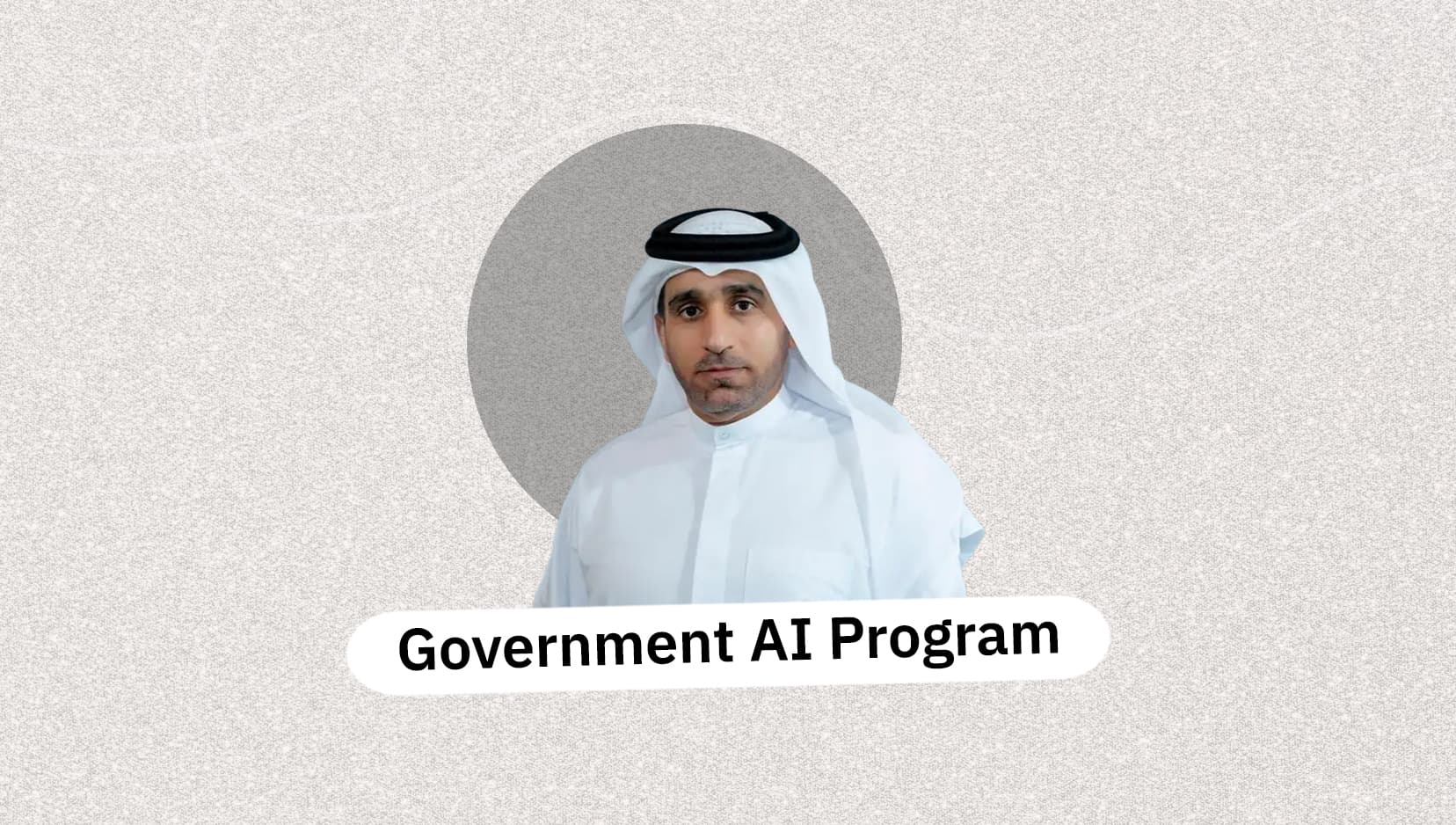
Hamad Obaid Al Mansoori, Director General of Digital Dubai, described the programme as a step towards empowering employees to use technology in service of the public, guided by data and knowledge. He pointed out that government staff are no longer just users of technology, but partners in designing smart, proactive services that anticipate residents’ needs.
That’s a big shift in mindset. And believe it or not, mindset is often the hardest part.
The programme is structured around different learning tracks, tailored to job roles. There’s a leadership track with expert-led sessions and roundtable discussions exploring AI opportunities, risks and global case studies. A dedicated track for Chief AI Officers focuses on implementing Dubai’s AI policies and frameworks, supported by practical workshops and communities of practice.
For product and service owners, the training walks participants through the full journey, from idea generation to building use cases and measuring impact. Department and section managers will learn how to introduce AI into their teams, identify relevant applications and allocate resources wisely. Then there’s the general employee track, which covers practical skills such as prompt engineering, automating tasks with AI agents and using productivity tools suited to different roles. Training will be delivered through webinars, in-person sessions and virtual courses.
Abdulla Ali bin Zayed Al Falasi, Director General of Dubai Government Human Resources Department, stressed that investing in people remains central to shaping the future. He highlighted AI skills as essential for boosting productivity and nurturing a culture of continuous learning and institutional innovation.
Meanwhile, Khalfan Juma Belhoul, CEO of the Dubai Future Foundation, described AI+ as a milestone in accelerating AI adoption across government entities. He emphasised the importance of turning advanced technologies into practical, high-impact use cases, and building an integrated ecosystem where technology and human capabilities reinforce each other.
That alignment with the Dubai Economic Agenda D33 is not accidental. The broader ambition is to solidify Dubai’s position as a leading digital city, where government efficiency and customer experience are enhanced through intelligent systems. It’s a bold target, but then again, Dubai rarely does things by halves.
On the flip side, training 50,000 employees is no small feat. Coordination, content relevance, engagement levels, it can all become a bit of a faff if not handled carefully. I reckon the real test will not be how many certificates are handed out, but how many real use cases emerge inside departments six or twelve months down the line.
Still, building AI literacy at scale is definately a step in the right direction. If governments want startups and private players to innovate confidently, the public sector must move at a similar speed. Otherwise, the gap becomes too wide.
For founders and tech entrepreneurs watching from across the region, this sends a strong signal: Dubai is not just talking about AI strategy; it is embedding it deep into its institutional fabric. And that, in my view, could make all the difference.
🚀 Got exciting news to share?
If you're a startup founder, VC, or PR agency with big updates—funding rounds, product launches 📢, or company milestones 🎉 — AraGeek English wants to hear from you!




✉️ Send Us Your Story 👇